Nigeria: Senate tells FG: Stop rehabilitating Boko Haram fighters, prosecute terrorists instead

By Zuleihat Owuiye, Nigeria
ABUJA — The Senate has called on the Federal Government to end the rehabilitation and reintegration of former Boko Haram members, insisting that terrorists and bandits should be arrested and made to face prosecution instead.
The resolution was passed during plenary on Tuesday, July 7, 2026, following a motion of urgent national importance on the rising attacks, abductions, and killings of serving and retired military officers. The motion was sponsored by the Chairman, Senate Committee on Army, Senator Abdulaziz Yar’Adua.
Lawmakers described Nigeria’s security situation as “increasingly complex, persistent and alarming,” citing terrorism, insurgency, banditry, kidnapping, and the continued loss of innocent lives across all regions.
The debate drew contributions from senators across party lines, reflecting growing concern that insecurity has spread beyond the North-East to every part of the country.
The Senate observed a minute of silence in honor of Major-General Rabe Abubakar, former Director of Defence Information, and all Nigerians killed by terrorism, insurgency, banditry and kidnapping. It also resolved to send a delegation to visit the late General’s family, the Katsina State government, and the Nigerian Army to convey condolences.
Moving the motion, Senator Yar’Adua said the killing of retired officers represents “not only personal tragedy but also a painful national loss demanding urgent action.” He warned that targeting retired personnel — because of their operational and intelligence background — undermines troop morale and emboldens criminal groups.
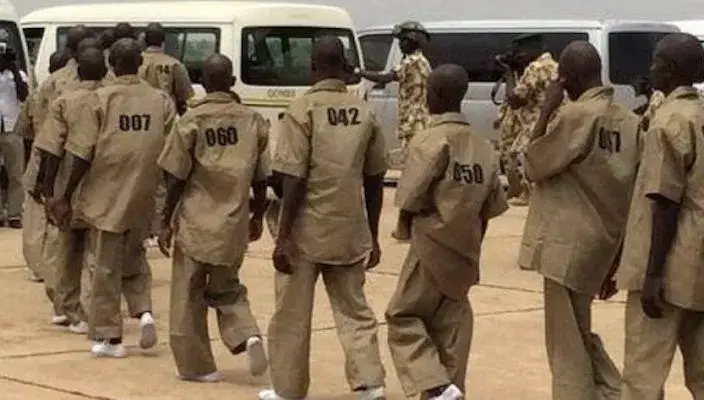
The Senate’s strongest push was against the government’s de-radicalization program, which screens and resettles repentant fighters in host communities.
Senator Joseph Ikpea moved an additional prayer to halt the program, saying Nigerians are deeply concerned about it.
One of the issues we need to look at is the rehabilitation of Boko Haram members. My additional prayer is to stop the rehabilitation of Boko Haram,” he said.
Senator Adams Oshiomhole seconded the motion.
“It does not make even common sense to grant pardon, rehabilitate and reintegrate criminals into society,” Oshiomhole said. “We should focus on justice for victims, accountability for perpetrators, and support for our security personnel.”
Beyond ending rehabilitation, the Senate urged security agencies to strengthen intelligence gathering, surveillance, early warning systems, and information sharing to prevent attacks.
Senator Abdul Ningi and Senator Osita Izunaso backed calls for more oversight, describing attacks on military personnel as “disturbing and unacceptable.”
Deputy Senate President Jibrin Barau, who presided, acknowledged the concerns but urged balance. “Our men and women in uniform are doing their best. They have been successful in decimating many criminal elements and deserve our continued support,” he said.
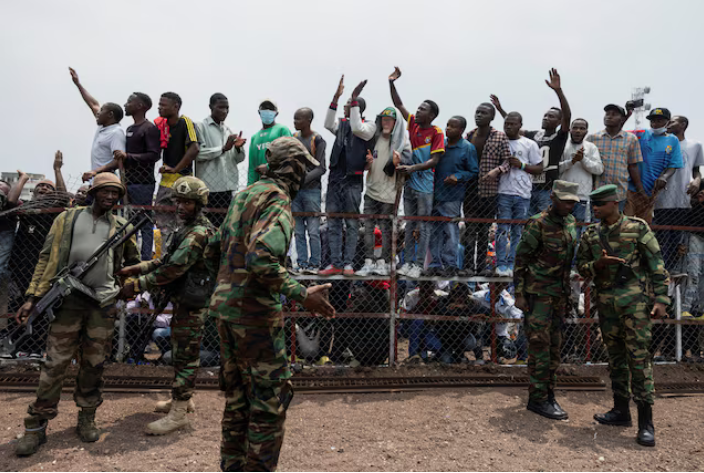
In a related development, the Nigerian Army announced that two senior terrorist commanders surrendered to troops of Operation Hadin Kai in Geidam, Borno State, on July 4, 2026. They arrived in Maiduguri on July 5 and are in custody for profiling and interrogation.
The Army identified them as “Munzirs” within the terrorist leadership. Officials said they hold key knowledge of the group’s operations, command structure, and logistics, and that initial debriefing has already provided valuable intelligence.
Describing the surrender as “another major setback” for insurgents, the Army said sustained land and air offensives are forcing terrorist leaders to abandon the fight.
However, the statement did not say whether the two commanders will be prosecuted or entered into the rehabilitation program — a question now at the center of Senate-FG disagreement.