Nigeria: The awakening of Hausa consciousness and future of Northern Nigeria

By Zuleihat Owuiye, Nigeria
Northern Nigeria has long been Nigeria’s paradox. It feeds the nation. It supplies the bulk of the food we eat. Yet it also carries the heaviest burdens: jihadist insurgency, mass school abductions, millions of out-of-school children, deep poverty, and some of the lowest human development indices in the country.
I served my youth service in the North and began my journalism career there. I know firsthand that the region is rich in human talent, natural resources, and culture. What has held it back is not a lack of potential, but a political and historical structure that has concentrated power in very few hands.
The root of it traces back to 1804, when Usman Dan Fodio’s jihad established the Sokoto Caliphate across much of present-day North West and parts of North Central Nigeria. In the process, political and religious authority was fused with Fulani leadership. Over the last two centuries, the Caliphate system placed Fulani elites at the center of palaces, the judiciary, religious institutions, the military, and the commanding heights of the Northern economy.
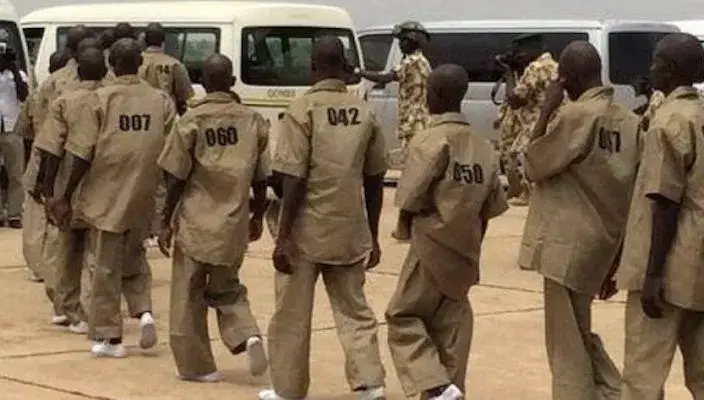
The Hausa majority, whose language and culture define much of the North, largely became the foot soldiers of that system. Today, the faces you see in the informal economy — the water hawkers, okada riders, shoe shiners, tea sellers, farmers, almajiri children, and junior ranks of the security forces — are overwhelmingly Hausa or Hausa-speaking Muslims.
Meanwhile, the list of presidents, governors, emirs, grand qadis, top generals, senior bureaucrats, and major business owners is dominated by Fulani, or by those appointed with Fulani backing. The system has functioned like a body where one group holds the head, and the other carries the weight.
This arrangement was sustained for so long because of a shared religious identity and the “Hausa-Fulani” label, which blurred ethnic lines and presented a united Northern front.
Just as the printing press in 15th-century Europe allowed people to read the Bible for themselves and question Church authority, smartphones and social media are giving ordinary Muslims direct access to Islamic texts, history, and global conversations. This is breeding more personal assertion, more questioning, and less automatic acceptance of traditional hierarchies. The Sokoto Caliphate structure is not immune to that effect.
Between 2013 and 2022, IPOB leader Nnamdi Kanu’s broadcasts, while aimed at Biafra agitation, made a point that resonated far beyond the South East. He noted that none of the 19 Northern governors is Hausa, and that all governors in the core Hausa states — Sokoto, Kebbi, Zamfara, Katsina, Kano, Kaduna, Jigawa, Gombe, and Bauchi — are Fulani.
That statement went viral in Hausa circles. For many Hausa youths, it was the first time they saw their political marginalization laid out so plainly.
The result is a growing wave of Hausa social media activists and commentators. They are openly rejecting the “Hausa-Fulani” tag. They argue it has been used for 66 years to subsume Hausa political interests under Fulani leadership.
Their message is simple: Hausas should vote for Hausas. They are questioning the idea of “Islamic unity” when, in practice, it seems to benefit only one ethnic group. Some are even pushing a secular “Hausa first” identity that puts ethnicity before religion.
This shift is also being driven by security realities. The armed groups behind banditry, kidnapping, and herder-farmer clashes are largely identified as Fulani. The primary victims on the farms and in rural communities are Hausa farmers. The two communities, once presented as one, are increasingly at odds over land, resources, and security.
At the same time, some Fulani opinion leaders have themselves dropped the “Hausa-Fulani” framing and now speak more directly about a pan-Fulani agenda. That includes calls to bring Fulani from across West Africa into Nigeria, which Hausa activists see as a direct threat to their ancestral lands.
The tension is now public. Hausa activists are openly criticizing the Sultan of Sokoto, Alhaji Sa’ad Abubakar, accusing him of speaking up mainly when Fulani interests are at stake, rather than for all Muslims in the North.
This is not a call for conflict. It is a call for self-determination within the North. What we are witnessing is the Hausa majority beginning to assert its identity, demand political representation, and question a system that has lasted for over 200 years.
If the Hausa succeed in reclaiming political and economic space in their own states, the entire structure of the Sokoto Caliphate as we know it will change. And because Northern Nigeria’s stability has always been central to Nigeria’s stability, that change will reshape the country.
Northern Nigeria’s problem has never been its people. It has been a system that concentrated power and left the majority to carry the burdens. The internet has opened their eyes. Politics has given them the data. Insecurity has given them the urgency.