Supreme Court declares Ex‑AG’s removal unconstitutional – Taxpayers to pay until 2031

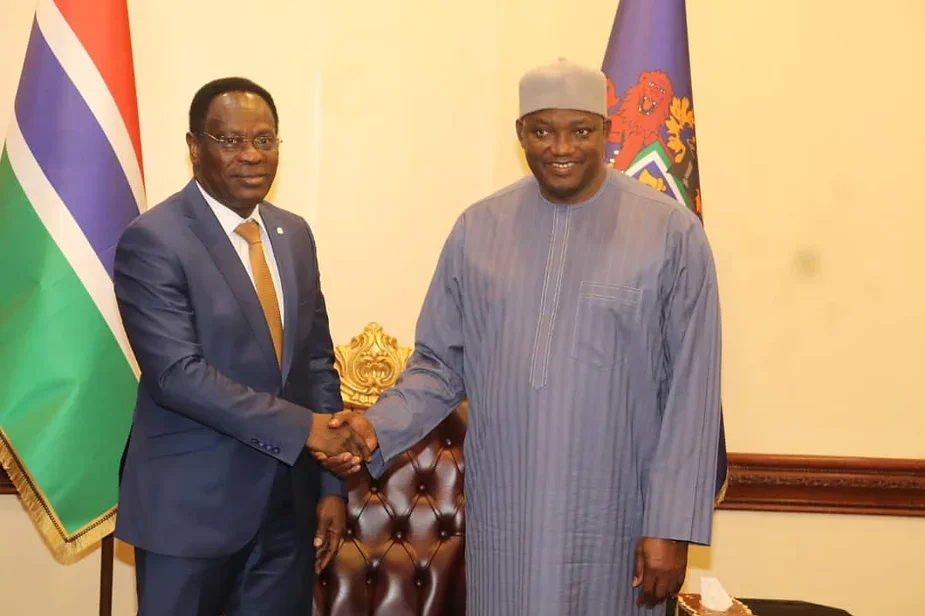
In a ruling that has stunned the nation, the Supreme Court has declared the removal of former Auditor General Modou Ceesay unconstitutional and ordered that he be paid until his term expires in 2035. Yet, despite this sweeping vindication, Ceesay will not return to office. The position remains occupied by Cherno Amadou Jallow, as the current Auditor General.
In a landmark ruling delivered yesterday, the Supreme Court declared the removal of former Auditor General Modou Ceesay unconstitutional, awarding him D4 million in vindictive damages.
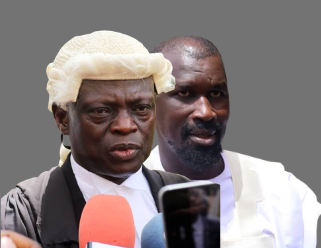
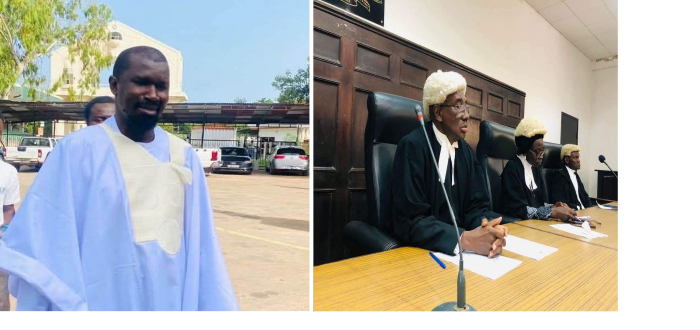
The unanimous judgment, read by Justice O.M.M. Njie on behalf of a five‑member panel, found that Ceesay’s constitutional rights were violated when he was ousted from office in September 2025.
Although the Court held that his removal was unlawful, it declined to order his reinstatement. Justice Njie explained that while the plaintiff had not sought reinstatement, the Court nonetheless considered the matter but exercised its discretion not to reinstate him, citing the constitutional nature of the Auditor General’s office and its working relationship with the Executive.
Instead, the Court ordered the Attorney General and the Inspector General of Police to ensure that Ceesay is paid D4 million in compensation within 60 days. It further ruled that he is entitled to continue receiving the salary, benefits and allowances attached to the office until the expiration of his constitutionally protected nine‑year tenure or his retirement, whichever comes first.
The justices found that Ceesay had never lawfully relinquished his position. While evidence showed he was offered the post of Minister for Trade, Industry, Regional Integration and Employment, the Court held there was no sufficient proof that he formally accepted the appointment.
Relying on evidence from both sides, the Court concluded that although discussions about the ministerial role had taken place, there was no legal basis for treating Ceesay as having vacated his constitutional office. It also ruled that the actions of the police in removing him were unconstitutional.
The case stemmed from Ceesay’s challenge to his September 2025 removal, which he argued breached both the Constitution and the National Audit Act after he declined to leave the National Audit Office to serve as Minister for Trade.
This judgment marks a significant precedent in constitutional law, reinforcing the independence of the Auditor General’s office and underscoring the limits of executive power in removing constitutional office holders.
Source: The Point