Nigeria: Nigerian women rewriting sound of pop

By Zuleihat Owuiye, Nigeria
After releasing quality singles since 2020, including collaborations with Joeboy and Victony, she was tired of shouting into a void. Listener attention was scarce. Playlists were crowded. For an independent woman in a male-dominated industry, every release felt like her last
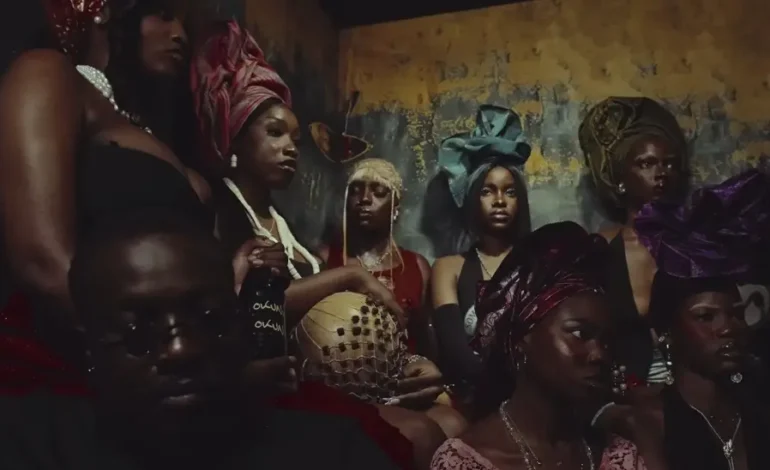
Named for the Yoruba word for darkness, the song is about refusing to be swallowed by it. The lyrics blend Yoruba aphorisms, spiritual pleas, and self-motivation. The production is something else entirely: glittering synthwave layered over Yoruba folk motifs. It’s easily the most distinctive sound in Nigerian pop this year, and Solana calls the style ‘Yorupop’ — a fusion of heritage and retro electronic pop.
“When I’m creating music, I don’t consciously try to fit into a particular trend,” Solana told OkayAfrica. “I just make stuff that is true to me, stuff that is a reflection of what I’m trying to express, and pushing boundaries just comes along.”
She played “Okunkun” for a few industry insiders first. Reactions were mixed. She released it anyway. On social media it caught fire for its catchiness and originality. For Solana, it wasn’t just a breakout single. It was proof that authenticity could still break through.
In Nigerian music, the safest route for new artists is usually imitation. Find the trending sound, copy the template, hope the algorithm picks you up. That logic is even harsher for women.
The industry is still heavily male. Radio, playlists, and funding often flow toward the same archetype: male, amapiano-leaning, slang-heavy. For women, fitting that mold rarely works. So many choose not to try.
Singer Rukmani, whose music leans into R&B and soulful pop, puts it plainly: “I don’t consciously create from a place of trying to be mainstream. Ironically, I believe my music is mainstream, so I don’t feel the need to chase it. I’m more interested in how the listener feels when they hear my music.”
That thoughtfulness is a pattern. Across the scene, female artists are building careers on specificity instead of sameness.
Solana’s ‘Yorupop’ echoes the experimental spirit of the Lijadu Sisters. Rukmani’s warm, plush vocals recall Waje’s siren tone from the 2010s. Tems’ dedication to her own version of Nigerian soul mirrors Asa’s folk roots. Ayra Starr channels the confidence of icons like Onyeka Onwenu and Christy Essien-Igbokwe. Rapper Fimi carries the swagger of Weird MC. Producer and singer Bloody Civilian pushes dance music into new textures, in the lineage of the late Goldie.
“I think that women in music have to be diverse because they have to work twice as hard as the men, so you have to show more range,” says culture writer and filmmaker Okeoghene Vandeh. “Men don’t listen to your music because they feel like you’re a woman. Then you’re in a male-dominated industry where you have to prove yourself a lot.”
A video that circulated recently captured the problem bluntly. A man said he doesn’t listen to Nigerian female artists. He was played Ayra Starr’s “Tornado,” rated it an 8/10, then shrugged and repeated that women “can’t really sing like that.” The comments filled with other men agreeing.
Vandeh calls it what it is: “rooted in patriarchy and misogyny,” and common in a conservative society.
But music executive Bella Adeleke, who manages Rukmani, argues the issue is also structural.
“The mass Nigerian audience has grown comfortable with a particular archetype; a certain sound, a certain style of storytelling and brand narrative,” Adeleke said. “If you do not fit that box, visibility becomes a tactical exercise rather than a natural outcome. Audiences respond to what they are consistently offered. And for too long, they have largely been offered one template. So the bias sits with the industry, not the listener.”
Her point: give people more, and they will listen to more. The narrowing happens at the level of who gets developed, funded, and platformed.
Beyond fairness, there’s a creative argument. A lot of current criticism of mainstream Nigerian pop points to the same things: overreliance on slang, repetitive amapiano-inspired beats, and a reluctance to take risks.
Female artists are already doing the work of pushing past that. They’re writing songs that invite listeners to attach their own stories. They’re pulling from folk, soul, electronic, and global sounds without abandoning Nigerian identity. They’re treating albums and artistry as long-term projects, not just TikTok moments.
On a global stage, women are already setting the rules in pop, R&B, afrobeats, and dance music. Nigeria is late to that shift, but the blueprint is here.
Adeleke says the next step is investment from executives, from media, from listeners. “What we need is more support, more platforms, and more spaces for discovery that do not require a woman to trade on over-sexualization, uninformed ambiguity, or theatrics as an unspoken pre-requisite to convert attention,” she said. “If the only reliable route to visibility is spectacle, we will keep having the same conversation.”
That means playlist editors taking chances beyond one or two token women. It means labels funding development, not just viral singles. It means media covering the music first, not the gossip. And it means audiences being open to sounds that don’t fit the current template.
Solana almost quit. Now “Okunkun” is traveling. Rukmani is building a catalog of emotionally resonant songs without chasing trends. Ayra Starr is selling out shows abroad. Tems won a Grammy. Bloody Civilian is producing and performing on her own terms.
That refusal is what’s making Nigerian pop more exciting right now. The diversity, the risk-taking, the willingness to sound like yourself even when the industry tells you not to — that’s coming largely from women.
If the industry widens the gates, the audience will follow. And Nigerian music will be better for it: richer, more varied, and more honest about who Nigerians actually are.
For Solana, the lesson is simple. “Being authentic is what brings me peace because that’s just me being myself.”