CALLS FOR DARBOE, TALIB RECONCILIATION SPARK DEBATE ON OPPOSITION UNITY

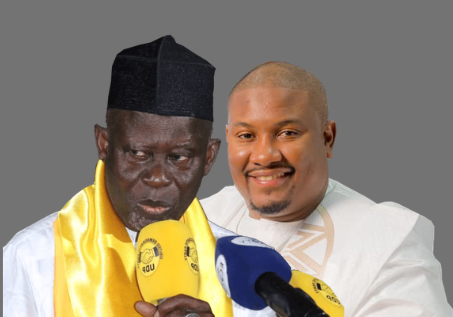
As the country approaches presidential elections in two months’ time, opposition supporters frustrated by the sharp division in the opposition and the successful poaching of key opposition leaders by the governing NPP, have started calls for reconciliation between the two main parties, United Democratic Party of Ousainu Darboe and Unite of Talib Bensouda and their respective coalitions, Gambia First and Coalition 2026. Proponents of opposition unity believe this will be a new avenue that will accelerate efforts to build a united opposition front.
Melville Roberts, a supporter of Unite based in the UK started the conversation saying ‘a political convergence between the UDP and Unite ahead of the crucial 2026 presidential election is necessary and doable in the interest of the nation’.
“I woke up with an overwhelming conviction that UDP leader Ousainu Darboe and Mayor Talib Ahmed Bensouda must find a path of convergence,” Roberts said in a Facebook post.
He went on to argue that if Mamma Kandeh, Essa Faal, Dr. Ismaila Ceesay and others can put aside their differences and forge alliances with President Adama Barrow and the NPP, then there is absolutely no reason why Darboe and Talib cannot sit around the same table in the spirit of brotherhood, dialogue and national interest.
According to Melville, the project of salvaging the country must become the ultimate priority – beyond personalities, egos, party colours and historical differences.
“Politics is the art of the possible. Yesterday’s differences do not have to become tomorrow’s barriers. The table of dialogue should never be too small. The conversation must begin. Project Gambia must come first,” he said.
Melville said the idea must be explored and it can be achieved.
“There are Gambians who are asking whether these two political forces can find common ground and that question deserves more than grandstanding about what can or cannot happen. It deserves serious, strategic and meticulous consideration,” he argued.
He noted that the table of dialogue should never be too small for those who believe they have a contribution to make to The Gambia’s future. “If others can find common ground despite their differences, then Darboe and Bensouda can at least sit, talk and explore what common ground may exist,” he said.
Melville’s suggestion generated a huge debate on online with over two hundred commentators contributing and many generally agreeing with the idea.
Baba Ginde, supporter of the idea, said if Bensouda and Darboe come together, they can easily win.
”It’s quite evident that the NPP coalition is not fit to rule and the country is drifting to a very rotten situation that has never been seen in this country. The Gambia is too small to be fragmented into tribal and ethnic groups. Remember that nobody wins in an ungovernable state,” he wrote.
Pape Baye, another contributor, said: “I strongly support this idea. At this critical moment, The Gambia needs political leaders who are willing to put national interest above personal differences, party loyalty, and political egos. If former rivals can find common ground when circumstances change, then there is no reason why Darboe and Bensouda cannot sit down, engage in honest dialogue, and explore areas of convergence. Politics should not be about permanent enemies or friendships; it should be about principles, ideas, and ultimately the national interest”.
Isatou Sonko Jammeh debating on the suggestion said the idea is a thoughtful perspective. “Whatever our political differences may be, dialogue and putting The Gambia’s national interest first are always worth exploring,” she said.
However Yai Mariam Jeng, another contributor said while she finds no problem with Darboe and Talib sitting down to talk, the real question is what happens when they sit down.
“Who is prepared to compromise? What are they actually agreeing on? Who leads? What happens to the political structures they have already built? And most importantly, where does the ordinary Gambian fit into all of this?
Because honestly, I think Gambians are becoming tired of political arrangements that sound good on paper but leave people wondering what has actually changed for them.” she asked.
”But am not against the idea at all. Let them talk. Let them explore it. Maybe there is common ground that people don’t see from the outside”.
Source: The Standard