
The Communications Bill, 2025 is NOT just a telecoms bill. It is a power Bill

by Ndey Jobarteh
I read the Bill and tried to understand the rationale but it is difficult to not challenge this Bill. I am in solidarity with GPU, all Journalists standing against this Bill and the Gambian people because if the Media is silenced then we know far we have entered the danger zone as we did with Jammeh and we are not going back to that danger zone.
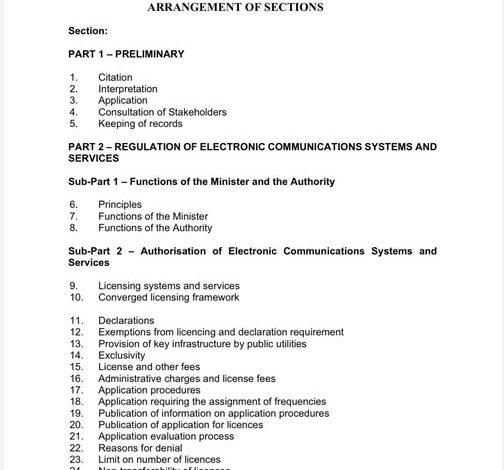
This Bill brings electronic communications, media, broadcasting, cybersecurity, and digital transactions under one law. That means it is not just regulating technology, it is shaping who speaks, who is heard, and who can be silenced in The Gambia.
1. And that is where the danger begins.
i hear and read people trying to justify the Bill by saying that every country regulates communications, telecoms, and broadcasting.
That is not the issue. The real question is what is being regulated, and who holds the power to regulate it?
There is a fundamental difference between:
Regulating infrastructure (telecoms, spectrum, service quality)
AND
Regulating content, journalism, and public expression.
Countries like the US, UK, Norway, and Canada regulate infrastructure, but they do not give the Government power to control Journalists or Influence editorial content.
2. Significant Power to the Minister
But this Bill gives significant powers to the Minister, over policy, licensing, regulations, and even broadcasting content. On paper, it talks about independence and transparency. In reality, it creates a system where the executive sits at the centre of the entire communication space.
Let’s not pretend we don’t understand what that means.
If you control licences, you control entry.
If you control regulations, you control operations.
If you control content rules, you influence narratives.
This is how control is built not always through censorship, but through regulation.
3. Serious concerns on Privacy and Surveillance
The Bill also raises serious concerns about privacy and surveillance. It allows the collection and retention of communication data, including metadata, who you talk to, when, from where, and how often. That is not small information. That is power.
4. Then comes cybersecurity.
We all agree cybersecurity is important. But in this Bill, it comes with broad powers: designation of critical infrastructure, mandatory compliance, information sharing, and state oversight. Without strong safeguards, these provisions can easily be turned against journalists, activists, and dissenting voices.
And the most worrying part?
5. Broadcasting.
The State can entertain complaints, demand corrections, force “alternative versions,” and even suspend broadcasting services. Imagine what that means in practice, media houses operating under constant pressure, always aware that one decision could lead to suspension.
This is not how a democratic media environment is protected. This is how it is managed.
This Bill contains good language, about consultation, consumer protection, and development. But good language does not cancel dangerous power structures.
The Gambia has lived through a time when control over information was used to silence people. We cannot afford to rebuild that system under a different name.
And this Bill builds that control through systems that can decide who gets access, who is monitored, and who can be sanctioned.
Control does not always come loudly.
It comes quietly, through laws, procedures, and “regulations.”
That is why this Bill must be challenged.
It must be scrutinised.
And where necessary, it must be resisted. Because once control is normalised in law, it becomes very difficult to undo.
The Gambia deserves laws that protect citizens, not laws that protect power. Because laws like this do not only regulate systems. They define the future of freedom.
Calling on The Gambia National Assembly to not hand us over to another dictator by voting this Bill without changes demanded by the Stakeholders, GPU/Journalists and the outcry from the people.