When the system speaks: Ignoring IEC warnings is no longer an option


By Ndey Jobarteh
For weeks, concerns around voter registration were dismissed as politics. Now, the Independent Electoral Commission itself has spoken, and its own words demand attention.
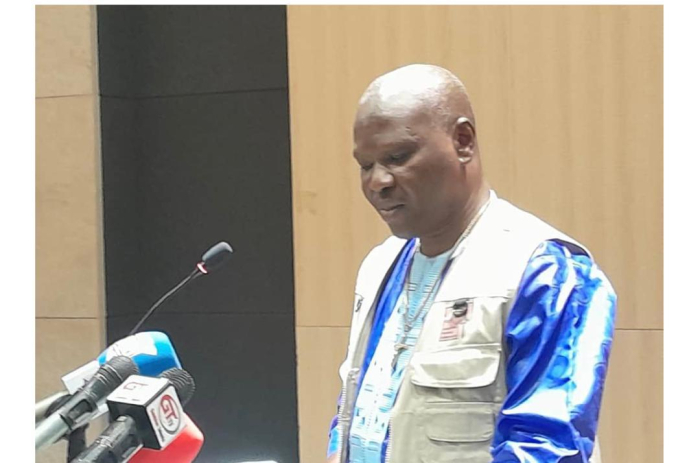
At a stakeholder engagement, IEC Vice Chairman Cherno Jallow did not describe a smooth process. He described a system under strain. “This is a very thorny issue, especially where birth certificates are backdated.”
A “thorny issue” is not administrative language. It is a warning. And the details are even more troubling: “We have come across instances where birth certificates carry identical serial numbers… which raises suspicion.”
Identical serial numbers are not a clerical error. They point to possible duplication or fabrication.
It does not end there. “We have also seen cases where birth certificates have been tampered with.” “People have attempted to alter information, including months being written in French.”
Backdated! Duplicated! Tampered! Altered! These are not minor irregularities. These are indicators of system vulnerability.
1. A System Accepting Questionable Inputs!
Even more concerning is the burden now placed on individual officials: “There are instances where we must apply judgment when documents appear suspicious…”
A system that relies on “judgment” instead of clear, enforceable standards is a system exposed to inconsistency, and potentially exploitation.
And then comes perhaps the most critical clarification of all: “Having a birth certificate does not necessarily make someone Gambian.”
This is not just a legal note. It is an admission that the current framework is insufficiently precise, creating room for misuse.
Jallow himself acknowledges the gap: “The law has to be specific… otherwise it creates problems once it becomes ambiguous.”
2. And Then the Numbers
While the document concerns are serious on their own, they do not exist in isolation. IEC Chairman Joseph Colley has already confirmed: “The Commission has identified over 2,000 cases of double registration…”
With internal figures pointing even higher:
“About 2,800 (unconfirmed) cases”, approximately 8% of registrations. Eight percent is not a rounding error. It is a signal.
3. From Denial to Confirmation
This is the turning point. What was previously dismissed when raised by UDP and Yanks Darboe, Chairman of West Coast Region, is now being confirmed by the institution responsible for managing the process. The issue is no longer whether concerns were exaggerated. The issue is whether they were ignored.
4. This Is Not Politics, This Is Risk:
Backdated documents
Identical serial numbers
Tampered certificates
Altered information
Thousands of duplicate registrations
These are not partisan claims. They are institutional admissions.
And when both the inputs (documents) and the entries (registrations) are in question, the integrity of the entire voter register is placed at risk.
5. The Real Question: The country is no longer waiting for confirmation. That has already come. The real question now is:
What is being done about it?
How many of these cases have been verified?
How many have been rejected?
What consequences are being applied?
What systemic fixes are being implemented?
Because detection without action is not protection. It is exposure.
A credible election does not begin on voting day. It begins with a credible register. The IEC has raised the alarm, clearly, and in its own words. Ignoring it, downplaying it, or politicising it will not make the problem disappear. It will only make the consequences harder to manage later.
This calls for National Unity with a common goal to defend our Votes and Protect our Votes!!
Source: KERR FATOU