SEEDY NJIE SAYS HE IS NOT ANTI-MANDINKA

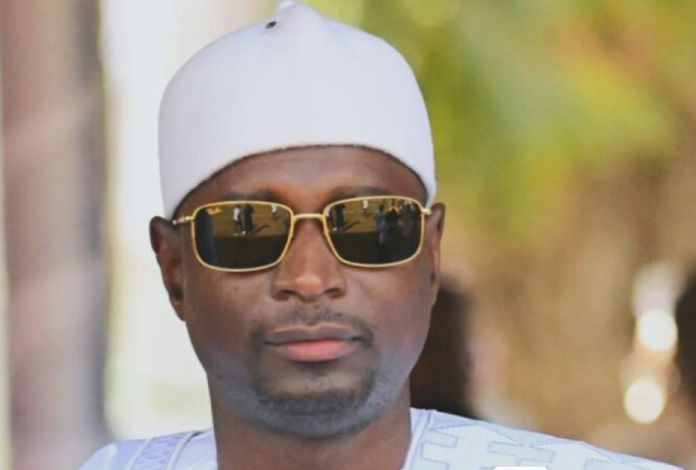
Following mounting public criticism and pressure over tribal comments attributed to him in the last few weeks, Deputy Speaker Seedy Njie has broken his silence over the matter.
In a statement shared with The Standard, Mr Njie explained the circumstances surrounding the incident, denied ever being anti Mandinka and apologised for whatever inconvenience it may have caused to anyone.
His statement reads in full.
“Fellow Gambians, in the recent past weeks, a secretly recorded conversation between me and Mr. Omar P. Jallow has been circulated on social media and discussed extensively in the public domain. The recording has given rise to allegations that I am tribalistic and specifically “anti-Mandinka”. Given the seriousness of these accusations and the concern they have generated, I consider it necessary to address the nation directly.
Before doing so, it is important to place the circumstances surrounding that conversation in their proper context.
The meeting from which the recording emerged did not arise out of political hostility, personal animosity, or any agenda directed against any individual, community, or ethnic group. Rather, it was the product of a relationship of goodwill and mutual respect that had developed between me and several prominent personalities from Niamina West.
Before that meeting, I had been invited to attend a community event in Sarre Gainako. Owing to prior commitments, I initially declined the invitation. However, Mr. Omar P. Jallow personally contacted me and subsequently handed the telephone to his father, Alkalo Pateh Jallow, who passionately appealed to me to honour the invitation. Out of respect for them and the people of the community, I travelled more than three hundred kilometres to attend the event.
I must acknowledge that the reception I received in Sarre Gainako was nothing short of remarkable. The Alkalo, elders, youths, women, and the wider community extended extraordinary hospitality to me and my delegation. I left the village with a deep sense of appreciation and respect for the people of the area and the bonds that had been established.
It was against this backdrop that a delegation led by Hon. Birom J.S. Sowe, National Assembly Member for Niamina West, later paid me a visit at my residence. The meeting was prompted by concerns and reports surrounding the redeployment of Mr. Omar P. Jallow from his assignment at the Office of the Vice President and the uncertainty that subsequently arose regarding his professional circumstances.
The discussion was cordial, informal, and conducted in what I genuinely believed to be a private family atmosphere among people who had, over time, developed a relationship of trust, mutual respect, and goodwill. Indeed, it was within the same spirit that I subsequently reached out to the Director General of GRTS and appealed for understanding and reconsideration of any measures that could adversely affect Mr. Jallow’s career and welfare.The Director General responded and was accompanied to my office by GRTS’s Director of Administration/Human Resources. I passionately appealed to them not to sack Omar P Jallow and they responded positively to my plea.
It is therefore deeply disappointing that a conversation held under such circumstances was secretly recorded without my knowledge or consent and subsequently disseminated to the public. Regardless of our differences, I believe there must remain room in our society for trust, privacy, and good faith engagement between individuals.
I am particularly saddened that this controversy has resulted in deeply regrettable personal consequences, including insults directed at my parents, attacks on my reputation, and attempts to portray me in a manner inconsistent with my character. I am fully aware that public service inevitably attracts criticism, and I accept criticism when it is fair and constructive. However, there is a clear distinction between legitimate scrutiny and the unjust labeling of an individual without evidence. No individual should be falsely branded a tribalist without evidence, particularly in a country whose unity and strength depend on mutual respect among its diverse communities.
I would not do justice to this statement without addressing references made during the conversation to His Excellency, the President of the Republic. If any portion of that discussion has caused misunderstanding, embarrassment, or unintended discomfort to the President, I sincerely regret that outcome. No disrespect was intended. The conversation took place in what I believed to be a private setting, and nothing said was ever intended for public circulation.
Similarly, I extend a sincere apology to Hon Lamin Queen Jammeh, whose name was mentioned during the conversation. Any reference made was never intended to impugn his character or question his integrity. I hold him in high regard as an elder statesman and colleague in public service, and I regret any misunderstanding or inconvenience caused by the publication of the recording.
Having addressed these matters, I would like to categorically state, and without reservation, that I am not a tribalist, nor am I anti-Mandinka. These allegations are completely inconsistent with my life, my relationships, and my values.
As a matter of fact, my first wife is Mandinka. During our traditional and religious marriage ceremonies, the distinguished ANM Ousainu Darboe, leader of the opposition UDP, played a prominent role in handing her hand over in marriage to me through Mr Ganyi Touray and family at Hon Sainey Singhateh’s compound. Together, we have raised a family whose heritage reflects the diversity and interconnectedness that define our nation.
Beyond my family life, many of the individuals with whom I have worked most closely over the years, both in my personal and professional capacities, are Mandinkas. Some of my closest friends, from childhood to the present day, are Mandinkas. The bonds we share are so profound that some have named their children after me, just as members of my family have named children after them.
For the record, I have also noted claims circulating in certain quarters that I requested the appointment of a Fula orderly or sought to influence security deployments on ethnic grounds. These claims are entirely false.
At no time have I contacted the Inspector General of Police to request the appointment of a Fula orderly or any security personnel on the basis of ethnicity. Indeed, the officer heading my security detail is Mandinka. Likewise, my Personal Assistant and Deputy Personal Assistant are both Mandinka. Throughout my public service, I have never considered tribe as a criterion for employment, appointment, or professional association. My concern has always been competence, trust, professionalism, and dedication to duty.
These facts are easily verifiable and further demonstrate the extent to which the allegations being leveled against me are inconsistent with both my conduct and my record in public service.
My personal relationships, family ties, political associations, and social interactions have never been defined by tribe, but by mutual respect, friendship, and our common Gambian identity. For anyone who knows me personally, the suggestion that I harbour hostility towards any ethnic group, particularly the Mandinka people, is simply incompatible with the life I have lived and the values I hold dear.
What is most telling is that despite all the commentary surrounding the leaked recording, nowhere in that conversation did I make a statement expressing hatred towards the Mandinka people or hostility towards them as an ethnic group. Such a statement cannot be found because it was never made.
In closing, I reaffirm my commitment to the unity, peace, and democratic stability of our country. At a time when public discourse is increasingly shaped by instant reactions and competing narratives, I urge all Gambians to be guided by truth, fairness, and a sense of collective responsibility. Let us reject attempts to divide us along ethnic, political, or regional lines and instead focus on the values that have long defined us as a people: tolerance, mutual respect, and national solidarity. The Gambia is, and must always remain, greater than any individual, political party, or momentary controversy.
I hereby render my unreserved apology to all Gambians for any wrong I may have done to each and every one during the cause of my public service”.
Source: The Standard