Nigeria: Women, children risk health at Abakaliki Rice Mill to survive on husk scraps

By Zuleihat Owuiye, Mamos Nigeria
At the Abakaliki rice mill in Ebonyi State, women and children sift through mountains of rice husks daily, braving dust, smoke, and disease to earn a living from leftover grains.
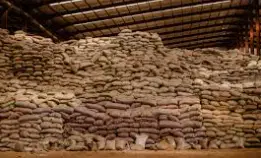
Established in 1967, the mill sits in northern Abakaliki and remains one of Nigeria’s largest rice processing hubs. It employs over 8,000 people across the value chain — paddy traders, haulers, millers, sorters, and technicians — and processes varieties including FARO 1, FARO 44, FARO 57, NERICA 19, and local strains like Brown and Ofada rice.
The mill blends traditional methods with diesel-powered machines. Years of heavy production have left a towering pile of husks, or chaff, where indigent women and children now work without protective gear.
*Living Off the Chaff*
With no masks, goggles, or gloves, they dig through the dusty heaps, inhaling particles and smoke from nearby milling machines. Their goal: recover remnants of rice to sell or feed their families.
Mrs. Rose Nwojoji, 30, has worked the husks since age 15. After her mother died, she continued. “We don’t have any other business apart from sorting and sieving rice from the chaff,” she said. On a good day she gathers a quarter or half bag. In a week, she may get 50kg to one and a half bags. “I don’t buy rice at home; I feed my family from what I get here. It has been helping me to take care of my needs and train my four children in secondary school.”
Mrs. Ogechi Igboke called the work “very risky and hectic” but said she has no alternative. “I am doing this job because I don’t have an alternative job or money to start another business. If I have a cash of N50,000, I will start a small business and leave this job.” She works under the sun Monday to Saturday and often doesn’t get much rice. She appealed to Governor Nwifuru and others for help to start small businesses. “In this place, you will see mothers and their three children doing this job just to feed themselves, not minding the health hazard.”
Mrs. Amaka Uchaji said workers are unrecognisable under the dust, “like mentally-challenged people.” She also complained that some women claiming to own the land demand a share of the rice they recover. “After suffering from morning to evening, some group of old women will compel you to bring some quantity of rice as the owners of the land,” she said. “We appeal to the management of the rice mill and the state government to intervene and stop it.”
*Health Toll*
Many workers report respiratory and eye problems. John Ovuoba, a milling machine operator, said his mother worked the husk heap for 17 years and died of lung disease in 2021. “She was always weak each day she returned from the job. She coughed, had lung issues… The sickness worsened, and she was taken to a private clinic where she died.”
Amaka Nworie, 28, lost her mother to similar illness and now brings her one-year-old baby to the site because she has no caregiver. “Yes, I do experience pains; eye pains, nose issues, and cough after work. Sometimes I go to a patent medicine dealer to get medicine to have strength and continue the work.”
Regina Nwankwo, 72, a widow, has worked the husks for 18 years to feed six children. “It is full of health hazards, but I don’t know what else to do to survive… I have waist pains, headaches, and breathing issues. But God has continued to protect me.”
Ginikachukwu Ogbudu, 20, described persistent cough, waist pain, and headaches. “We need help; we are not supposed to be doing this work because of its health implications, but we don’t have anyone who cares for us.” She called for a clinic on site, safety kits, and face masks.
Joy Awoke, 18, joined after her mother died to support her poor farmer father. “I have been having frequent headaches, cough, and chest pains… But if I stop, who will care for my father and me?”
*Experts Call for Intervention*
Dr. Jacob Nwodum, a health officer with the State Ministry of Health, said the husk workers need government and private support to learn skills or start small businesses. “The health risk involved in the job is far more than the gains, if any,” he said.
For now, he urged provision of safety kits, face masks, and medical checks. “Most of them have developed different accumulated diseases that need urgent attention.” He also suggested sealing the husk heap and stopping women from working there while providing alternative livelihoods.
The Abakaliki mill remains a key player in Ebonyi’s agriculture, reducing reliance on imported rice and supporting thousands of livelihoods. But for those at the bottom of its value chain, survival comes at a steep health cost.