Nigeria: US, Iran exchange fire, putting fragile ceasefire at risk

By Zuleihat Owuiye, Mamos Nigeria
A fragile ceasefire between the United States and Iran came under strain on Thursday after both sides exchanged fire in the Strait of Hormuz, raising fears of a wider escalation.
President Donald Trump said the truce was still in place despite an Iranian attack on three U.S. destroyers. The U.S. military said it responded with strikes on Iranian military targets. Tehran, however, accused Washington of initiating the exchange by attacking an oil tanker and another ship.
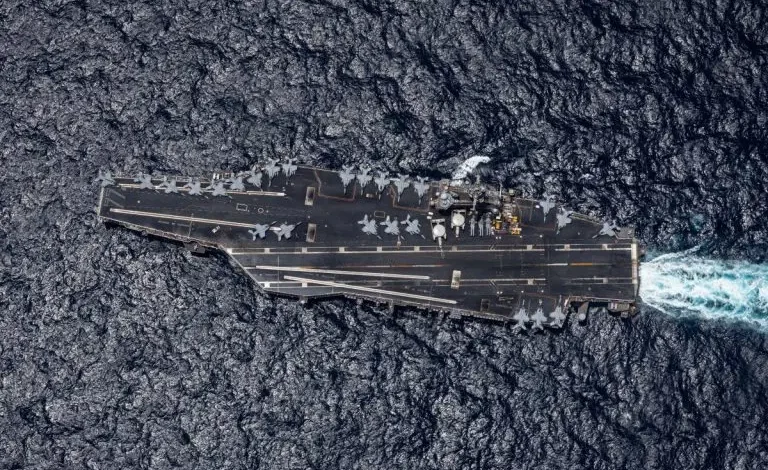
U.S. Central Command said Iranian forces launched missiles, drones, and small boats at the warships but caused no damage. “We eliminated inbound threats and targeted Iranian military facilities responsible,” CENTCOM posted on X. It added that it does not seek escalation but remains ready to protect American forces.
Iran’s military command said its forces retaliated immediately after the U.S. strikes. The United Arab Emirates reported that its air defenses were also engaging Iranian missiles and drones on Friday.
The clash threatens a ceasefire that has held since April 8, which ended weeks of U.S.-Israeli strikes on Iran and Iranian retaliation across the region. Iran had also briefly blocked the Strait of Hormuz, a critical route for global oil and gas shipments.
Speaking in Washington, Trump said Iran “trifled with us today. We blew them away. They trifled. I call that a trifle.” He later posted on Truth Social that the U.S. would strike “a lot harder, and a lot more violently” if Iran does not sign a deal quickly.
Iran said it would communicate its position to mediator Pakistan once its views were finalized. Pakistani Prime Minister Shehbaz Sharif had earlier expressed hope the ceasefire would become long-term.
The violence also risks undermining separate talks on Lebanon. A U.S. official confirmed that Israel-Lebanon negotiations are set for May 14-15, following an Israeli strike in Beirut that killed a Hezbollah commander. Secretary of State Marco Rubio said a deal was “eminently achievable,” but blamed Hezbollah for the deadlock.
The conflict has disrupted shipping in the Gulf. The UN’s International Maritime Organization said around 1,500 ships and 20,000 crew are stranded in the region after Iran largely closed the Strait of Hormuz in February. Trump briefly launched a naval operation to reopen it this week but halted it hours later, citing progress in negotiations.
Trump said he had a “great call” with EU Commission chief Ursula von der Leyen, adding that the U.S. and EU were “completely united that Iran can never have a nuclear weapon.