
Nigeria: Senate passes State Police Bill, shifts Nigeria to Federal + State policing model

By Zuleihat Owuiye, Nigeria
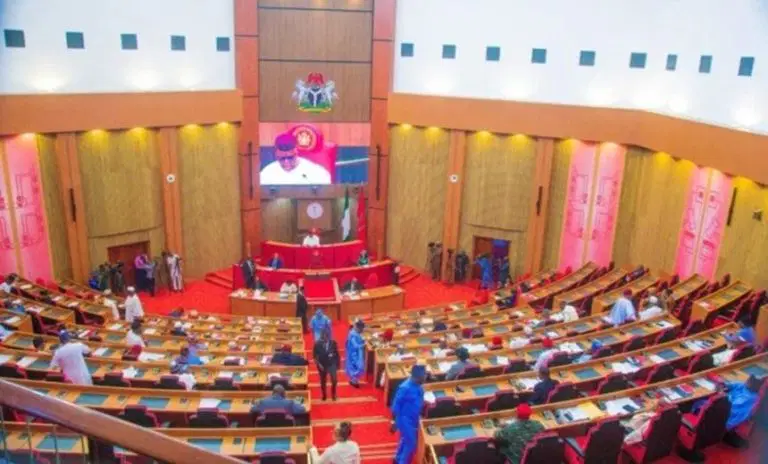
The Senate on June 25, 2026 passed a landmark constitutional amendment establishing state police across Nigeria’s 36 states, ending decades of unitary policing under the Nigeria Police Force.
The executive bill, transmitted by President Bola Tinubu, replaces the NPF with a dual structure: the Federal Police Service and State Police Services. It shifts Nigeria from centralized to federal policing.
The bill, Sixth Alteration Bill 2026, SB. 1055, passed after the Senate’s electronic voting system crashed for 30 minutes. All 88 lawmakers present then voted manually by a show of hands. Senate Leader Opeyemi Bamidele moved to ditch the faulty tech, seconded by Minority Leader Abba Moro.
retains exclusive jurisdiction over national security, terrorism, cybercrime, inter-state crimes, arms trafficking, international syndicates, FCT Abuja, and federal institutions.
established by each state through state assembly law, but cannot commence operations until certified by the National Assembly as meeting “national minimum standards”. State police cannot operate outside their state borders except as authorized by the National Assembly.
The President can temporarily take over a State Police Service only under strict conditions: breakdown of public order the state cannot contain, serious incapacity, or evidence of rights violations, electoral intimidation, ethnic/religious persecution, or partisan use.
Any takeover must be in writing by the President, with grounds and duration stated, and notice sent to the governor, state assembly speaker, National Police Council and National Assembly within 48 hours. It requires Senate validation and is subject to judicial review.
The IGP will be appointed by the President on advice of the National Police Council, subject to Senate confirmation. State Commissioners of Police will be appointed by governors on the National Police Council’s recommendation, subject to state assembly confirmation. Both can only be removed for “stated cause” after fair hearing and a two-thirds majority vote by Senate or state assembly.
Section 215(7) bars political directives: police cannot be ordered to arrest, detain, or deploy force against named persons, parties, or groups for partisan, ethnic, religious or personal reasons.
Senate Leader Bamidele argued the centralized NPF is overstretched and ill-equipped for localized threats like banditry, kidnapping and communal clashes. “This decentralised framework aligns with true federalism. It empowers subnational authorities with local knowledge and cultural competence for rapid response,” he said.
Governors Uba Sani, Dapo Abiodun, Lucky Aiyedatiwa, and Chief of Staff Femi Gbajabiamila observed the session, alongside state Attorneys-General and the NGF DG.
The bill now awaits concurrence by the House of Representatives and approval by 24 state assemblies to amend the 1999 Constitution.