Nigeria: Ramaphosa rejects resignation calls as South Africa reopens impeachment inquiry

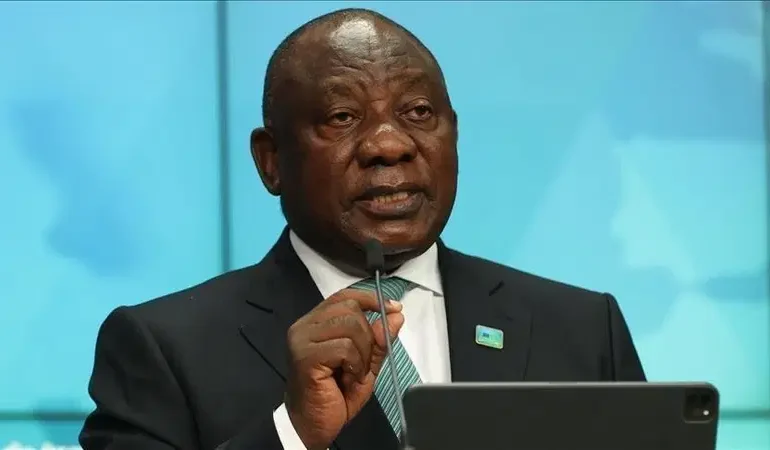
By Zuleihat Owuiye, Mamos Nigeria
South African President Cyril Ramaphosa has ruled out stepping down and confirmed he will take legal action to block renewed impeachment proceedings linked to the 2020 cash heist at his Phala Phala farm.
In a televised address on Monday 11th May 2026, the 73-year-old president said he would challenge the findings of an independent panel that concluded he “may have committed” serious violations and misconduct. The panel’s report is now set to be referred to an impeachment committee after a ruling by South Africa’s Constitutional Court last week.
Ramaphosa said the court’s decision gave no legal basis for his removal from office and that resigning would legitimize what he described as a flawed process.
The controversy stems from a break-in at Ramaphosa’s luxury Phala Phala farmhouse in Limpopo province in February 2020. According to the president, thieves broke into the property and stole a large sum of foreign currency that had been hidden in furniture.
The incident only became public in 2022 when former State Security Agency chief Arthur Fraser filed a criminal complaint. Fraser alleged that Ramaphosa had failed to report the theft to police and tax authorities and accused him of orchestrating a cover-up, including the abduction and questioning of the suspects.
Ramaphosa has acknowledged the burglary but denied any wrongdoing. He said the money came from the sale of 20 buffalo for $580,000 and was declared. He also said he reported the break-in to the police and that the matter was being handled through legal channels. He has repeatedly denied Fraser’s claims that he ordered the abduction of the thieves.
In 2022, an independent panel appointed by Parliament found that Ramaphosa “may have committed” serious violations of the constitution and anti-corruption laws in connection with the incident. The panel said there was prima facie evidence that he had breached the Executive Ethics Code and that he may have violated sections of the Prevention and Combating of Corrupt Activities Act.
At the time, Parliament, which was controlled by Ramaphosa’s African National Congress, voted against launching formal impeachment proceedings. The vote effectively shelved the matter.
The case resurfaced after the Economic Freedom Fighters, a left-wing opposition party led by Julius Malema, filed a complaint challenging Parliament’s decision. Last week, the Constitutional Court ruled that the panel’s report had been improperly dismissed and ordered that it be referred to an impeachment committee for further consideration.
The court’s ruling does not mean Ramaphosa is guilty of any crime or that impeachment will proceed. It only means the report must now be properly considered by Parliament’s impeachment mechanism.
In his Monday address, Ramaphosa said he had been advised by legal counsel to seek a judicial review of the panel’s report. He argued that the panel had exceeded its mandate and made “grave errors of law and unfounded conclusions of fact.”
“There is nothing in Friday’s Constitutional Court ruling that justifies impeachment or my removal from office,” he said. “I therefore respectfully want to make it clear that I will not resign. If I did, it would give credence to the flawed parliamentary report.”
Ramaphosa also reiterated that he had no intention of interfering with the legal process and would cooperate fully with any lawful inquiry.
The revival of the Phala Phala case comes at a politically sensitive time for Ramaphosa and the ANC. The party has been losing support steadily since the 2019 general election due to slow economic growth, high unemployment, frequent power outages, and persistent allegations of corruption.
Municipal elections are scheduled for 4 November 2026, and the ANC is under pressure to demonstrate accountability and clean governance. Opposition parties, including the EFF and the Democratic Alliance, have used the Phala Phala scandal to argue that Ramaphosa’s anti-corruption platform is inconsistent.
The ANC has not yet issued an official position on the latest court ruling. In 2022, the party defended Ramaphosa and voted against impeachment, citing a lack of conclusive evidence and procedural concerns about the panel’s report. It remains unclear whether the party will take the same stance this time.
Under South Africa’s constitution, the President can be removed from office if Parliament finds him guilty of a serious violation of the constitution or the law, serious misconduct, or inability to perform the functions of office.
The referral of the panel’s report to an impeachment committee is the first formal step in that process. The committee will need to decide whether there is sufficient grounds to proceed with a full impeachment inquiry. If it does, the matter would go before the National Assembly for a vote. Removing a president requires a two-thirds majority.
Legal experts say the process could take months and may be delayed further by Ramaphosa’s planned legal review of the panel’s findings. If the court grants a review, the impeachment process could be paused until the review is concluded.
Cyril Ramaphosa rose to prominence as a trade union leader and chief negotiator for the ANC during South Africa’s transition from apartheid in the early 1990s. He left politics briefly to become a successful businessman before returning as Deputy President in 2014 and President in 2018.
He has positioned himself as a reformer focused on fighting corruption and restoring confidence in state institutions after the Zuma administration. The Phala Phala scandal has been one of the most significant challenges to that reputation.
Ramaphosa has consistently denied any attempt to hide the theft or obstruct justice. He has said the incident was handled poorly from a communications standpoint but that he acted within the law.
Reactions to the court ruling and Ramaphosa’s response have been mixed. Supporters argue that the president is being targeted for political reasons and that the panel’s report was flawed. Critics say the case raises legitimate questions about transparency and the rule of law that must be answered in Parliament.
Civil society groups have called for the process to be allowed to proceed without political interference, emphasizing that accountability should apply equally to all public officials regardless of rank.
The Phala Phala case is not just about one incident. It has become a test case for how South Africa handles allegations of executive misconduct and whether Parliament can act independently when the President is implicated.
For Ramaphosa, the outcome will affect both his political future and his legacy. For the ANC, it will shape how voters judge the party’s commitment to anti-corruption ahead of the November elections.