Nigeria: Lawyer questions constitutional basis of Tinubu and Shettima’s simultaneous absence from Nigeria

By Zuleihat Owuiye, Nigeria
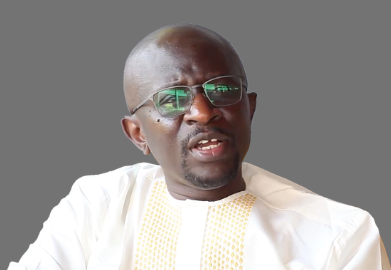
Human rights lawyer Inibehe Effiong has raised constitutional questions over the simultaneous absence of President Bola Tinubu and Vice President Kashim Shettima from Nigeria.
Effiong made the comments during an appearance on Channels Television’s The Morning Brief, where he discussed the constitutional provisions governing the president’s absence from the country.
Tinubu has been outside Nigeria since August 30, when he travelled to London for what the Presidency described as a working vacation. The Presidency later announced that the President had extended his stay by a few days and was expected to return to Nigeria at the weekend.
Shettima, meanwhile, left Nigeria on September 20 to represent Tinubu and lead the Nigerian delegation to the 81st United Nations General Assembly in New York. He is expected to deliver Nigeria’s national statement and participate in high-level meetings and bilateral engagements during the UNGA week.
Effiong argued that Section 145 of the 1999 Constitution sets out a procedure for the transfer of presidential functions when the President proceeds on vacation or is otherwise unable to perform the duties of his office.
According to the lawyer, the provision requires the President to transmit a written declaration to the President of the Senate and the Speaker of the House of Representatives.
He said that, under the constitutional provision, the Vice President would then perform the functions of President as Acting President until the President communicates that he is available to resume his duties.
Effiong further pointed to the 21-day provision contained in Section 145. The Constitution states that if the President is unable or fails to transmit the required written declaration within 21 days, the National Assembly shall, through a simple majority in each chamber, mandate the Vice President to perform the functions of President as Acting President.
The lawyer argued that more than 21 days had passed since Tinubu left Nigeria and questioned whether the constitutional procedure had been followed.
He described the situation as a serious constitutional issue and called on the National Assembly to examine the matter.
Effiong also argued that certain presidential responsibilities cannot simply be delegated without following the constitutional mechanism for an Acting President.
The debate has emerged at a time when both Tinubu and Shettima are outside Nigeria, with the Vice President currently representing the country at the UN General Assembly.
Former Vice President Atiku Abubakar has also questioned the situation, asking whether a written declaration required under Section 145 was transmitted to the leadership of the National Assembly. He called on the Presidency to clarify whether such a document exists.
The Presidency, however, has maintained that government activities have continued normally despite Tinubu’s absence.
In announcing the extension of the President’s vacation, Special Adviser to the President on Information and Strategy Bayo Onanuga said Tinubu remained in contact with officials in Nigeria and continued to direct government affairs while abroad. The Presidency also said that Secretary to the Government of the Federation, George Akume, would continue representing the President at some official engagements while Shettima is in New York.
The Federal Government has separately defended Shettima’s participation at the UN General Assembly.
In a statement issued by the Minister of Information and National Orientation, Mohammed Idris, the government said Tinubu had given Shettima a full mandate to represent him and Nigeria at the gathering.
According to the Federal Government, Shettima’s activities in New York include Nigeria’s national statement, high-level diplomatic meetings and engagements concerning issues such as peace and security, economic development, climate action and international cooperation. The government said the decision for Shettima to represent the President was neither unusual nor a reduction in Nigeria’s diplomatic standing.
The Presidency has also rejected suggestions that governance has been disrupted because Tinubu and Shettima are both temporarily outside the country.
The constitutional debate therefore centres on whether the requirements of Section 145 have been satisfied and, specifically, whether the appropriate written communication was transmitted to the National Assembly.
Section 145 itself provides the formal mechanism for presidential vacations and periods when the President is unable to discharge the functions of office. It also sets out what happens if the required declaration is not transmitted within 21 days.
As the debate continues, clarification from the Presidency and the National Assembly on whether the required communication was transmitted, and when, would address the central factual question being raised by critics.
The controversy comes as Shettima continues Nigeria’s representation at the 81st UN General Assembly, while Tinubu is expected to return to Nigeria at the weekend.