Nigeria: Ghana mourns highlife legend Ebo Taylor

By Zuleihat Owuiye, Nigeria
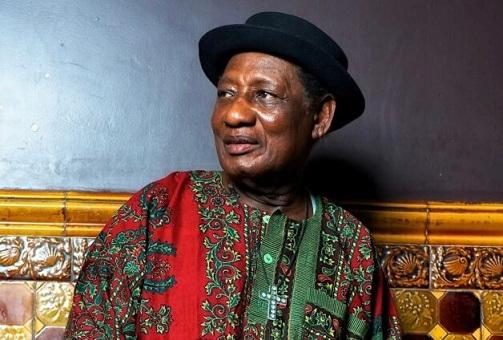
Legendary Ghanaian guitarist, composer and producer Ebo Taylor will be laid to rest on Saturday, August 1, 2026, in his hometown of Saltpond.
The family of the highlife and Afrobeat icon announced that the final funeral rites will take place over three days, beginning with a private laying-in-state on Friday, July 31. His burial service will be held on Saturday, August 1 at the Wesley Methodist Church in Saltpond, followed by a thanksgiving service and final rites at Victoria Park, Saltpond on Sunday, August 2.
The announcement was made by the Nsɔna Ebusua of McCarthy Hill, Cape Coast and Saltpond, represented by Nsɔna Ebusuapanyin Nana Asobo II, Obaahemaa Nana Saakoa, and Obaapanyin Baaba Koufie, together with the Ebo Taylor family.
Ebo Taylor passed away on February 7, 2026, at Saltpond Hospital at the age of 90. The Musicians Union of Ghana, MUSIGA, confirmed his death.
His passing came with a deep sense of poignancy. It happened just one day after the launch of the maiden Ebo Taylor Festival, an event created to celebrate his life and music. It was also barely a month after he marked his 90th birthday on January 6, 2026.
For many in Ghana’s music community, the timing felt like both a celebration and a farewell. The festival was meant to be the start of a new chapter of honoring his legacy. Instead, it became one of the last public acknowledgments of a man who had given more than six decades to African music
Born Deroy Taylor in Cape Coast on January 6, 1936, Ebo Taylor grew up at a time when Ghanaian music was finding its own voice after independence. He started his career playing with bands such as the Stargazers and the Broadway Dance Band. Those early years gave him a foundation in dance band highlife, the sound that dominated Ghana in the 1950s and 60s.
In the 1960s, Taylor traveled to London. There, he crossed paths with and worked alongside Afrobeat pioneer Fela Kuti. That experience broadened his musical language and exposed him to new ways of blending African rhythms with jazz, funk and soul.
When he returned to Ghana, Taylor became one of the most sought-after minds behind the scenes. As a producer, arranger and bandleader, he shaped the sound of many of Ghana’s biggest names. He worked with and produced for artists including Pat Thomas and C.K. Mann, helping to define what Ghanaian highlife would sound like for generations.
His guitar playing was instantly recognizable — sharp, melodic, and deeply rhythmic. But it was his skill as an arranger that set him apart. He had an ear for horns, for percussion, for the way a song could make people dance while still carrying a story
While Taylor was already a legend in Ghana, the 21st century brought his music to an entirely new audience around the world.
International reissues of his albums introduced his work to younger listeners in Europe, America and Asia. Producers and DJs began sampling his tracks. Music critics called him one of Africa’s most influential guitarists and composers.
That renewed interest led to a late-career resurgence. Taylor released a series of acclaimed albums that were recorded when he was already in his 80s. Among his most celebrated works are _Love and Death_, _Appia Kwa Bridge_ and _Yen Ara_. These albums fused traditional Ghanaian highlife with Afrobeat, jazz, funk and soul in a way that felt both timeless and modern.
He showed no signs of slowing down. In 2025, at age 89, he released _Ebo Taylor JID022_, proving that his creativity was still sharp. He continued to perform live well into his late 80s, often to sold-out crowds who came to see a master at work.
Through it all, Taylor remained rooted in Ghana. He never stopped identifying as a highlife musician first, even as the world labeled him an Afrobeat pioneer. That fusion — Ghanaian melodies with global grooves — became his signature and his gift to African music
Ebo Taylor’s influence goes beyond the records he made. He helped train musicians, arranged hits that are still played on radio today, and created a template for how African music could travel without losing its identity.
For younger Ghanaian artists, he was proof that you could be local and global at the same time. For international audiences, he was a gateway into the richness of West African music.
His death marks the end of an era. But the music remains. From dance halls in Accra to clubs in London, New York and Tokyo, his songs continue to move people.
As Saltpond prepares to host his final rites, tributes have poured in from across Ghana and the diaspora. Musicians, fans, and cultural leaders describe him as a giant whose work put Ghanaian music on the world map.
The three-day funeral programme is expected to draw family, friends, fellow musicians and fans who want to pay their last respects to a man who gave his life to sound.
Ghana has lost one of its greatest musical architects. But in every guitar riff, horn line and highlife rhythm that follows, Ebo Taylor’s spirit will keep playing.