Nigeria: Diplomatic tension after killing of Ghanaian migrant in South Africa

By Zuleihat Owuiye, Nigeria
A diplomatic disagreement between Ghana and South Africa has drawn international attention after the BBC reported on the killing of a Ghanaian migrant in South Africa, prompting high-level exchanges between the two countries’ foreign affairs ministers.
The report, covered by GhanaWeb on Friday, July 3, 2026, focused on how the incident has strained relations and raised fresh concerns about the safety of Ghanaians living in South Africa amid ongoing xenophobic tensions
According to the BBC’s account referenced by GhanaWeb, a Ghanaian migrant was killed in South Africa under circumstances that have not yet been fully detailed by South African authorities. The death has become a flashpoint, with Ghanaian officials calling for a transparent investigation and accountability.
While the BBC did not publish graphic details in the excerpt shared by GhanaWeb, the coverage emphasized that the killing occurred at a time when anti-foreigner sentiment in parts of South Africa remains elevated. Several African migrant communities have reported increased harassment and sporadic violence in recent months.
For Ghana, the death of one of its citizens abroad has triggered official diplomatic action. The government in Accra is seeking clarity from Pretoria on what happened, how the case is being handled by police, and what steps will be taken to prevent similar incidents.
The diplomatic engagement has been led on both sides by their respective foreign affairs heads.
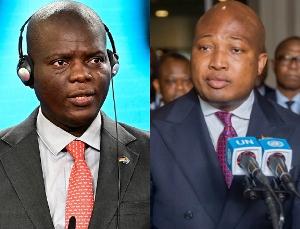
South Africa’s Minister of International Relations and Cooperation, Ronald Lamola, has been in contact with Ghana’s Minister for Foreign Affairs, Samuel Okudzeto Ablakwa. An image shared alongside the report showed the two ministers, underscoring the seriousness with which both governments are treating the matter.
Ghana’s side has stressed the need for protection of its nationals. Accra is reportedly pressing Pretoria to ensure that the investigation is thorough, that suspects are identified and prosecuted, and that the Ghanaian community in South Africa receives stronger security assurances.
South Africa, for its part, has reiterated its commitment to the rule of law and to protecting all residents, including foreign nationals. The government has consistently stated that criminal violence is not state policy and that law enforcement agencies are expected to act without discrimination.
By describing the situation as a “diplomatic row,” the BBC has highlighted that this is more than a routine consular case. The language suggests tension between two countries that have historically maintained strong bilateral ties.
Ghana and South Africa share deep economic, cultural, and political links. Both are members of the African Union, and South Africa hosts one of the largest Ghanaian diaspora populations on the continent. Trade, education, and travel between the two countries are significant.
When a citizen is killed under contested circumstances, it tests those ties. The BBC’s framing signals to international audiences that Accra and Pretoria are not aligned in their initial public messaging, and that negotiations are underway to manage the fallout.
The incident comes as Ghana continues to monitor the welfare of its citizens in South Africa. In recent years, the Ghanaian government has issued travel advisories and engaged in dialogue with South African officials whenever reports of xenophobic attacks have surfaced.
Community groups representing Ghanaians in South Africa have also called for greater police presence in areas with high migrant populations, faster responses to complaints, and better communication from authorities when incidents occur.
For many families in Ghana, the safety of relatives working or studying in South Africa is a constant concern. Remittances, business networks, and educational opportunities keep the migration corridor active, but safety fears can quickly dampen confidence.
Diplomatic rows of this nature typically follow a pattern. First, the affected country summons or engages the host country’s envoy to demand information. Second, both sides hold bilateral talks to de-escalate public tension. Third, they agree on concrete steps, such as joint investigations, consular access, or community engagement programs.
In this case, the engagement between Minister Lamola and Minister Ablakwa suggests that the second stage is already underway. The image of the two ministers together indicates direct communication, which is often used to signal that both sides want to contain the issue before it damages broader relations.
Within Ghana, the story has generated concern and calls for government action. Citizens and civil society groups are urging Accra to be firm but diplomatic, ensuring justice for the deceased while protecting the interests of the thousands of Ghanaians who live and work in South Africa.
The case also revives memories of past incidents involving African migrants in South Africa, which have at times led to protests, retaliatory actions, and calls for boycotts. Government officials on both sides appear keen to avoid that escalation
The killing of the Ghanaian migrant is now a test of bilateral diplomacy. For South Africa, it is an opportunity to demonstrate that it can protect foreign nationals and uphold due process. For Ghana, it is a moment to show that it will advocate for its citizens abroad without rupturing a strategic partnership.
The BBC’s coverage has brought the issue to a global audience, increasing pressure for transparency and resolution. How quickly both governments move from public statements to concrete actions will likely determine whether this remains a contained diplomatic disagreement or develops into a longer-term strain.
For now, all eyes are on the ongoing engagement between Lamola and Ablakwa, and on what Pretoria’s next investigative and security steps will be.