Nigeria: Cardinal Onaiyekan tells presidency to show results, not words

By Zuleihat Owuiye, Nigeria
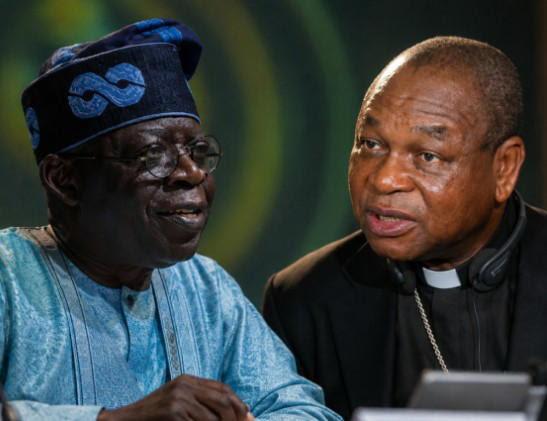
Archbishop Emeritus of Abuja, John Cardinal Onaiyekan, has said Catholic bishops are no longer interested in trading words with the Presidency.
Their focus, he said, is on whether the message they delivered to President Bola Tinubu will translate into better governance for Nigerians.
The statement came days after the Catholic Bishops’ Conference of Nigeria, CBCN, met with President Tinubu at the State House in Abuja on July 28, 2026. During that meeting, the bishops presented their assessment of the country’s economy, security, and the welfare of citizens.
The meeting was followed by public comments from government spokespersons, which appeared to challenge the bishops’ position. When asked to respond, Onaiyekan said there would be no counter-argument.
Speaking in an exclusive interview on Frontline_, a current affairs programme on Eagle 102.5 FM in Ilese-Ijebu, Ogun State, on August 3, 2026, Onaiyekan made his position clear.
“I would not even answer that question. We have no response for them,” he said. “We have spoken and the only response we are waiting for is whether it is affecting the way they are governing.”
He added that whatever government supporters or spokespersons choose to say is “their business, not mine.”
“For me, the social media is full of responses from Nigerian people and that, for me, is more than enough,” he said.
Onaiyekan explained that the audience with the President was requested by the CBCN and took months to secure.
“We didn’t go there to preach to him and try to see whether we could convert him to our Catholic Church,” he said. “We went there to share our views and thoughts about the government which he heads, hoping that our ideas will be taken into consideration.”
“We didn’t go there just as Catholic bishops pushing the Catholic agenda. No. We went there as people who have a spiritual mandate to speak to anybody in the name of God,” he said.
The document presented to the President, he noted, was prepared collectively by the bishops of Nigeria and passed unanimously.
“We don’t have any political ambitions for anything,” Onaiyekan said. “Even our church does not allow us to get engaged in party politics. So even if I wanted to be a presidential candidate, I can’t be.”
According to Onaiyekan, the core of the bishops’ message was simple: governance must be measured by how ordinary Nigerians are living, not just by economic statistics.
“If we admit that the role of government is the welfare of citizens, then we are not going to judge the success of our government on the basis of statistics from GDP, from the World Bank, or whatever,” he said. “The important thing is, how is the life of the Nigerian?”
“The terrible thing now is many of our young people that have struggled to finish university are all going around with their degrees. They are unable to get a job,” he said.
“Therefore, they can’t even think of marriage. They can’t think of starting a family. They can’t think of planning their life. That is terrible.”
He warned that without urgent action, Nigeria risks creating a generation of frustrated and hopeless young people.
“The only thing it takes is political will to do the right thing, to be honest in how government is run, to be just to everybody, to be fair,” he said.
While saying “we’re done talking” in the media, Onaiyekan expressed hope that the dialogue with government would continue behind closed doors.
“We are hoping that our meeting with the President or our dialogue with the government of Nigeria did not end with that visit,” he said.
He suggested that a broader engagement involving all religious leaders could help.
“It would be wonderful if we could organise a meeting with Mr. President and all the religious leaders in Nigeria, talking together,” he said. “We are hoping that somehow, he will invite us, not necessarily to meet him, but at least to open up a forum for us to give more information, more concerns that we have, than we could give in the ten minutes talk that we gave to him.”
He also called on other Christian leaders under CAN and Muslim leaders to speak up on issues affecting citizens. “Collective action is needed to address the country’s challenges,” he said.
The meeting between the CBCN and President Tinubu came at a time of growing public concern over inflation, insecurity, and the cost of living.
The bishops’ submission reportedly touched on economic hardship, security failures, and the need for inclusive governance.
The Presidency’s response after the meeting drew criticism from some quarters, with observers saying it missed the substance of the bishops’ concerns and focused instead on politics.
That is what prompted Onaiyekan’s latest remarks — a refusal to be drawn into a back-and-forth.
He acknowledged that government often cites macroeconomic improvements, but said those numbers mean little if life on the street is not getting better.
“Statistics are good,” he implied. “But can a young graduate feed himself? Can a mother afford medicine? Can a family sleep without fear? That is the real test.”
He said the bishops will continue to play their prophetic role — speaking truth to power without seeking power themselves.
The bishops have delivered their message. They are waiting to see policy changes, appointments, programs, and decisions that reflect the concerns raised.
Whether that leads to another meeting with the President remains to be seen. But Onaiyekan made it clear the Church is not looking for a media fight.
In a country where religious leaders often carry moral weight, the Cardinal’s words add to the pressure on government to show that it is listening — not just to bishops, but to the millions of Nigerians struggling daily.