Nigeria: As 2027 campaigns begin, Nigeria braces for a battle of ideas or a descent into hate

By Zuleihat Owuiye, Nigeria
With presidential and National Assembly campaigns officially underway, Nigeria is entering a political season that could define the country’s direction for the next four years. But as candidates hit the road, civil society groups, lawyers and observers are warning that the 2027 race risks being consumed by hate speech, ethnic profiling and violence instead of policy debate.
Campaigns for the presidential and National Assembly elections began on August 19, 2026, and will run until January 15, 2027, one day before the polls on January 16. Governorship and State House of Assembly campaigns will start on September 9 and end on February 5, ahead of voting on February
Last week, several presidential candidates signed the National Peace Accord facilitated by the National Peace Committee and the Kukah Centre. The accord commits signatories to peaceful and issue-based campaigns.
Those who signed include Peter Obi of the National Democratic Congress, NDC, Prince Adewole Adebayo of the SDP, and Omoyele Sowore of the AAC.
President Bola Tinubu, the APC candidate, was represented by Secretary to the Government of the Federation, George Akume. ADC candidate Atiku Abubakar was absent, with no explanation given.
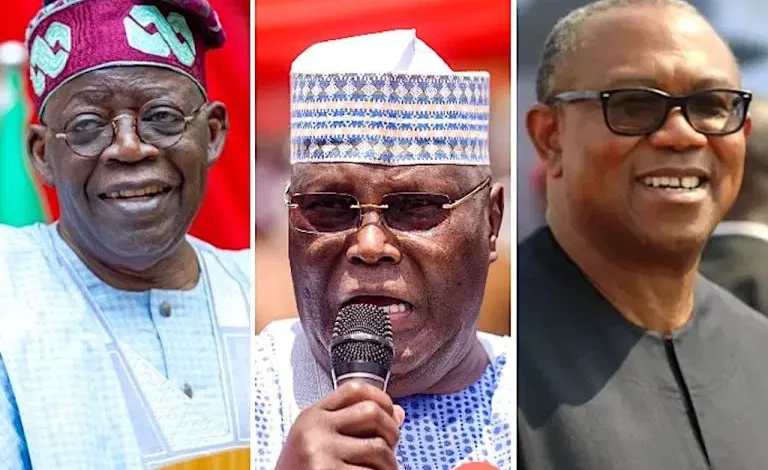
Tinubu, Atiku and Obi are widely seen as the frontrunners for the presidency. All three were also central figures in the contentious 2023 election, and early signs suggest 2027 could follow a similar pattern.
Legal battles are already in play. Atiku has filed a case questioning Tinubu’s qualifications, alleging discrepancies in NYSC records submitted to INEC. Obi is pursuing a separate case in the U.S. seeking the release of documents related to a drug-related forfeiture involving Tinubu years ago.
Stakeholders say the anxiety around 2027 is rooted in recent history. The 2011, 2015 and 2023 elections were all marked by rhetoric that took on ethnic, religious and regional tones.
The recent Osun governorship election offered a grim reminder: at least 40 people were reportedly killed in pre-election violence.
Dr. Joe Okei Odumakin, President of the Centre for Change, said her biggest concern is the weaponisation of social media.
“My greatest concern ahead of 2027 is political competition degenerating into hate speech, ethnic and religious profiling, misinformation and violence,” Odumakin said. “Elections should be a contest of ideas, policies, competence and character, not a war between ethnic or religious groups.”
She warned that false videos and inflammatory statements can spread in minutes. “Political leaders, their supporters, influencers and the media must exercise responsibility,” she added. “Attack policies, not ethnicities. Expose wrongdoing, but do not manufacture allegations.
Action Aid Nigeria Country Director, Dr. Andrew Mamedu, echoed those concerns. He said policians too often abandon real issues for ethnic hatred and religious division.
“My concern is when political competition is deliberately converted into ethnic hatred, religious division, hate speech and violence,” Mamedu said. “Nigeria has already paid too high a price for politics that tells citizens they should fear one another because of where they come from.”
He pointed to the Electoral Act 2026, which prohibits abusive language that can injure ethnic or religious feelings. He also called out social media, where “a false story or manipulated video can travel across the country in minutes.”
“Nigerians are dealing with hunger, unemployment, insecurity and rising costs,” Mamedu said. “The 2027 campaign should be a competition of ideas about how we solve those problems, not who can insult an opponent most effectively.
Not everyone shares the same level of alarm. Afenifere General Secretary, Chief Ademola Folarin, said Nigerians have seen this before.
“I have no fears at all. Nothing new is expected,” Folarin said. “Hate speech, ethnic profiling, are familiar incidents of our politics. The opposition, bereft of alternative ideas, will amplify personal attacks.”
Former presidential adviser Chief Akin Osuntokun was more blunt: “All the negative anticipation — hate speech, profiling, violence — come with the territory. Unfortunately, they are effective political instruments.”
The Yoruba Council of Elders urged caution. YCE Secretary Chief Oluwole Oladipo said, “We implore participants to avoid hate speech and any action that may dismember our great country. The 2027 elections should be free, fair and devoid of rigging.”
Human rights lawyer Idris Faro called for strict adherence to the law. “Election is not a do-or-die affair. Campaigns must be issue-based. Security agents must be firm and fair while discharging their duties.”
The risks are not just theoretical. Lawyer Toluwa Odekhe pointed to early warning signs, including online threats referencing ethnic violence in Lagos, and recent NHRC interventions naming public figures for dangerous statements.
INEC Chairman, Prof. Joash Amupitan, has listed hate speech, disinformation, localized violence, vote-buying and foreign interference as major threats to 2027.
Section 97 of the Electoral Act prohibits campaigning based on religion or ethnicity to promote or oppose a candidate. The Cybercrimes Act also criminalizes racist and xenophobic conduct online.
The National Broadcasting Commission has warned broadcasters against amplifying divisive content.
IPC Executive Director Lanre Arogundade said the Peace Accord is a good start, but enforcement matters. “We must be prepared to call out those who violate the letters and spirit of the peace agreement and campaign that violators be sanctioned,” he said.
Analyst Patrick Onoja listed four fears drawn from past elections: hate speech as a campaign tool, voting by tribe and religion instead of policy, a return of thuggery, and the spread of fake news and deepfakes.
“In 2023, fake INEC result sheets went viral hours before collation ended,” Onoja said. “With AI, we should expect fake audio and deepfakes 48 hours to the election.”
He urged regulators to sanction offenders from day one, and voters to demand manifestos and town halls.
At the heart of the debate is a simple question: will 2027 be about Nigeria’s problems, or about Nigeria’s divisions?
The issues are clear. Food prices, jobs, security, education and healthcare dominate everyday conversations. But as campaigns intensify, there is pressure to drag the conversation back to identity.
“No Nigerian should be threatened, profiled, intimidated or denied their democratic voice because of ethnicity, religion, gender, location or political preference,” Mamedu said.
Odumakin put it plainly: “After the election, we will still remain neighbours, colleagues, friends and fellow citizens.”
For now, the Peace Accord is signed. The campaigns have started. The courts are involved. And as Onoja noted, “If we allow hate speech, profiling, violence and mudslinging to define the campaigns, then regardless of who wins, Nigeria loses.”
The next five months will test whether politicians, parties, the media and voters can keep the focus on solutions — or whether 2027 becomes another cycle of bitterness.