Nigeria: A miracle in the rubble: 3-year-old boy rescued alive six days after Venezuela earthquakes

By Zuleihat Owuiye, Nigeria
A three-year-old boy has been rescued alive from collapsed buildings in Venezuela six days after twin earthquakes devastated the country, in what officials are calling a rare moment of hope amid widespread destruction.
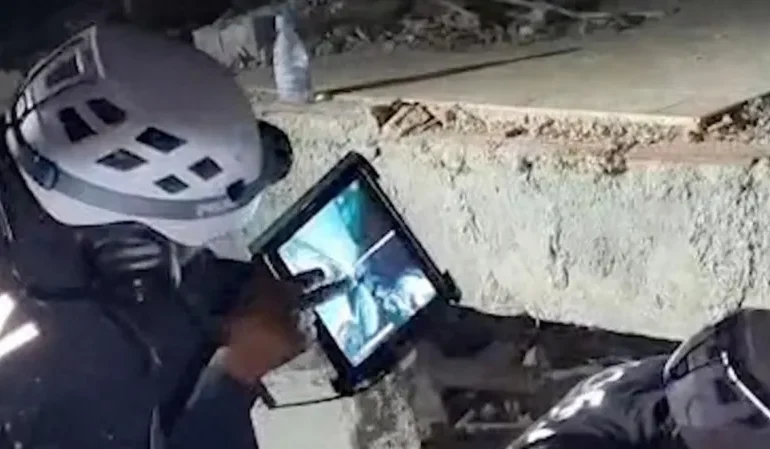
The child, identified as Klieber Morán by interim authorities, was pulled from rubble in La Guaira state on Tuesday by a Jordanian civil defence team. Video released by the team shows rescuers cheering as the boy is carried to safety.
Experts say the first 72 hours after an earthquake are critical for finding survivors trapped under debris. Klieber’s rescue on day six defied those expectations.
Jordanian rescuers said the boy was given first aid at the site, taken to a hospital in Caracas, and was in stable condition with good vital signs, according to Venezuelan Assembly President Jorge Rodríguez.
“His rescue shows there is still hope of continuing to find people alive,” Rodríguez said. He added that domestic and international search teams remain on the ground, combing through rubble with dogs, drones, and sound detectors.
La Guaira, on Venezuela’s central coast, is among the hardest-hit areas. Many residents have been digging with crowbars, pickaxes, and their bare hands while waiting for heavy equipment.
The twin quakes, measuring 7.2 and 7.5 magnitude, struck last week and have killed 1,943 people so far, with more than 10,000 injured. Tens of thousands are still unaccounted for.
An initial assessment of satellite data by NASA estimates that 58,870 buildings were probably damaged or destroyed across the affected region.
At a makeshift morgue in La Guaira’s port, families continue to wait for news of missing relatives. Wilker Molalla told AFP he was trying to identify the remains of his sister, her children, and his brother’s children. “There were 11 people in my household,” he said. “Only two of us survived because we were at work.”
The United Nations refugee agency, UNHCR, warned Tuesday that food shortages are widespread, basic services have broken down, and communications are largely cut in La Guaira.
“Community tensions are rising as access to assistance remains constrained,” the agency said.
Daniela Armas, an 18-year-old vendor injured when she fell from a motorbike during the quakes, described chaotic aid distribution. “Some supplies are being distributed but sometimes people nearly kill each other for food… it’s like a cockfight,” she told AFP.
The UNHCR said it needs $15 million immediately to provide protection, relief items, and temporary shelter for 30,000 earthquake-affected people over the next six months.
The World Health Organization, WHO, said health services are under “extreme pressure.” Spokesman Christian Lindmeier warned of an increased risk of outbreaks of measles and diphtheria because vaccination coverage was already low before the disaster.
International help is starting to reach the country. The UN said a 47-tonne shipment of humanitarian supplies arrived on Tuesday. It includes emergency health kits, supplies for safe childbirth, newborn care, and disease prevention.
Rescue teams from the United States, Mexico, and dozens of other countries are assisting Venezuelan crews. The UK’s International Search and Rescue team, UK ISAR, including seven London firefighters, is working alongside locals in Carabelleda, La Guaira.
Shelters have opened in La Guaira and other affected states, Jorge Rodríguez said.
As the death toll rises, some Venezuelans have accused the government of negligence in its earthquake response. Residents in devastated areas say they are largely fending for themselves, relying on neighbors and volunteers for food, water, and rescue efforts.
Officials say recovery and relief operations are underway, but the scale of damage has overwhelmed local capacity.
Klieber’s survival highlights how air pockets, cooler temperatures under rubble, and limited water can sometimes keep trapped people alive beyond the typical three-day window. Search teams now rely on acoustic devices to listen for movement or voices, and on trained dogs to detect scent beneath collapsed structures.
Across affected communities, families have begun burying those who have been recovered. Many others continue to wait, holding onto photographs and belongings in the hope that loved ones will be found.
The emotional toll is compounded by aftershocks that have frayed nerves and forced people to sleep outdoors, afraid to return to damaged homes.
With tens of thousands still missing and basic needs unmet, humanitarian agencies say the coming weeks will be critical. Access to clean water, medical care, and safe shelter will determine how many more lives are lost to secondary causes like disease and exposure.
For now, Klieber’s rescue has given a devastated nation a single, powerful image of survival.
“A moment of hope,” said Delcy Rodríguez, describing the toddler’s emergence from the rubble.