Nigeria: 24 companies now control nearly 75% of Nigeria’s stock market

By Zuleihat Owuiye, Nigeria
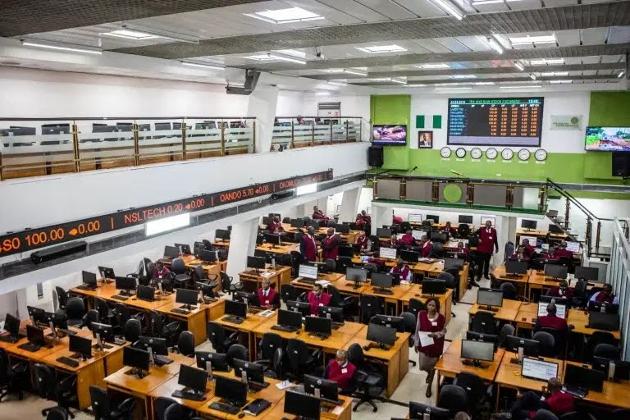
Just 24 companies now account for nearly three-quarters of the total value of all stocks on the Nigerian Exchange Limited, NGX, highlighting how concentrated market growth has become in 2026.
As of August 17, 2026, these top 24 firms have a combined market capitalisation of N117.01 trillion. That represents 74.8% of the NGX’s total equity market value of N156.517 trillion.
The NGX has surged this year. Overall market cap is up N57.141 trillion, or 57.5% year-to-date, from N99.376 trillion at the close of 2025. But analysts warn the rally has been driven largely by a handful of large-cap names.
The list spans banking, consumer goods, industrial goods, energy, consumer services and telecoms.
Banking stocks have been the biggest story of 2026, lifted by the sector’s recapitalisation exercise and improved investor confidence.
First Holdco tops the banks at N6.37 trillion, followed by Zenith Bank at N5.04 trillion and GTCO at N4.70 trillion. Stanbic IBTC is at N2.56 trillion, UBA at N1.99 trillion, Access Holdings at N1.45 trillion, Fidelity Bank at N1.38 trillion, Ecobank at N1.27 trillion, and Wema Bank at N1.16 trillion.
Dangote Cement leads the entire market with N17.15 trillion. BUA Cement follows at N13.69 trillion, and HBM Nigeria at N5.38 trillion. The three industrials alone account for more than N36 trillion.
BUA Foods is the largest consumer name at N13.69 trillion. Presco is next at N2.40 trillion, Nestle Nigeria at N2.22 trillion, Nigerian Breweries at N2.10 trillion, and International Breweries at N1.79 trillion. Analysts note the sector is benefiting from expectations of better operating conditions, though inflation and weak purchasing power remain risks.
Aradel Holdings and Seplat Energy both sit at N6.72 trillion. Geregu Power is at N2.06 trillion and Transcorp Power at N1.65 trillion.
The heavy concentration means movements in these 24 stocks can swing the entire All-Share Index.
David Adonri, CEO of Highcap Securities, said: “The 70.5 per cent concentration is significant because it shows that the headline market performance is being driven by a relatively small number of large companies. Investors, therefore need to look beyond the All-Share Index and examine individual stocks, earnings and valuations.”
He also cautioned against chasing stocks just because of high year-to-date returns: “Some companies have recorded extraordinary share-price appreciation without necessarily having the same level of improvement in fundamentals.”
An analyst at InvestData Consulting added that investors should watch balance-sheet strength, especially for companies with negative equity. Aradel Holdings, for example, has N10.88 trillion in assets but negative equity of N2.16 trillion. Oando has N7.89 trillion in assets and negative equity of N530.45 billion. “Negative shareholders’ equity is a red flag… Investors should examine whether the negative position is temporary, whether there is a credible recapitalisation or restructuring plan,” the analyst said.
Analysts currently rate 17 of 32 closely-watched stocks as Buy or Strong Buy, including Dangote Cement, GTCO, Zenith, Access, Aradel, and Nestle. 12 are rated Sell or Strong Sell, including BUA Cement, BUA Foods, First Holdco, and Presco. 3 are Neutral: Fidelity Bank, Ecobank, and NASCON.
The rally hasn’t lifted every stock. Year-to-date gainers include Zichis Agro Allied, up 1,744% to N18.35, and SCOA Nigeria, up 365% to N33.05. Losers include Sovereign Trust Insurance, down 50.39% to N1.89, and Ellah Lakes, down 41.52% to N8.10.
When ranked by total assets in Q2’26 instead of market cap, the picture changes. Ecobank leads with N49.15 trillion in assets, followed by First Holdco at N30.65 trillion. Aradel is third at N10.88 trillion. Analysts note that large assets don’t automatically mean profit or shareholder returns, especially if funded by debt.
The NGX’s N57 trillion gain in 2026 is real, but it is not broad-based. With 24 companies controlling almost 75% of market value, Nigeria’s stock market is now more dependent on large caps than ever.
For investors, the message is clear: look past the index. Earnings quality, debt levels, cash flow, and valuation matter more in a market where a few names set the tone.