From the Back Way to the Tatami: Edrisa Jallow’s Journey of Resilience

By Jarra Cham
Youth migration remains one of the major challenges confronting communities in The Gambia, with many young people leaving the country through irregular migration routes in search of opportunities and a better future.
Among those who embarked on that difficult journey was Edrisa Jallow, a young karate athlete whose life before migration was rooted in sport, discipline and the pursuit of excellence.
Before leaving the country, Jallow was an active member of the karate community. He trained regularly, competed in tournaments and showed considerable promise as an athlete. The dojo had become more than a place for physical training; it was where he developed discipline, resilience and a sense of ppurpose.
However, in 2023, while still a Grade 11 student, Jallow dropped out of school and left The Gambia through the irregular migration route.
For him, the decision was driven largely by the financial difficulties facing his family. He believed that travelling abroad would give him a chance to change his circumstances and provide greater support for those at home.
“If my mom could not provide, I have to,” he recalled.
What began as a journey in search of opportunity would instead become an ordeal lasting one year and ten months.
At one point, Jallow recalled walking approximately 420 kilometres alongside a companion who became an important source of support during the journey. The experience tested his physical and emotional endurance in ways he could hardly have imagined when he left home.
The journey took another difficult turn when he was intercepted in Algeria and eventually deported to Niger, where he spent three weeks in detention.
It was during that period that the dream that had taken him away from home appeared to collapse.
“That day, I lost all hopes of making home better,” he said. “It was so hard for me. It felt like everything had come to an end.”
Jallow had hoped that his family would be able to raise enough money to help him continue his journey. But the support they could provide was largely limited to meeting his immediate basic needs.
Eventually, with his journey having reached an uncertain and difficult point, the International Organisation for Migration (IOM) facilitated his return to The Gambia.
His return, however, would mark not the end of his story, but the beginning of another chapter.
Back home, Jallow would gradually find his way back to the dojo and to the discipline that had shaped him before migration. Karate, once part of the life he had left behind, would become part of his journey of rebuilding and rediscovering himself.
Returning Home
When Jallow returned home, his family was happy to have him back. However, his return also came with challenges.
While some people encouraged him, others viewed him as someone who had travelled but returned without achieving what he had hoped for.
“Some people saw me as a failure because I travelled and didn’t achieve what I hoped for,” he said.
Jallow, however, said he did not regret the experience.
“I have never regretted my decision to take up the journey because I have learned lessons that I would have never learned from the class.”
The economic circumstances that had pushed him to leave had also largely remained unchanged.
Through IOM’s reintegration programme, Jallow received barbering equipment and established a local salon, giving him a source of income as he tried to rebuild his life.
It was also during this period that he decided to return to karate.
Returning to the Dojo
Jallow had been practising Shotokan karate since 2015. He started the sport as a young boy and said it helped him direct his energy away from street conflict.
After returning home, his mother encouraged him to resume training. His passion for karate also played an important role in his decision.
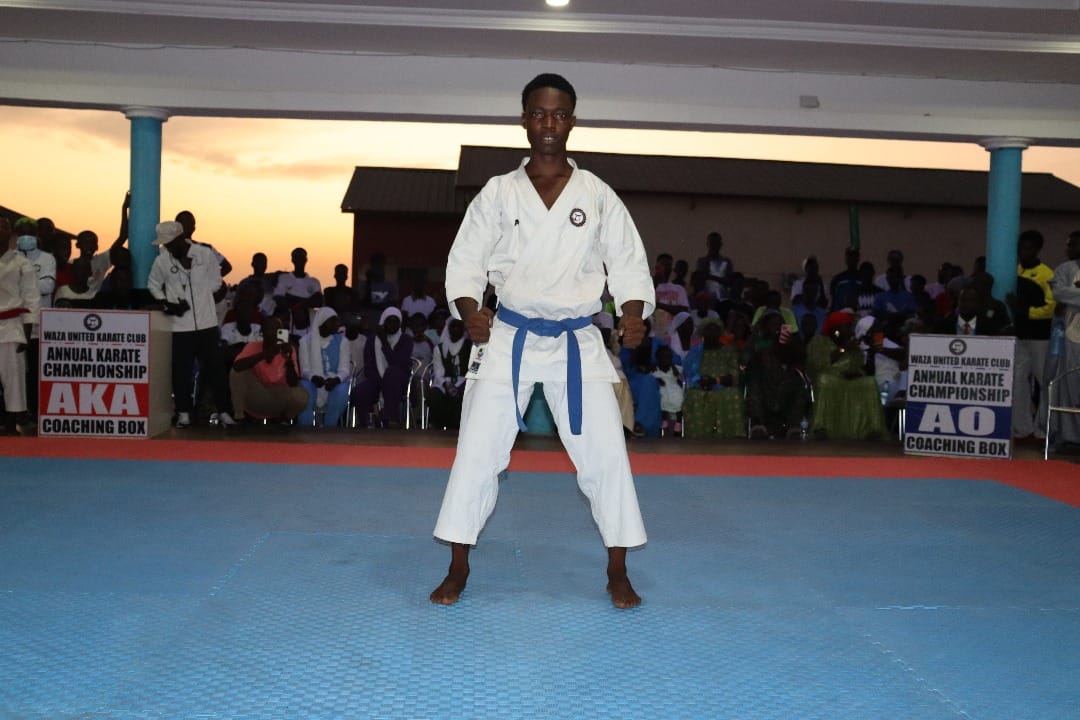
“My passion for karate inspired me to come back to the dojo,” he said. “When I walked back into the dojo and saw the tatami, I felt I have returned home.”
In an interview with Demba Y. Bah and Isatou Jallow, Jallow’s coach Ibrima Gomis, said Edrisa’s return to karate was important in helping him regain a sense of discipline, structure and purpose as he adjusted to life after migration.
Gomis brings a wealth of competitive experience to Waza United KarateClub. As a former Senegal national team athlete, he was ranked among the country’s top competitors, reaching second position nationally before retiring from active competition. He later joined Waza United as a trainer and member of the club’s technical team, bringing with him a new energy, experience and commitment to raising technical standards at the centre.
According to Gomis, Edrisa’s return to the dojo was significant not only for his development as an athlete but also for his adjustment to life back home.
“Karate gave him discipline and structure. Coming back to the sport was important because it helped him reconnect with something positive and familiar as he adjusted to life after migration,” Gomis said.
His experience, Gomis added, demonstrates how sport can provide young people with a supportive environment in which to rebuild confidence, develop discipline and pursue meaningful goals.
Returning to training, however, was not easy.
Being away from the dojo for almost two years, his physical condition had changed, while competition rules and aspects of kata had also evolved.
Therefore, returning to karate was another beginning. Regaining the level he had reached before leaving the country required patience, discipline and considerable effort.
Sensei Pateh Jobe, Jallow’s senior instructor at Waza United and the Technical Director of the Gambia Karate Federation (GKF), said the young athlete had to work particularly hard to recover his previous form.
“Before he went on the backway, he had more speed and was more focused. After coming back, his concentration was lower. He had to work twice as hard to get back to where he was,” Jobe said.
Jobe’s role in Jallow’s comeback extends beyond his responsibilities at Waza United. As the GKF Technical Director, he is currently at the centre of efforts to strengthen technical standards, improve quality and introduce greater structure and professionalism across karate in The Gambia. His work at the national level, alongside his responsibilities at Waza United, has placed him in a position to support athletes not only in returning to competition but also in developing to higher standards.
For Jallow, that environment provided the discipline and technical guidance he needed to rebuild his confidence and competitive form. His progress would eventually extend beyond simply returning to the dojo, setting the stage for a new chapter in his karate career.
From Comeback to Champion
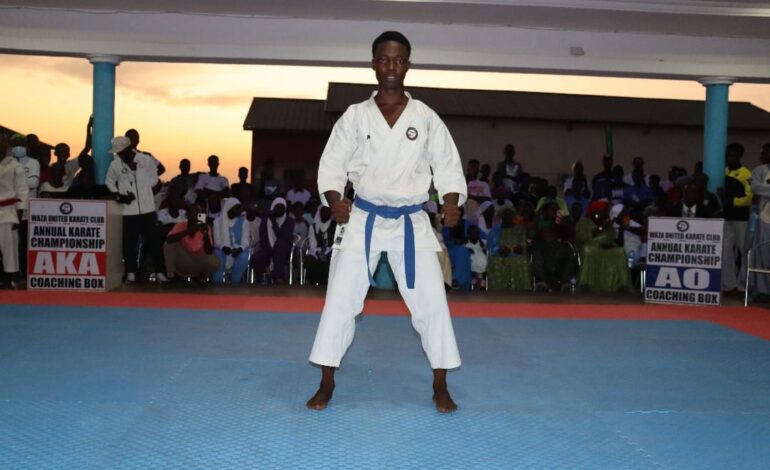
With less than a month of formal training after his return, Jallow entered his first major competition and delivered an impressive performance. This helped him regain his confidence he said. Months later, he also participated in an international karate championship hosted in the Gambia.
The competition attracted athletes from several countries and provided Jallow with his first major test since returning to the sport.
Despite his long absence from competition, Jallow remained confident.
“I may be in doubt before I compete, but once I step on the tatami, I know I would win,” he said.
He went on to win the competition.
For Jallow, the victory was more than a medal. It showed him that the time away had not taken away his ability to compete.
“For two years I didn’t train. I came back, trained for few months, and secured that trophy for Gambia,” he said. “That was the moment Gambia won.”
The victory boosted his confidence and encouraged him to continue with karate.
Since his return, Jallow has won several local tournaments and three important international competitions, including championships hosted in The Gambia, Senegal and Guinea.
His achievements have also helped him regain confidence after the difficult experience of migration.
Challenges Beyond the Tatami
Despite his progress, Jallow’s development as an athlete continues to face challenges.
Gambian karate athletes often have to depend on their own resources to cover training, equipment and the cost of travelling to competitions outside the country.
Awa Manneh, a fellow athlete from Waza United Karate Club, said more support is needed for athletes to compete internationally.
“We don’t have sponsors; we are doing it for ourselves,” she said. “People laugh when you say you do karate, they think it’s just about fighting. But karate opens your mind and makes you think fast. We need government and institutional help to reach the next level.”
Jobe also believes regular international competition is important for athletes who want to progress.
“In karate, if you don’t have international matches, your ranking cannot go up,” he explained. “Despite winning national championships, he must be supported to compete internationally if he is to reach his full potential.”
For Jallow, that opportunity has now taken him to Guinea.
A Different Journey
In August 2026, Jallow represented The Gambia at the 6th Edition of the Union of African Karate Federations (UFAK) Championship in Guinea, competing in the senior category.
He returned home with another gold medal.
The journey was different from the one he made three years ago.
This time, he was not travelling through the backway in search of opportunities abroad. He was travelling as a karate athlete, carrying the colours of The Gambia and competing on the international tatami.
“Right now, I have the intention that my journey will be one I have worked hard for and done legally,” Jallow said.
Three years ago, Jallow left The Gambia hoping that the journey would help him support his family.
Today, he has made another journey, but this time as an athlete with several local and international victories behind him.
His circumstances have not changed overnight, and the challenges facing him and many other young Gambians remain.
But Jallow has found a different path.
A path that has taken him from the backway, back to the dojo, and now onto the international tatami; returning home with another gold medal.