Nigeria: Kwankwaso Obi-led NDC government would reintroduce fuel subsidy through different approach

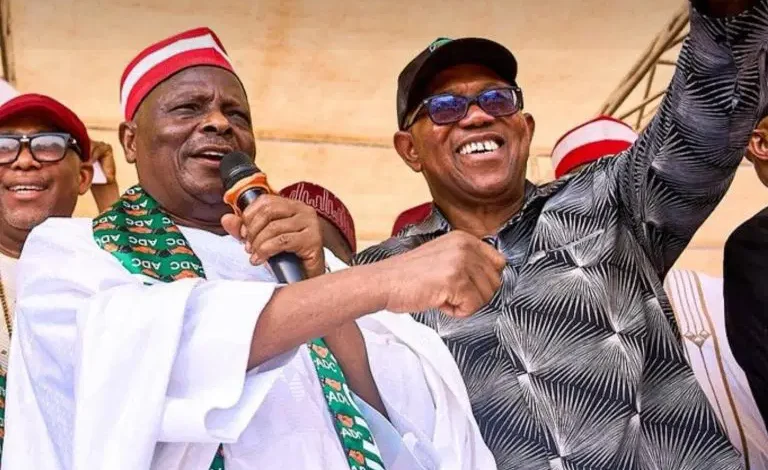
By Zuleihat Owuiye, Nigeria
Rabiu Kwankwaso, the vice-presidential candidate of the Nigeria Democratic Congress (NDC), has said an administration led by the party’s presidential candidate, Peter Obi, would reintroduce fuel subsidy if elected, but through a different approach.
Kwankwaso, a former governor of Kano State, made the statement during an interview with Arise News while discussing petrol pricing, domestic refining and the economic policies of President Bola Tinubu’s administration.
His comments come as fuel prices and the future of petrol subsidy remain major issues in political discussions ahead of the 2027 general election.
Asked whether the NDC would face difficulties campaigning in the North-West, where there have been calls for the return of petrol subsidy, Kwankwaso said the party had its own approach to making fuel more affordable.
Kwankwaso explained that one of the measures the NDC could pursue would be greater government investment in domestic refining. He argued that increasing Nigeria’s refining capacity could reduce the country’s dependence on imported petroleum products and help lower the price of petrol.
He said the government could establish additional refineries where necessary, noting that private investors had already demonstrated that large-scale refining projects were possible in Nigeria.
“Now, if individuals in this country could build refineries, I see no reason why government, under certain circumstances, will not build a refinery or refineries to the extent that we achieve the minimum requirement,” Kwankwaso said.
According to him, the objective would be to ensure that Nigerians can buy petrol at what he described as a reasonable price.
“What is the minimum requirement? The minimum requirement is for the people across the country to go to the filling stations and buy fuel at a reasonable price,” he said.
Kwankwaso added that an NDC administration would pursue measures aimed at reducing the cost of petroleum products.
“We, in the NDC, will do whatever it takes, really, to put the price of oil down,” he said.
The former Kano governor also criticised the manner in which the Tinubu administration removed the petrol subsidy shortly after taking office in May 2023.
Kwankwaso acknowledged that major presidential candidates in the 2023 election had supported the removal of the subsidy, but argued that the implementation under Tinubu was too immediate and was carried out without sufficient attention to its possible consequences.
He said the government should have considered the effects of the policy before implementing it.
“And not only he decided to remove the subsidy, what he did was to remove it immediately — in fact, day one — without looking at all those possible issues that were associated with that,” Kwankwaso said.
The removal of the subsidy in 2023 resulted in significant changes to petrol pricing and has remained a major subject of public debate. Supporters of subsidy removal have argued that the policy reduced the financial burden of subsidising petroleum consumption, while critics have raised concerns about its impact on household expenses, transportation costs and the wider cost of living.
Kwankwaso’s comments therefore place fuel affordability and domestic refining at the centre of the NDC’s proposed approach to the petrol market ahead of the 2027 election.
His proposal, as described in the interview, would involve using increased domestic refining capacity and government intervention to help make petrol available at lower or more reasonable prices rather than simply returning to the previous subsidy arrangement.
The NDC vice-presidential candidate did not provide details of the proposed subsidy mechanism, including how it would be funded, how much government would spend on it or what specific petrol price the party would seek to achieve.
For now, his remarks represent the party’s stated position as presented by him during the interview, with further details of the NDC’s economic programme expected to emerge as the 2027 election campaign develops.