Nigeria: Christian metal band demon hunter sues Netflix over ‘KPop Demon Hunters’ trademark dispute

By Zuleihat Owuiye, Nigeria
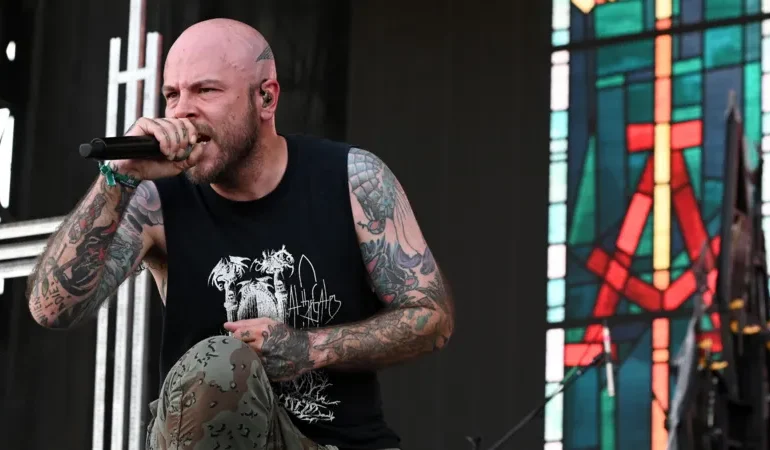
Christian metal band Demon Hunter has filed a trademark lawsuit against Netflix, claiming the streamer’s global hit _KPop Demon Hunters_ is causing widespread confusion with the band’s 25-year-old brand.
The lawsuit, filed Tuesday in the US by the band’s company Hyde Lane, names Netflix Studios and live promoter AEG Presents. Demon Hunter argues that Netflix’s plans for music releases, merchandise, and a planned world tour create “almost complete overlap” with the band’s own work in recorded music, live shows, and merch.
Demon Hunter, a five-piece band from Seattle, has been releasing “aggressive yet emotionally stirring heavy metal” since 2000. They have 12 albums, have toured internationally, and hold a registered trademark for “Demon Hunter” covering recorded music and merchandise since 2022. They have also applied for a trademark covering live music.
Netflix, meanwhile, registered “KPop Demon Hunters” for various merchandise categories, with additional applications pending. The animated film premiered in 2025 and follows fictional K-pop girl group HUNTR/X, who fight demons between world tours.
The band’s complaint says the similarity in names, combined with Netflix’s expansion into music and live events, is already causing problems.
Filed documents cite several examples. One person allegedly spent $500 on tickets to a Demon Hunter concert in New York, believing it was a family-friendly _KPop Demon Hunters_ show for young children. Another example mentions a television producer who contacted the band’s management assuming they were connected to the Netflix film. The filing also points to social media posts that incorrectly tag Demon Hunter when discussing the movie.
“Netflix’s use of KPop Demon Hunters for recorded music, live performances, and merchandise has caused, and is likely to continue to cause, substantial confusion among consumers,” the complaint states.
The contrast in scale is stark. Demon Hunter has about 350,000 monthly listeners on Spotify. The cast of _KPop Demon Hunters_ — voiced by performers Ejae, Audrey Nuna, and Rei Ami — has roughly 27 million monthly listeners on the same platform.
The Netflix project has grown far beyond the original animated film. _KPop Demon Hunters_ is now Netflix’s most-watched original title ever. It won Best Animated Film and Best Original Song for “Golden” at both the 2026 Golden Globes and the Oscars.
Since the film’s release, Netflix has rolled out music releases, a large merchandise line, and announced plans for a global live tour set to begin in 2027. A sequel is already in development, and reports suggest Netflix is also exploring a TV series and a stage musical based on the property.
Demon Hunter’s legal team argues that this expansion puts the band’s brand at risk.
“The brand that Hyde Lane has carefully built over the course of the past quarter century now faces an existential crisis, thereby necessitating the filing of this action and the granting of the requested relief from this Court,” the complaint reads
The band is asking the court to block Netflix from using “KPop Demon Hunters” in connection with recorded music, live performances, and merchandise. They are also seeking unspecified monetary damages.
The timing is notable. Demon Hunter released their 12th studio album in September 2025, and they continue to tour. Their brand has historically been built around Christian themes, heavy guitar work, and a dedicated rock and metal fanbase — a very different audience from the pop audience targeted by Netflix’s animated musical.
Netflix has not yet publicly responded to the lawsuit. The BBC has reached out to Demon Hunter, Netflix, and AEG Presents for comment.
Trademark law protects brands from consumer confusion, especially when two companies operate in related markets. Even if the full names are different — “Demon Hunter” vs “KPop Demon Hunters” — courts look at whether an average consumer could reasonably believe they come from the same source.
Netflix’s decision to move _KPop Demon Hunters_ into music and live touring is central to the band’s argument. For years, Demon Hunter’s name has appeared on concert posters, albums, and t-shirts. Now, Netflix is planning to put “KPop Demon Hunters” on similar products and on arena marquees.
The alleged mix-ups cited in the filing — ticket buyers, media inquiries, social media tags — are the kind of evidence courts consider when evaluating likelihood of confusion.
There is no question _KPop Demon Hunters_ has become a cultural phenomenon. What began as a 2025 animated film has turned into a multi-platform franchise in under a year. The soundtrack topped charts, the characters have millions of followers, and the planned 2027 tour is expected to be one of Netflix’s first major forays into live music at this scale.
A sequel is confirmed, and Netflix executives have hinted at further expansions. For the streamer, protecting the _KPop Demon Hunters_ brand is critical to that growth.
For Demon Hunter, the stakes are just as high. A quarter-century of touring and recording has built a loyal following, but the band argues that a global Netflix franchise using a nearly identical name could dilute or overshadow that work.
The case will now move through the courts. Netflix will have the opportunity to file a response and argue that the addition of “KPop” is enough to distinguish the brands, or that there is no real likelihood of confusion.
Until then, both parties will likely continue operating. Demon Hunter will keep touring and releasing music. Netflix will keep promoting _KPop Demon Hunters_ and preparing its tour.
The lawsuit highlights a growing challenge in entertainment: as streaming platforms expand into music, merch, and live events, they increasingly run into established brands with similar names.
Whether the court sides with the Seattle metal veterans or the global streaming giant, the outcome could set an important precedent for how far a title can stretch across industries before it collides with someone else’s trademark.