Nigeria: Pace of change has been slow, study finds

By Zuleihat Owuiye, Nigeria
Hollywood’s push for more diverse and inclusive storytelling has stalled, according to the latest annual report from Dr. Stacy L. Smith and the USC Annenberg Inclusion Initiative.
The study, “Inequality in 1,900 Popular Films,” analyzed the 100 top-grossing movies of 2025 for on-screen and behind-the-camera representation. After nearly 20 years of tracking the same data, the findings show small gains in some areas, backsliding in others, and many of the same patterns that have existed since 2007.
“While we’ve seen pockets of progress for women on screen, the pace of change has been slow,” Dr. Smith said in a statement. “Year after year, many of the same patterns remain. Incremental improvement is important, but after nearly two decades of research and advocacy, it is clear that the industry is content to wait for change to find them rather than pursuing solutions.
Women and girls made up just 33.6% of all speaking or named characters in 2025’s top 100 films. That’s barely up from 29.9% in 2007, despite women comprising just over 50% of the U.S. population.
There was some movement in lead roles. In 2025, 38 of the top 100 films had a female lead or co-lead. That’s up from 20 in 2007. But it’s a drop from the 19-year high of 55 films with female leads in 2024.
Of those 38 films with women leads, 15 featured a woman from an underrepresented racial or ethnic group. Only 3 had a female lead aged 45 or older.
Nonbinary representation remained minimal. The study coded only 4 nonbinary speaking or named characters across the entire sample.
LGBTQ+ representation also stayed flat. There were 36 LGBTQ+ speaking or named characters in 2025, less than 1% of all characters. That matches 2024’s numbers. Notably, not a single transgender character appeared in the 100 top films.
Characters with disabilities saw little change as well, making up 2.8% of characters, or 121 roles. That figure has hovered in the same range for years.
Only 9 of the 111 directors who helmed 2025’s top-grossing films were women. That’s down sharply from a record high of 16 women directors in 2024. The 2025 figure matches the number from 2008.
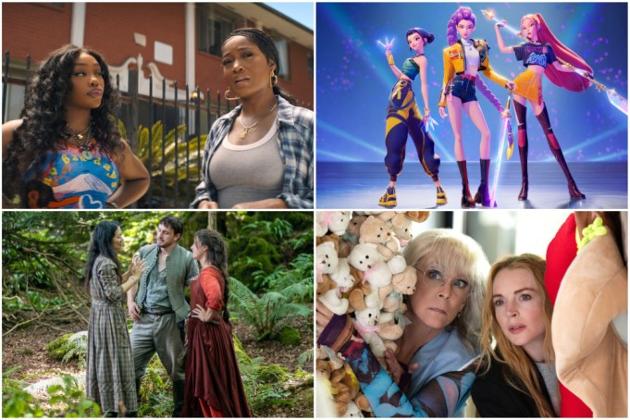
The women directors in 2025 were: Nisha Ganatra for _Freakier Friday_, Emma Tammi for _Five Nights at Freddy’s 2_, Domee Shi and Madeline Sharafian for _Elio_, Celine Song for _Materialists_, Jennifer Kaytin Robinson for _I Know What You Did Last Summer_, Maggie Kang for _KPop Demon Hunters_, Hikari for _Rental Family_, and Oscar winner Chloé Zhao for _Hamnet_.
The one area with clear growth was music. In 2007, there were zero women composers credited on top 100 films. In 2025, 10 women, or 8.5%, worked as composers.
On the positive side, 41.5% of all speaking or named characters in 2025 were from underrepresented racial or ethnic groups. That’s only the fourth time in 19 years that the figure reached proportional representation compared to the world’s population.
Since 2007, the percentage of white characters has dropped by 19.1%. The biggest gain has been for Asian characters, whose representation increased by 11.1% over the same period.
But the data also shows persistent exclusion. Thirty of the top 100 films had no Black characters at all. Forty-six had no Hispanic or Latino characters. Twenty-six had no Asian characters.
That means nearly half of Hollywood’s biggest movies in 2025 told stories without any Latino characters, and more than a quarter told stories without any Asian characters.
Dr. Smith said the 19 years of data show two things: change is possible, and it’s also fragile.
“This is not the first time this report has shown that meaningful gains are followed by a return to business as usual,” she said. “At a moment when the industry is redefining its future, inclusion can be part of the solution, not a casualty of contraction. The question is no longer whether the industry can change. It’s whether it will.”
The report arrives as studios are cutting costs and rethinking release strategies. Some advocates worry that diversity initiatives will be among the first things scaled back during contraction. Smith argues the opposite — that broader stories can help the industry reach broader audiences.
The top films of 2025 included a mix of genres and budgets, from animated hits like _KPop Demon Hunters_ and _Elio_, to horror sequels like _Five Nights at Freddy’s 2_, to adult dramas like _Hamnet_ and _Materialists_, to comedies like _Freakier Friday_ and _One of Them Days_.
Having women directors on projects across animation, horror, and drama suggests the talent pool exists. Yet the overall drop from 16 to 9 women directors in one year shows how quickly progress can erode without intentional hiring.
The same is true on screen. The fact that female lead numbers fell after a peak in 2024, while the overall percentage of female characters barely moved in two decades, points to a system that greenlights occasional “tentpole” female-led films but hasn’t changed the day-to-day makeup of casts.
The Annenberg Inclusion Initiative has been publishing this report since 2007. Its purpose is to give the industry hard data, not just anecdotes, about who gets to tell stories and who gets to be in them.
After 19 years, the throughline is clear: small improvements happen, but they are not locked in. Without policies, targets, and accountability, the industry tends to revert to previous patterns.
“Inclusion can be part of the solution,” Smith said. As studios look to the future, the data suggests the choice is theirs — to build on the pockets of progress, or to wait another decade and measure the same gaps again.