DARBOE EXPLAINS REASONS UDP QUIT COALITION TALKS

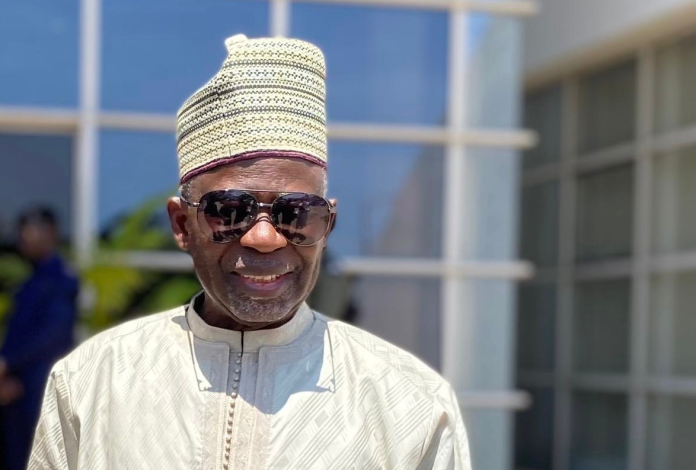
Main opposition United Democratic Party leader Ousainu Darboe yesterday confirmed that his party has left the ongoing opposition coalition talks initiated by the Coalition Task Force Mediation Committee, CTMC.
The veteran politician also gave reasons for the decision, and revealed that the UDP is now focused on a different coalition talks under the APEX Initiative.
Addressing a press conference at the UDP national office in Manjai, Darboe explained that his party’s decision to leave the discussions is because some aspects of the process are unacceptable to the party, as they are included to target himself, while other aspects are considered unconstitutional.
“We are not going to accept an eligibility criteria crafted by people we know in the past to have been calling for people to get together and fight UDP and NPP. You can see that from the word go, the so-called CTMC was crafting rules that are skewed against UDP and it was clear that those who claim to be mediators have themselves expressed their preferences for models of alliances even before they become members of the Committee. So from the beginning, we realised that there was something that is not completely right. However we remained in the talks optimistic that we could still engage in constructive discussions and come to a conclusion that suits this country. But after carefully considering all these issues, we are now formally pulling out of this coalition initiative and will continue to take part in the discussions by APEX, where we hope we will be able to reach a reasonable compromise among participants,” Darboe said.
Expounding on the reasons for UDP’s decision to quit, Darboe said one of the criteria outlined by the Committee which the UDP disagrees with, is “loyalty to the coalition” under which it is stated that a candidate must have no verifiable history of sabotaging coalition efforts.
“You can see clearly that this criteria is for Ousainu Darboe and no other person, because since 2017 those who oppose UDP have carried a message throughout the world that the Coalition 2016 failed because of UDP. So even if we agree to a candidate-led coalition, once we reach the selection stage, we will be asked questions like ‘didn’t you do that for Coalition 2016’ and we will again be reduced to explaining and debunking the false statements they have been making about us,” Darboe said.
He pointed out that the UDP also found the criteria that speak about grassroots connection as contradictory since it was stated that a candidate must show active engagement with party structures. This he said, exposes that even though they do not accept party- led model, the drafters realised that parties are so important in all these.
According to him, the UDP also opposes the Committee’s framework that calls for the establishment of a governing council upon assuming office, arguing that there is no need for a governing council when the constitution and other laws of The Gambia already determines how a government should be run, including the powers and discretions vested in a president.
“For us, accepting this will be contrary to public policy because we are agreeing to a government with rules that are not provided for by the constitution. The UDP cannot disregard the prevailing constitution, and we do not subscribe to political expediency at the expense of the nation’s interest or constitutionalism. Yes, governments abide by universally accepted traditions without having them legislated, but you cannot put out certain things for selection of a presidential candidate that you know will run contrary to the provisions of the constitution,” Darboe stated, arguing further that the risks involved in such are that once the person is elected he or she will turn to say the arrangement is not constitutionally backed and may not abide by it.
”That is not UDP. We don’t accept things and then renege on them,” Mr Darboe stated.
He said the UDP is also opposed to the power sharing model proposed during the discussions because most actors are primarily concerned about what position they would hold if the coalition gained victory.
According to Darboe, power sharing arrangement is important in every coalition discussion but it should not be anyone’s primary focus.
“For the majority of the proponents of this power sharing issue, their fundamental approach is ‘what is there for me.’ For UDP, we cannot even talk of sharing power when we have not set ourselves the task of addressing key issues such as unemployment, worsening economic situations, corruption and other things hampering our development. Power sharing should be the last bit,” he said.
The UDP leader further explained that some of the suggestions on power sharing include appointing coalition partners as governors or senior civil servants which he said run contrary to his party’s fundamental belief that governors and civil servants should keep away from the reach of political parties. “UDP wants holders of those positions to operate purely as civil servants not representatives of parties, or political appointees.
That was unacceptable to the UDP,” he averred.
Darboe said his party also opposes the voting process proposed by the Committee which he said puts UDP at the same level with CSOs and political movements that are only emerging in the ring with no grassroots, regional or national structures.
“We want an alliance built on fairness, honesty and one that reflects the democratic values of our country and recognises the strength of political parties. You cannot equate UDP which existed and invested for 30 years in the politics of this country, with structures, NAMs, mayors and councillors, with a CSO that is just registered in 2016 or a movement that was just formed in 2026. We are not demeaning anybody, but this is the reality. If any of these parties have the same strength as UDP, they will slap us if we tell them it has to be candidate-led. So it is only sensible for us to reject these proposals, because if we accept them, we will annihilate all our supporters. We are doing this not because we want to be president, but because we want a better Gambia and that can be achieved through a party- led alliance, and that alliance will address the ills of this country and fight corruption,” Darboe concluded.
Source: The Standard