Nigeria: Africa becomes world’s hunger capital as global food insecurity persists, UN report warns

By Zuleihat Owuiye, Nigeria
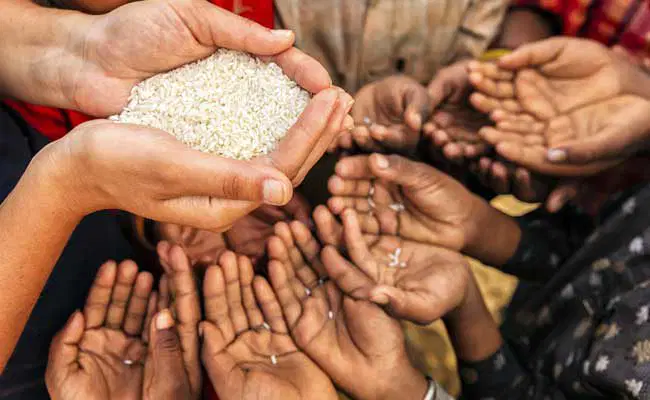
Global hunger fell for the third year in a row in 2026 but Africa has now overtaken Asia to become the region with the highest number of hungry people, according to a new United Nations report.
The 2026 edition of _The State of Food Security and Nutrition in the World_, SOFI, released on Wednesday by five UN agencies, shows that while the world is making slow progress, Africa is slipping deeper into crisis.
The report found that global hunger dropped to 7.8% of the world’s population in 2025, down from 8.1% in 2024. The number of hungry people worldwide fell by nearly 14 million compared to 2024, and by 43 million since 2022.
Africa is now home to about 309 million hungry people, surpassing Asia’s 292 million. That means one in every five Africans experienced hunger in 2025.
More than half of the continent’s population also faced moderate or severe food insecurity — meaning they lacked consistent access to enough food.
The agencies behind the report — FAO, IFAD, UNICEF, WFP and WHO — estimate that about 645 million people globally went hungry in 2025.
An estimated 2.1 billion people experienced moderate or severe food insecurity in 2025. Nearly 2.7 billion people, almost one in three globally, could not afford a healthy diet.
In Africa the situation is far worse. 66.6% of Africans could not afford a healthy diet in 2025. That means two out of every three people on the continent cannot regularly access fruits, vegetables, protein and other foods needed for good health.
Around 150 million children under five remain stunted — too short for their age due to chronic undernutrition. Only 30.8% of children aged 6 to 23 months receive a minimally diverse diet.
Anaemia among women of reproductive age continues to worsen globally. At the same time, adult obesity has risen steadily from 12.1% in 2012 to 16.2% in 2024, showing that poor diets are a problem in both low- and high-income countries.
UNICEF Executive Director Catherine Russell said the findings are a reminder that food systems are failing vulnerable families.
“Millions of children continue to suffer because nutrition, healthcare, education and social protection are not working together,” she said.
Because of these pressures, the report projects that between 510 million and 520 million people could still be hungry by 2030. That puts the Sustainable Development Goal of ending hunger by 2030 far out of reach at the current pace.
“The report shows that progress is possible, but we must move faster,” he said. “Ending hunger and making healthy diets affordable requires political commitment, sustained investment and enabling policies.”
WHO Director-General Dr Tedros Adhanom Ghebreyesus stressed that healthy food must not be a luxury.
“While we welcome the clear progress we have made in reducing hunger, a healthy diet still remains unaffordable for one in three people globally,” he said.
“Obesity is rising and progress on maternal and child nutrition is stalling. But we know what works: policies that make healthy food the easy choice, promoting breastfeeding, front-of-pack labelling, taxing unhealthy products, and protecting children from harmful marketing. Healthy diets are the foundation of health and must be within everyone’s reach.”
The findings resonate in Nigeria, where food prices have remained high despite government interventions.
For many households, the issue is not just lack of food, but lack of affordable, nutritious food. Staples are available, but protein, fruits and vegetables have become too expensive for average families
Africa’s population is growing fast, and so is the demand for food. At the same time, conflict, climate change and debt are limiting governments’ ability to invest in agriculture.
The UN report makes it clear: the world is winning the battle against hunger in some regions, but losing it in Africa.
As Qu Dongyu put it, “We have shown we can reduce hunger. Now we must choose to do it everywhere, for everyone.”