Nigeria: EFCC urges Africa to partner against Terrorist Financing without targeting legitimate charities

By Zuleihat Owuiye, Nigeria
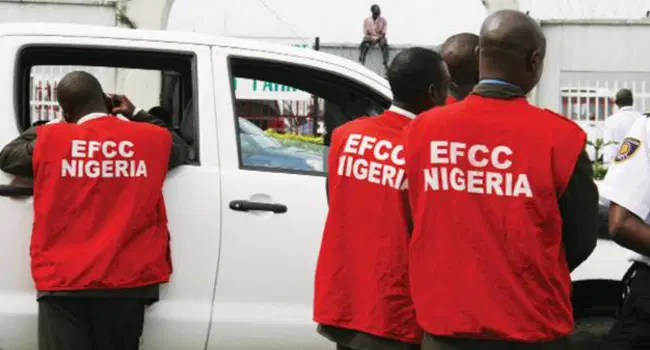
The Economic and Financial Crimes Commission (EFCC) is calling for stronger collaboration between governments, regulators, and civil society organisations across Africa to tackle terrorist financing, while ensuring legitimate charities are not caught in overly broad regulations.
EFCC Chairman, Mr. Olanipekun Olukoyede, made the call on Wednesday at the 3rd Africa High-Level Civil Society Anti-Money Laundering and Counter-Terrorist Financing (AML/CFT) Conference in Abuja. He was represented by the Director of the Special Control Unit Against Money Laundering, SCUML, Mr. Harry Erin.
Olukoyede said the implementation of Financial Action Task Force, FATF, Recommendation 8 must be targeted and risk-based.
The recommendation requires countries to identify non-profit organisations, NPOs, that are vulnerable to terrorist financing abuse. It does not, he stressed, mean placing restrictions on all CSOs.
“Effective implementation of FATF Recommendation 8 depends on trust — trust between regulators and civil society, trust between governments and development partners, built through transparency, consultation, information sharing and mutual respect,” he said.
He noted that terrorist financing, violent extremism, transnational organised crime, and illicit financial flows continue to threaten peace, democracy, and economic development across Africa. The response, he argued, should protect the majority of NPOs doing legitimate humanitarian and development work.
According to Olukoyede, Nigeria has made progress by adopting a collaborative, inter-agency approach.
The EFCC, SCUML, Nigerian Financial Intelligence Unit, NFIU, Office of the National Security Adviser, Corporate Affairs Commission, and civil society groups worked together to conduct a comprehensive terrorist financing risk assessment of the non-profit sector.
The assessment, he said, has helped regulators take a more focused approach to vulnerabilities. It also allows legitimate charities to operate without facing unnecessary regulatory burdens.
He added that Nigeria’s reforms show compliance with international standards should strengthen institutions and public confidence, not just satisfy global assessment requirements.
Executive Director of Spaces for Change, S4C, Mrs. Victoria Ibezim-Ohaeri, said the conference marked 10 years of advocacy for proper implementation of FATF Recommendation 8 in Nigeria.
She said sustained dialogue between civil society and regulators has turned a once tense relationship into a working partnership. The results include Nigeria’s standalone terrorist financing risk assessment for the non-profit sector and the removal of NPOs from the list of reporting entities under the Money Laundering (Prevention and Prohibition) Act.
Ibezim-Ohaeri noted that Nigeria’s experience has earned the country a compliant rating on FATF Recommendation 8. That model is now being shared with Ghana, The Gambia, Togo, and Burkina Faso.
She added that hosting the conference in Abuja shows Africa’s growing determination to lead conversations on financial integrity and develop solutions tailored to the continent.
Delivering the keynote, UN Special Rapporteur on the Promotion and Protection of Human Rights while Countering Terrorism, Professor Ben Saul, commended Nigeria for achieving FATF compliance in late 2025.
He said the 2023 revision of FATF Recommendation 8 made it clear that only NPOs within FATF’s definition should be subject to counter-terrorism financing measures. Regulation must be risk-based and proportionate, he said, and should not indiscriminately target the entire non-profit sector.
Saul warned that many countries still over-regulate CSOs with excessive registration, reporting, auditing, and monitoring requirements based on weak or outdated risk assessments.
“Such measures divert scarce resources from humanitarian work, peacebuilding, human rights advocacy and efforts to prevent violent extremism, while discouraging legitimate charitable activities,” he said.
He also acknowledged Nigeria’s National Counter-Terrorism Centre’s ambition to become a regional hub for counter-terrorism expertise, and pledged continued UN engagement on balancing security with human rights.
Board Chair of S4C, Mr. Samuel Diminas, highlighted the scale of the challenge, noting that about $88 billion is siphoned from Africa annually through illicit financial flows.
The message from Abuja was clear: fighting terrorist financing requires cooperation, data, and precision. Blanket restrictions on civil society will not work.
For Nigeria and other African countries, the path forward lies in building trust, sharing information, and applying global standards in ways that protect both security and the space for legitimate civil society work.