
Nigeria: ‘Embrace us, we’re just different’: Ghanaian vitiligo model Abigail Boateng speaks out against stigma

By Zuleihat Owuiye, Nigeria
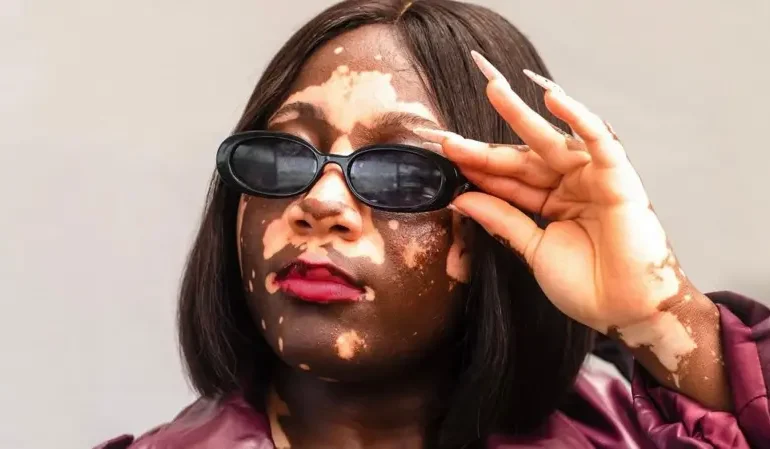
When Abigail Asabea Boateng, popularly known as Abigail Anderson, first noticed a small yellow patch on her lips at 16, she didn’t think much of it. Months later, the patches spread across her body and she began to lose most of her dark skin tone to vitiligo.
Today, the young Ghanaian model and activist is using her platform to challenge myths, push for diversity in fashion, and tell society one thing: “Embrace us, make society no look us different.”
Abigail is the first person in her family to have vitiligo, an autoimmune condition that causes loss of melanin, the pigment that gives colour to skin, hair, and eyes.
“For di beginning I neva really accept am,” she told BBC News Pidgin. “My papa also no understand am until di doctor explain give am say make dem accept my new reality.”
At first, she felt shy and lacked confidence because her skin looked different. But she soon decided to embrace it. “Vitiligo make I dey feel different to di extent say now I fit embrace di part of me wey I neva tink say I get; my confidence, social skills and oda tins,” she said.
In Ghana, many people are unfamiliar with vitiligo. Abigail says strangers often approach her with wrong ideas.
“Mostly pipo dey tink say I suffer burns; from gas, hot water or fire outbreak, wey dem go dey prescribe medicine for my skin,” she explained. “If I dey good mood, I dey listen to dem, if my mood no beta, I dey ignore dem.”
For some Ghanaians, the condition is mistaken for spiritual problems. But medically, vitiligo happens when the body’s immune system mistakenly attacks its own melanin cells. It is not contagious and cannot be passed from one person to another.
Enam Honya Heikeens, Director of Vitiligo Ghana and also living with the condition, says triggers can include genetics, emotional stress, sun exposure, and industrial chemicals like chlorine. While there is no cure yet, treatment options include light therapy, surgery, de-pigmentation, and other therapies recommended by a dermatologist.
Instead of hiding, Abigail turned to modelling. Inspired by Canadian vitiligo model and actress Winnie Harlow, she walked at least three runways last year and has picked up brand deals and fashion opportunities.
“As model, vitiligo carry me go places wey I neva tink say I fit enta,” she said. “If I be normal pesin, I no tink say I fit reach wia I dey and enta di places vitiligo carry me enta.”
She says the reaction after shows is often positive. “Pipo dey watch me well well wey I dey feel good say at least dem go know say pipo like me dey. Also, I wan represent for di industry internationally.”
Beyond modelling, Abigail is an activist. She uses social media to educate people about vitiligo and to break myths around the condition.
“Through our advocacy and activism, some pipo wit vitiligo comot for dia shell to embrace dia identity witout fear,” she said.
She is calling on fashion brands and designers to be intentional about inclusion. “No be evritime dem for dey use pipo wit full colour as models, sometimes dem for use pipo like us and also albinos and oda pipo wey be different, to promote diversity and inclusion.”
Her message to society is simple: “Make dem continue to embrace pipo like us, make dem no do and make us look so different, we be human beings like dem, only our colour be different.”
Vitiligo affects people of all races, men and women. It shows up as irregular white patches, often on the face, hands, legs, and joints.
Doctors say research is ongoing into why the immune system attacks melanin cells. While there’s no cure, support groups like Vitiligo Ghana are helping people manage the condition and fight stigma.
For Abigail, the journey from a 16-year-old girl confused by patches on her lips to an international runway model shows what happens when acceptance replaces shame.
“I developed vitiligo, but vitiligo never defined me,” she says. “It gave me confidence, it gave me a voice, and it carried me to to places i never imagined.”