Nigeria: Atiku emerges as ADC presidential candidate for 2027

By Zuleihat Owuiye, Nigeria
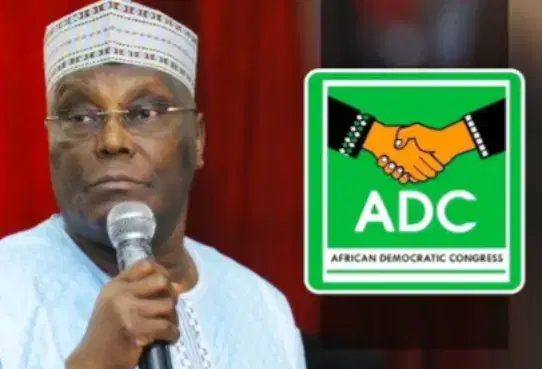
Former Vice President Atiku Abubakar has clinched the African Democratic Congress, ADC, presidential ticket for the 2027 general election after a landslide victory in the party’s primary election held on May 28, 2026.
The result, announced late Wednesday night via the ADC’s official X account, showed Atiku polling 1,855,787 votes to comfortably defeat former Minister of Transportation Rotimi Amaechi, who scored 509,397 votes, and businessman Mohammed Hayatu-Deen, who garnered 180,903 votes. A total of 2,546,457 votes were cast out of 3,113,599 eligible party members, giving Atiku a winning margin of 1,346,390 votes over Amaechi and 1,674,884 over Hayatu-Deen.
The outcome confirms Atiku as the standard-bearer of the ADC, a party positioning itself as a leading opposition platform ahead of the 2027 contest. It also marks another major step in Atiku’s long political career, having previously contested the presidency under the Peoples Democratic Party, PDP, in 2019 and 2023.
Addressing supporters at the Transcorp Hilton in Abuja shortly after his victory, Atiku framed the primary as proof that democracy remains vibrant within the ADC despite what he described as systematic attacks on opposition parties by the ruling All Progressives Congress, APC.
“We demonstrated that while democracy is being strangled and squashed by the ruling party and its oppressive and anti-democratic government, democracy is alive and well in the African Democratic Congress,” Atiku said.
He accused the APC-led administration of engineering leadership crises in opposition parties through alleged interference by security agencies, the Independent National Electoral Commission, INEC, and elements within the judiciary.
“As I speak, virtually all opposition political parties in the country have leadership crises engineered by the APC government, INEC and elements in the judiciary,” he said.
Atiku also condemned the continued detention of former Kaduna State governor Nasir El-Rufai, calling it part of a broader crackdown on opposition figures. “All because he is a leading opposition figure. This kind of cruelty must stop,” he declared.
He further alleged that anti-corruption agencies were being weaponized to coerce opposition politicians into defecting to the APC. “Under this government, once a person joins the APC, the harassment ceases and the charges against them magically disappear,” Atiku said.
Despite the decisive win, Atiku urged party members to avoid celebrating in a way that deepens divisions. He said the coalition needed unity to challenge the APC in 2027.
“This is not the time to celebrate. No one was defeated because we are one party and we all need to recognise the fierce urgency of the moment,” he said.
He made a direct appeal to his rivals in the primary, asking them to join his campaign.
“In particular, I invite Chief Chibuike Rotimi Amaechi and Alhaji Mohammed Hayatu-Deen to join me in this fight to save our democracy and our country,” Atiku added.
Atiku’s acceptance speech placed security and the economy at the heart of the ADC’s pitch to voters. He accused President Bola Tinubu’s administration of failing to contain rising insecurity, pointing to killings and attacks across the country, including the deaths of military personnel.
“Every region of this country is gripped by insecurity, the worst kind in our history,” he said.
He pledged that an ADC government would strengthen the armed forces, police, and intelligence agencies through mass recruitment, improved welfare, better training, and modern equipment.
On the economy, Atiku argued that official claims of growth do not match the reality faced by Nigerians. He said soaring prices and poverty have reached unprecedented levels.
“The poverty gripping our people is at a level that we have never seen in our history,” he said.
He criticized the government’s handling of fuel subsidy removal and rising public debt, alleging that borrowed funds were being diverted through contracts awarded without due process.
“The future of our younger generation is being mortgaged with no accountability,” Atiku declared.
Atiku also promised sweeping reforms in education and healthcare. He said over 20 million school-age children remain out of school under the current administration and vowed to introduce free and compulsory primary and secondary education if elected.
“This cannot be tolerated in the modern world where education is the surest path to decent employment, wealth creation, national development and enlightened citizenry,” he said.
On healthcare, Atiku accused the Federal Government of neglecting the sector, citing what he described as an allocation of only N30 million for capital expenditure in the Ministry of Health in the previous fiscal year.
“This is clearly a government that doesn’t care about the health of our people,” he said, promising major investments in primary healthcare and specialist medical facilities.
“Where the APC government offers meaningless renewed hope, we will provide renewed action to repair the damage that they have done to our economy and society in the last twelve years of misrule,” he said.
He warned against further interference in the ADC by the Presidency, INEC, or the judiciary, saying the party would resist any attempts to undermine the coalition.
“Enough is enough,” Atiku said, adding that any further attempt to subvert the opposition will be “fiercely resisted.
Atiku’s emergence as ADC candidate reshapes the opposition landscape ahead of 2027. With his national name recognition, extensive political network, and experience running presidential campaigns, he gives the ADC a credible challenger to the APC.
The scale of his victory — more than 1.8 million votes — also signals strong internal support within the party and suggests he was able to consolidate delegates across multiple states. Amaechi’s second-place finish with over 500,000 votes shows he retains significant influence, particularly in the South-South, while Hayatu-Deen’s showing indicates pockets of support among party members seeking a business-oriented candidate.
The next challenge for Atiku will be keeping the ADC coalition intact. He inherits a party that has struggled with internal divisions in the past and faces a ruling APC that has demonstrated skill in leveraging incumbency and state resources during elections.
If he can unite Amaechi, Hayatu-Deen, and other stakeholders behind a common platform, Atiku’s “renewed action” message could resonate with voters frustrated by inflation, insecurity, and unemployment.
For now, the ADC has its flagbearer. The campaign for 2027 has effectively begun, and Atiku has made clear he intends to run it as a referendum on the APC’s record and a promise of a different direction for Nigeria.