Nigeria: Wike backs George-Kelly, Chinda for Rivers 2027 governorship race


By Zuleihat Owuiye, Mamos Nigeria
Two close allies of Federal Capital Territory Minister Nyesom Wike are reportedly set to contest the Rivers State governorship in 2027 under different political parties, setting the stage for what could be one of the most closely watched political contests in the state in recent years.
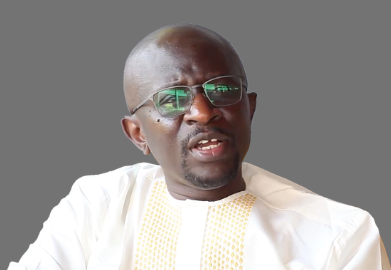
According to sources familiar with developments within Wike’s political camp, Alabo Dakorinama George-Kelly will run on the platform of the All Progressives Congress (APC), while Kingsley Chinda will represent the Peoples Democratic Party (PDP). Both men are key members of Wike’s Rainbow Coalition, a political structure he has maintained since leaving office as Rivers governor in 2023.
The coalition’s leadership is said to have advised the pair to obtain their respective party’s governorship nomination forms, with George-Kelly pursuing the APC ticket and Chinda the PDP ticket. The strategy appears designed to keep Wike’s influence firmly rooted in Rivers politics regardless of which party holds power at the national level in 2027.
George-Kelly’s public declaration has already sparked celebrations among Rivers stakeholders, who see it as confirmation that Wike has chosen him as the APC’s preferred aspirant ahead of the party primaries. If confirmed, the move would solidify Wike’s standing within the APC while also preserving his legacy within the PDP through Chinda’s candidacy.
No official confirmation has been made by Wike or either party yet, and both camps have remained cautious in their public statements. However, political observers in Port Harcourt say the development aligns with Wike’s long-standing approach of maintaining multiple options while consolidating his base.
Alabo Dakorinama George-Kelly is a prominent Rivers politician and former Commissioner for Works under Wike’s administration. Known for his role in delivering several infrastructure projects during Wike’s tenure, he has built a reputation as a technocrat with strong grassroots connections in the Kalabari axis of the state. His alignment with Wike has remained consistent since the 2023 elections, when Wike openly supported the APC’s presidential candidate.
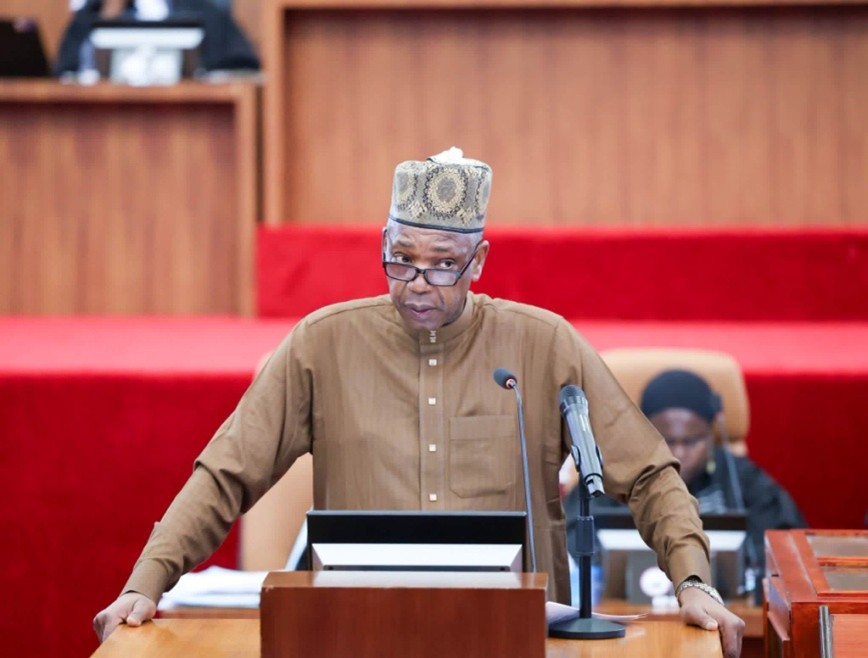
Kingsley Chinda, on the other hand, is a ranking member of the House of Representatives and currently serves as the Minority Leader. A lawyer by training, Chinda has been a vocal figure in the PDP and is widely regarded as one of the party’s most experienced legislators from Rivers. His selection signals Wike’s intent to retain influence within the PDP structure despite his current federal appointment under an APC-led government.
Both men bring distinct strengths to the table. George-Kelly offers administrative experience and proximity to Wike’s governance model, while Chinda carries legislative weight and a broad network within the PDP at the national level.
The Rainbow Coalition has operated as Wike’s informal political vehicle since 2023, bringing together loyalists across party lines. It was instrumental in shaping political alignments in Rivers during the last general election and has continued to function as a platform for decision-making within Wike’s camp.
By positioning one ally in the APC and another in the PDP, the coalition appears to be hedging its bets. The approach reflects a broader political calculation: maintaining relevance in Rivers irrespective of the outcome of the 2027 general elections at both state and federal levels. It also ensures that Wike remains a kingmaker in the state, with direct channels to whichever party eventually wins.
Political analysts note that this dual-track strategy is not new in Nigerian politics, but it is rarely executed so openly. The fact that both aspirants are being encouraged to purchase nomination forms simultaneously suggests a high level of coordination and confidence within Wike’s circle.
Rivers State has been a political battleground for decades, with power often shifting between the PDP and APC. The 2023 elections further complicated the landscape, as Wike, a PDP member, worked openly with the APC at the federal level while maintaining control of the PDP structure in Rivers.
If the report holds true, 2027 could see a direct contest between two Wike-backed candidates from opposing parties. That scenario would test the loyalty of Rivers voters and the strength of party structures on the ground. It would also raise questions about party discipline and the extent to which national party leadership can influence the state-level contest.
For the APC, George-Kelly’s candidacy could strengthen the party’s presence in a state where it has historically struggled to gain full dominance. Wike’s backing gives him immediate visibility and access to resources, which could make the APC primaries highly competitive.
For the PDP, Chinda’s emergence would represent continuity with the party’s traditional base in Rivers. However, it could also deepen internal divisions, especially among PDP members who have opposed Wike’s collaboration with the APC since 2023.
Following George-Kelly’s declaration, celebrations broke out in parts of Port Harcourt, particularly among youth groups and community leaders aligned with Wike. Many view the move as a sign of stability and continuity, given George-Kelly’s role in Wike’s infrastructure-driven administration.
At the same time, some PDP stakeholders have expressed concern that Chinda’s candidacy could further blur the lines between the PDP and APC in Rivers. They argue that the party needs a candidate with a clear identity separate from Wike’s influence if it hopes to rebuild its national standing.
On the APC side, there has been mixed reaction. While some party members welcome Wike’s support as a boost to the party’s chances in 2027, others worry about the potential for internal friction if George-Kelly is seen as an “imported” candidate backed by an external power bloc.
The coming months will be critical in determining whether this reported arrangement materializes. Both the APC and PDP are expected to begin internal consultations and zoning discussions ahead of their primaries, and Wike’s public stance will likely shape the direction of both contests.
For now, the lack of an official statement from Wike leaves room for speculation. But the coordinated movement by George-Kelly and Chinda suggests that planning is already underway behind the scenes.
As 2027 approaches, Rivers politics is once again poised to take center stage in Nigeria’s political narrative. Whether through George-Kelly, Chinda, or another contender, Wike’s influence remains the single most important variable in the state’s electoral equation.
The next few weeks will reveal whether this dual-candidate strategy is a masterstroke or a gamble that could fracture Wike’s political structure. For Rivers voters, it promises a contest that will be as much about personalities as it is about party platforms.