The Benin Coup

By Madi Jobateh
Here is a very sobering, powerful and instructive opinion piece on the December 7 coup in Benin by a journalist in that country.
Not only is this piece relevant for Benin itself but it is also relevant to and a wake up call for all leaders and governments in Africa. In this piece, it is obvious to realize that after having all sorts of constitutions and laws and mechanisms for good governance both at national and continental levels, at the end of the day what matters is the humility and integrity of leaders.
This article therefore sends a clear message that not only is there lot of arrogance and dishonesty in Africa’s leadership but also the AU and its regional blocs have failed to build, strengthen and protect the culture of democracy, good governance, and ethical leadership on the continent.
HAPPY READING!
——————————-
When the Arrogance of Power Itself Prepares Coups d’État
There are times in political life when words reveal more than actions. When those in power publicly declare, before elections, that “the next president is already known” or that “the members of parliament are practically chosen,” they are not simply expressing excessive confidence. They are creating, consciously or unconsciously, a stifling atmosphere that erodes the very foundations of democracy.
This way of speaking betrays, first and foremost, a contempt for the people: it reassures citizens that their vote is secondary, almost useless. It implies that the election is merely an administrative formality designed to confirm a pre-ordained scenario. This type of rhetoric is a slow poison: it numbs at first, then infuriates.
For it is also the sign of a power intoxicated by itself, convinced of its centrality, persuaded that legitimacy belongs to it by nature and not by the popular will. When this self-assurance transforms into the certainty that nothing can change the course of events, arrogance becomes a political doctrine. And when a power becomes intoxicated by this illusion of invincibility, it ceases to listen, to see, to sense the true mood of the nation.
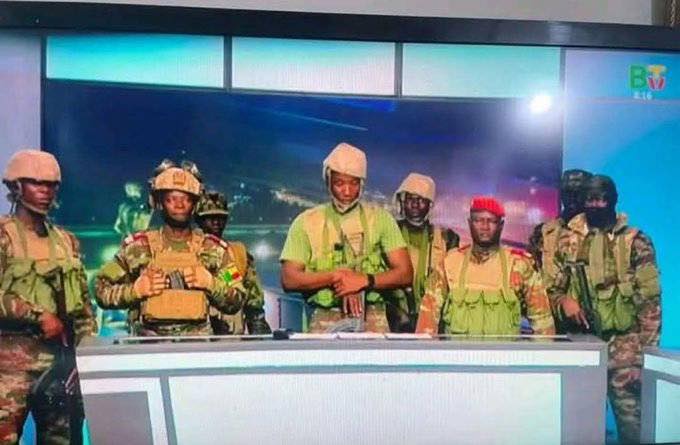
But the crux of the matter lies elsewhere: this behavior creates an environment conducive to instability. It is in this breeding ground of contempt and arrogance that the idea inevitably germinates that there is no longer an institutional way to correct these excesses. This is precisely what partly explains the attempted coup of December 7th.
When Arrogance Breeds Despair
Far from being a sudden eruption, a coup d’état always arises from a climate. And this climate is often shaped by the way those in power behave. When leaders seem to trivialize elections as an empty ritual, when they present political competition as a predetermined stage set, they send a dangerous message: the ballot box can no longer change anything.
Faced with this impression that the democratic process is locked down, some political, military, and civilian actors feel cornered. Not out of a taste for violence, but out of the idea—often illusory but deeply felt—that there are no longer any peaceful means to restore institutional balance.
Thus, the attempted coup of December 7th did not emerge from nothing. It was fostered by an accumulation of signs of closure, disdain, and political indifference. When a government gives the impression that a change of power is no longer possible, it is itself preparing the conditions for its own extreme challenge.
Democracy survives only when the people still believe in their own power.
An election is only valuable because it is open, unpredictable, and honest in both its conduct and its perception. The very idea that a government could announce the results prematurely destroys collective trust. And when a population no longer believes that its vote truly counts, institutions slip into a state of silent vulnerability.
Those in power often forget this simple truth:
It is not protest that creates coups. It is gridlock.
It is not the opposition that weakens a regime. It is the regime’s own arrogance.
December 7: A political warning, more than a military event
This attempted coup, whether clumsy or disorganized, is not simply the work of a few adventurers. It is a symptom. It reveals what happens when leaders confuse stability with entrenchment, authority with domination, legitimacy with eternity.
A power that announces the election results before the vote does not demonstrate strength. It reveals its own fragility. It provokes distrust, fuels frustration, and raises tensions. It creates precisely what it claims to fear: the erosion of the constitutional order.
Democracy is protected by humility, not by the assurance of victory.
A truly strong power is one that accepts the uncertainty of the popular verdict, that recognizes that its continuity is never a right but a possibility. Conversely, a power that proclaims its victory prematurely reveals to the world that it has begun to disconnect from reality.
And it is in these moments that impatient, frustrated forces, or those convinced they are acting to save what is essential, attempt the unthinkable.
December 7th will remain a stark reminder:
arrogance is not a political strategy—it’s a national security vulnerability.
And when those in power forget the people, chaos inevitably ensues.