NAWEC admits crisis, hints ‘long-term’ load shedding

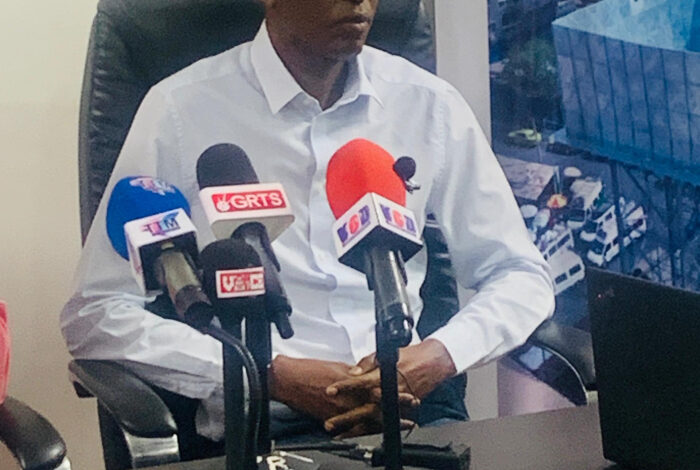
The National Water and Electricity Company (NAWEC), at a press conference, has told journalists that the recent electricity crisis in the country is the result of the United States and Israel’s war on the Islamic Republic of Iran, technical challenges, and disruption in the fuel supply chain.
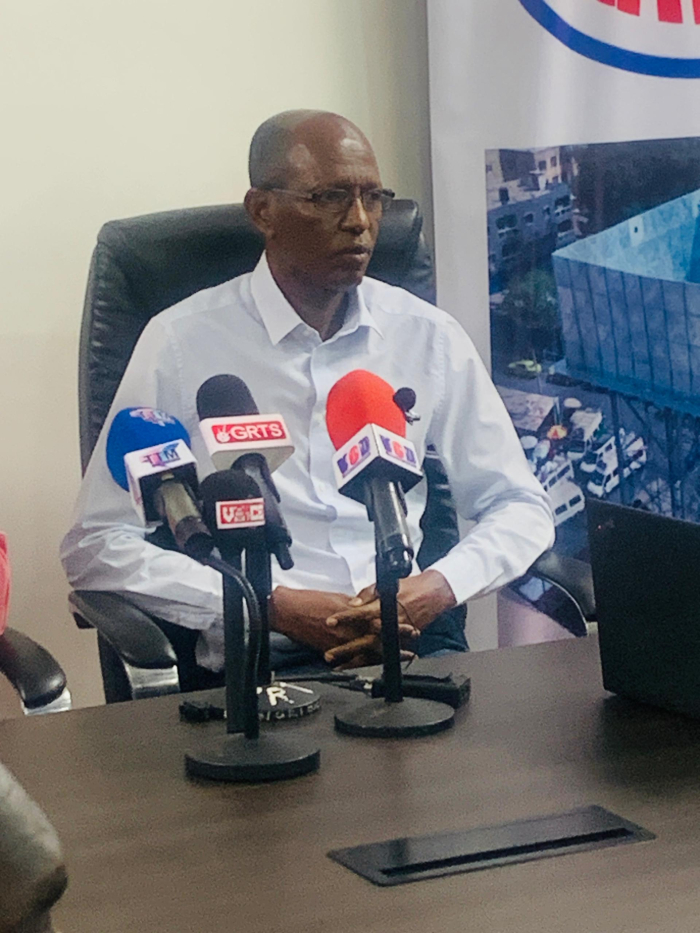
Mr. Gallo Saidy, the managing director of NAWEC, said the US-Israel war on Iran has affected all the utilities that are using heavy fuel. He said the load shedding that NAWEC published last week and implemented was due to some technical problems in terms of the power that is coming into the country.
“Our consumption demand was higher than what we are getting including even our local generation, so we had to load shed and that was why that was out there and is still out there and I can tell the public this is going to be a long-term load shedding that will be out there for the public to understand,” he said.
Mr. Saidy further told journalists that Gambian people should understand that NAWEC imports most of its electricity from outside. He said the country does not have a lot of resources.
Mr. Saidy said the only resources the country has are human beings.
“We have the West African Power Pool, we have the OMVG line and these are good things to have regionally. But the problem we are having today is not just a Gambia problem, it is not just our neighbours’ problem, it is a global problem and until there is certainty about that war (US-Israel war on Iran) let us not just be naive and expect that we can give you power whenever you want it,” NAWEC MD told journalists.
Sanna Gomez, NAWEC Operations and Planning manager, said NAWEC currently faces a capacity deficit as a result of several factors. He said NAWEC is facing challenges with the logistics of getting fuel on the ground.
“The current capacity that is available is around 78 megawatts. This includes our importation plus NAWEC’s own local generation,” he said.
Mr. Gomez said in the Greater Banjul area, NAWEC has about four power plants, putting that together with the power it imports from Senegal and Guinea, making it 78 megawatts.
Mr. Gomez further told the journalists that NAWEC’s available capacity is around 78 megawatts, but the peak demand is at 106 megawatts.
“Now, if you look at the two of them, they do not tally. One is more than the other. The demand is more than the available capacity. Out of the available capacity, about 52% of it is being imported. Meanwhile, 22 is actually our own local generation. And we have a deficit of up to 26 megawatts to remove from the system to stabilise the network. You leave it there, and we will all collapse. We will have a total blackout,” he said.
Mr. Gomez said they want to remove the 26 megawatt deficit that is what prompted them to come up with the load shedding roster to show that at least about seven to eight feeders will be removed just to make sure that the system or the network is stable.
Meanwhile, Mr. Sonko Ceesay, deputy managing director of NAWEC, said the company operates three power plants in Kotu, Brikama, with a solar plant in Jambur.
“The issue with the war in Iran is that it does not just have an impact on the price of fuel, but also it affects the supply chain in terms of getting spare parts back to The Gambia. So we are trying as much as possible to have as much materials here so that the ongoing maintenance can be accelerated,” he said.
Mr. Ceesay said there are other NAWEC engines that are currently going through maintenance, and he is hoping that within the next six weeks, some of the engines will come back to life.
“In Kotu, we have just received approval from our board to bring back G6 and also G8, which is an investment of almost more than D200 million,” he divulged.
Source: The Point