Assembly erupts over jail terms for unlicensed g/nut & cashew exporters

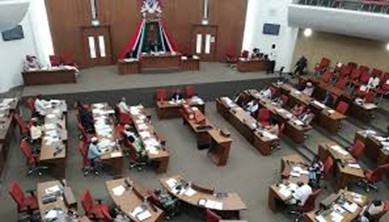
The National Assembly turned tense and emotional during the debate as lawmakers clashed over proposed jail terms and heavy fines for unlicensed groundnut and cashew trade under clause 47 of the National Food Security Corporation Bill 2025.
The debate began when Minister for Agriculture Dr Demba Sabally, introduced additions to the clause to attach penalties to offences already created in the Bill. Under the proposal, any person who imports or exports groundnut or cashew without a licence would face a fine of not less than D50,000 and not more than D5,000,000, or imprisonment of between two months and five years, or both. A licence holder who transfers that licence to another person would face a minimum fine of D1,000,000 or imprisonment of not less than two years and not more than five years, or both.
Dr Sabally told members the offence was already in the original bill but without punishment. He explained that leaving penalties to regulations would not work because regulations cannot impose imprisonment beyond one month or fines above D1,000. That, he said will be too trivial, arguing that stronger measures were necessary.
But the proposal quickly raised fears that ordinary farmers, especially those living along border communities, could be caught in the net.
Nominated member, Hon Kebba Lang Fofana, defended the punitive measures. He pointed to the scale of government investment in groundnut production, noting that at least D500 million is spent annually on fertiliser and certified seed subsidies. “What return are you getting for your investment?” he asked, arguing that subsidised groundnuts should not simply leave the country without control.
Member for Wulli East, Hon. Suwaibou Touray, questioned whether a farmer in Bolibana crossing into a nearby Senegalese village to sell a few bags of groundnut would be treated as an exporter and prosecuted. He asked whether Senegalese farmers bringing groundnuts into The Gambia because of better prices would be arrested under the same law.
Member for Kiang West, Hon. Lamin Ceesay warned that the wording was vague and too broad. He suggested the law should target agents and large traders rather than small-scale farmers.
He raised concerns about the ECOWAS protocol on the free movement of goods and services, cautioning against passing a law that could clash with regional commitments.
The minister further revealed that government has already spent D1.7 billion this season buying groundnuts at D38,000 per ton, while the world market price stands at about D22,000 per ton. He said the higher local price has attracted large volumes from across the border, placing pressure on the national budget. “We cannot throw our money like that,” he stressed.
Dr Sabally also cited a D35 million factory built at GGC, which requires at least 50,000 metric tons of groundnuts annually to operate viably. With current purchases at around 45,000 metric tons and national production estimated at roughly 80,000 metric tons, he warned that uncontrolled exports could undermine the factory’s sustainability.
In an effort to calm tensions, the minister proposed inserting a threshold so that penalties would apply only to quantities above a certain limit, suggesting one ton or possibly five tons. However, confusion over tons and bags showed how sensitive and complex the issue remains.
By the end of the debate, the Assembly remained divided; torn between protecting public funds and avoiding laws that could jail the very farmers the government says it is trying to support.
The bill was later considered with amendments.
Source: The Point