Nigeria: INEC urges police to speed up prosecution of campaign violence offenders

By Zuleihat Owuiye, Nigeria
The Independent National Electoral Commission (INEC) has called on the Nigeria Police Force to speed up investigations and forward completed case files involving political violence to enable the commission to prosecute electoral offenders ahead of the 2027 general elections.
INEC Chairman, Professor Joash Amupitan, made the appeal on Tuesday in Abuja during an interactive meeting organised by the Inspector-General of Police, Olatunji Rilwan Disu, with chairmen and secretaries of political parties.
The meeting, held at the Goodluck Ebele Jonathan Peace Conference Hall at the Police Force Headquarters, focused on promoting peaceful political activities before, during and after the 2027 elections.
Amupitan said prompt arrests, thorough investigations and timely submission of case files were necessary to ensure that those responsible for electoral violence faced the law.
He stressed that the commission wanted impunity to be decisively addressed before January, warning that political violence must not be allowed to undermine the country’s democratic process.
According to him, the Electoral Act 2026 introduced stronger legal measures to discourage electoral offences.
He specifically referred to Sections 96 and 97, which prohibit inflammatory campaign statements and the use of political thugs, private armed guards and masquerades at rallies.
The INEC chairman explained that individuals who violate the provisions could face fines of up to ₦5 million or 12 months’ imprisonment for initial offences, while political parties could be fined up to ₦10 million.
He also highlighted Section 148 of the Act, which empowers INEC to prosecute electoral offenders directly after receiving completed case files from the police.
Amupitan said this was why the commission was urging the police to ensure that investigations were concluded quickly and relevant documents forwarded without unnecessary delays.
He, however, clarified that INEC was not responsible for maintaining public order or making arrests, noting that the commission lacked the constitutional authority and operational capacity to perform such duties.
He pointed to Section 95 of the Electoral Act, which assigns responsibility for securing political rallies to the police.
Under the provision, Commissioners of Police in the 36 states and the Federal Capital Territory are expected to provide adequate security for political gatherings and processions, with assistance from the Nigeria Security and Civil Defence Corps and other federal security agencies.
Amupitan also reminded political parties of the requirement to formally notify the police about their rally locations and schedules. He said the details must also be submitted to INEC at least 10 days before the events.
He urged political leaders to stop seeking public support through intimidation and fear, encouraging them instead to build trust through honesty, integrity and transparency.
The INEC chairman described the coming elections as an important moment for Nigeria’s democracy, noting that preparations were already underway.
According to the timetable announced at the meeting, the presidential and National Assembly elections will take place on Saturday, January 16, 2027, while governorship and State Houses of Assembly elections are scheduled for Saturday, February 6, 2027.
The presidential and National Assembly elections are expected to cover 176,846 polling units across the country.
Amupitan also requested additional police security for designated mock polling centres and collation locations ahead of INEC’s mock accreditation and result transmission exercise scheduled for Saturday, November 28, 2026.
The exercise will take place across all 36 states and the FCT to test upgraded Bimodal Voter Accreditation System (BVAS) devices and automated validation procedures on the INEC Result Viewing Portal (IReV).
He disclosed that the commission was preparing for an election involving approximately 103.43 million verified registered voters, 57,000 newly procured BVAS devices and more than 1.41 million ad hoc personnel.
He said the scale of the exercise made closer cooperation between INEC and the police particularly important.
Among his requests was the full activation of the ICCES Tentacles framework down to the local government and ward levels.
The arrangement, he explained, would help ensure that rapid-response security teams were positioned close to areas considered vulnerable to violence, including difficult-to-reach and riverine communities.
He also called for stronger security around Registration Area Centres, polling units, collation centres and INEC offices throughout the election period, from the deployment of materials to the final announcement of results.
Amupitan further warned about the growing use of misinformation to influence electoral activities and discourage citizens from voting.
He identified fabricated security alerts, false reports and manipulated audio-visual materials as tactics increasingly being used to create fear and suppress voter turnout.
To address the problem, he proposed a real-time information-sharing arrangement between INEC’s Situation Room and the Police Force Headquarters.
He said the arrangement would allow both institutions to verify suspicious reports quickly and respond to false narratives before they spread widely.
The chairman also urged security personnel to remain professional and politically neutral, stressing that their presence at election venues should make voters feel safe rather than intimidated.
He commended the police for their role in off-cycle elections conducted since he assumed office in October 2025.
These included governorship elections in Anambra, Ekiti and Osun states, FCT Area Council elections and 16 legislative bye-elections.
According to him, the exercises demonstrated that early security planning, intelligence gathering and impartial conduct could help reduce electoral violence and disputes.
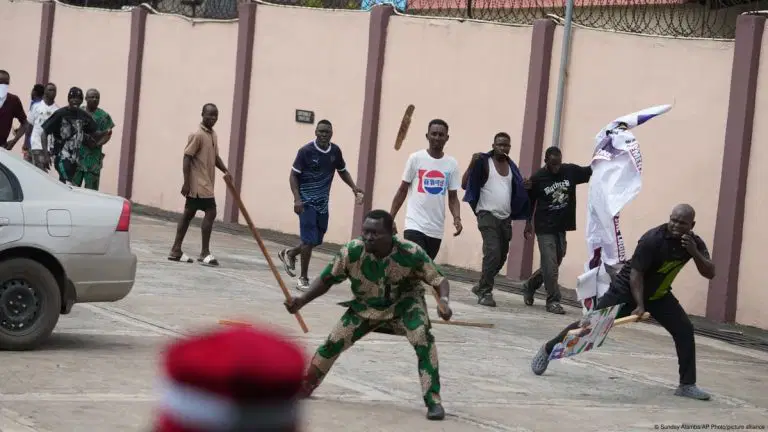
Speaking at the meeting, Inspector-General of Police Olatunji Rilwan Disu expressed concern over recent clashes between supporters of political parties, attacks on campaign venues and convoys, as well as the growing use of dangerous weapons during political activities.
He described the incidents as warning signs that required immediate attention before they developed into a wider national security challenge.
Disu maintained that the police would not tolerate political violence, regardless of the political party, candidate or influential individual involved.
He also insisted that the neutrality of the police in the electoral process was non-negotiable.
The IGP warned that individuals who finance, sponsor or organise political violence would face the same level of accountability as those who physically carry out the attacks.
He assured political parties and their supporters that the police would protect their right to organise lawful rallies, hold meetings and participate in democratic activities.
However, he warned that anyone involved in thuggery, intimidation, assault, the use of offensive weapons or other actions capable of disturbing public peace would face appropriate legal action.
Disu also reminded political party leaders that maintaining peace during elections was not solely the responsibility of the police.
He urged national chairmen to issue clear instructions against violence and ensure that members at all levels complied with them.
National secretaries were also asked to ensure that parties followed the required notification procedures, while youth leaders were encouraged to direct young people towards constructive political participation rather than expose them to manipulation.
The police chief explained that the meeting was designed to move beyond repeated calls for peaceful elections by assigning specific responsibilities to political parties and their leaders.
He disclosed that guidelines outlining expected conduct before, during and after the 2027 general elections had been presented to the participants.
Political parties were also expected to sign a Joint Peace and Security Undertaking at the end of the meeting.
Disu cautioned that the agreement must not become another document signed for publicity and subsequently ignored.
He further urged political parties and their supporters to exercise restraint after election results are announced, warning against retaliatory attacks or violence.
According to him, any party dissatisfied with an election outcome should seek redress through the courts and other lawful judicial processes.
He concluded with a reminder that political ambitions should never come at the expense of human lives, stressing that no political position was worth the death of a Nigerian.