
Nigeria: South Korea mourns legendary actors

By Zuleihat Owuiye, Nigeria
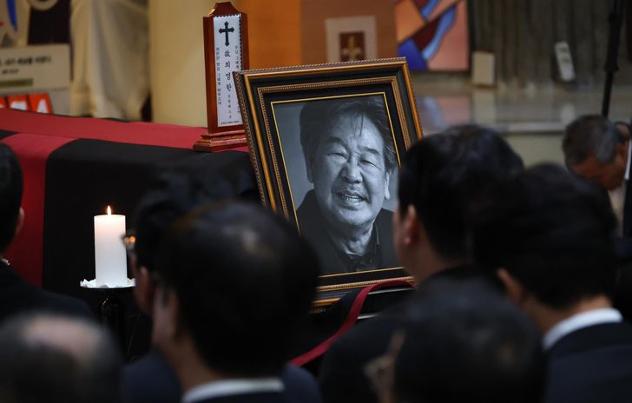
South Korea’s entertainment industry is mourning the loss of three legendary actors, Choi Bool-am, Lee Soon-jae and Ahn Sung-ki, whose decades-long careers helped shape the country’s television and film industries.
The deaths of the veteran performers within less than a year have left a significant gap in Korean entertainment, with generations of fans remembering them for their memorable performances and contributions to popular culture.
Often regarded as national treasures, the three actors earned widespread admiration through their work across television dramas, films and theatre. Beyond their professional achievements, they became familiar faces in Korean households, connecting with audiences through characters that reflected family life, social values and everyday experiences.
Although their careers followed different paths, each left a lasting impression on the industry and the people who watched them.
Veteran actor Choi Bool-am, widely recognised for portraying a dependable and compassionate father figure, died at a hospital in western Seoul on October 29, 2026. He was 87.
Choi became a household name through his role as Chief Inspector Park Young-han in MBC’s crime drama Chief Inspector, which aired from 1971 to 1989.
His portrayal of an upright detective who pursued justice while showing compassion towards ordinary people earned him widespread recognition and established him as a familiar presence on Korean television.
He further strengthened his reputation through the long-running MBC series Country Diaries, which aired from 1980 to 2002. In the programme, he played Kim, the respected head of a farming family in a rural village.
The drama ran for 22 years, allowing audiences to follow the lives of its characters across generations. Choi’s performance helped establish his image as an ideal father figure, earning the affection of viewers who saw aspects of their own families reflected in his character.
Beyond acting, Choi became known for introducing audiences to Korea’s culinary traditions. From 2011, he hosted KBS’ food documentary Korean Cuisine and Dining for 14 years, travelling across the country to explore regional dishes and the stories of the people behind them.
His gentle presentation style made the programme a platform for celebrating local culture, food and the memories associated with traditional Korean life.
Choi stepped down from the show after undergoing surgery in 2025. Despite undergoing rehabilitation, his health reportedly deteriorated in the months leading up to his death.
Lee Soon-jae, another highly respected figure in Korean entertainment, died on November 25, 2025, at the age of 91. His career spanned nearly seven decades, covering theatre, television and film.
He began his acting journey in 1956 with the stage production Beyond the Horizon and gradually established himself as one of the country’s most versatile performers.
Lee became widely recognised for his roles in productions such as the television drama What on Earth is Love, which aired from 1991 to 1992, and the popular sitcom High Kick!, broadcast from 2006 to 2007.
His ability to move between serious dramatic roles and comedy helped him appeal to audiences of different ages.
Older viewers remembered him for his performances in historical dramas and family-oriented series, while younger fans discovered his humorous side through sitcoms that allowed him to display his comic timing and willingness to make fun of his own image.
Even in his later years, Lee remained committed to his profession, accepting demanding theatre roles, including the title character in William Shakespeare’s King Lear.
In 2024, he won the grand prize at the KBS Drama Awards for his performance in Dog Knows Everything. The achievement made him the oldest recipient of the broadcaster’s highest acting honour.
His continued dedication demonstrated his passion for the craft and earned him admiration across generations.
Ahn Sung-ki, regarded as one of South Korea’s most influential film actors, died on January 5, 2026, at the age of 74.
His career began in childhood when he appeared in the 1957 film Twilight Train. Over the following decades, he featured in more than 170 films, becoming a central figure in the development of Korean cinema.
His extensive filmography includes acclaimed productions such as Mandala (1981), Whale Hunting (1984), Two Cops (1993), The Taebaek Mountains (1994), Nowhere to Hide (1999) and Silmido (2003).
Ahn’s career reflected the transformation of South Korean cinema, from its earlier productions to the increasingly ambitious films that attracted international attention.
He worked with prominent directors and fellow actors across different generations, demonstrating versatility through a wide range of characters and stories.
While Lee maintained a strong presence in theatre and television, Ahn became closely associated with the growth of Korean filmmaking. His body of work helped define an important period in the country’s cinematic history.
His death marked the loss of a performer whose career had closely followed the evolution of the industry over several decades.
Although Choi, Lee and Ahn built different professional identities, their careers shared a common thread: a lasting connection with audiences.
Choi became a trusted father figure through his television roles and documentaries. Lee demonstrated that dedication to acting could endure well into old age, while Ahn contributed to the development of Korean cinema through an extensive collection of films.
Their deaths have prompted reflection on an era in which veteran performers became deeply woven into the daily lives of viewers.
For many Koreans, these actors were more than entertainers. Their performances provided familiarity, comfort and shared memories that connected parents, children and grandparents.
While their passing represents the loss of three influential figures, their work remains accessible to future generations through the dramas, films and performances they left behind.
Their legacies will continue to form an important part of South Korea’s entertainment history, reminding audiences of the lasting influence that dedicated performers can have on a nation’s cultural identity.