TOP BRITISH ANALYST FIRM PREDICTS BARROW WILL WIN ELECTION BUT WITH REDUCED MARGIN

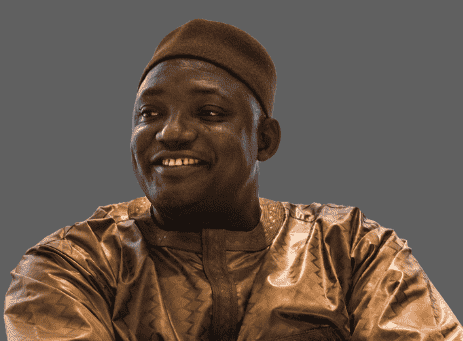
A leading British research and analysis company with over 70 years’ experience which has accurately forecast election results in The Gambia has predicted that President Adama Barrow will win the 5th December presidential election but with a significantly reduced majority.
Commenting on the elections in its special report, “Two Year Forecast: Gambia”, released a few weeks ago, the Economist Intelligence Unit, a sister company to The Economist weekly newspaper of London, wrote: “We forecast that Mr Barrow, who is currently serving his second term in office, will seek re-election, but his popularity is declining. His undelivered electoral promises on constitutional and security reforms, alongside limited economic opportunities, especially for the youth population, is likely to translate into a decline in voter share compared with the previous election, in December 2021, when he won 53 percent of the vote.
“We nonetheless expect him to win-capitalising on incumbency advantage and co-opting other, smaller political parties into a coalition-although by a wafer-thin margin. Local opinion polls from early 2026 suggest that 34 percent of the voting population is likely to support the NPP, with 14.7 percent supporting the UDP. “However, about 60 percent of the population remains undecided or supports independents for now, suggesting that the race remains open and these votes could be diverted to the opposition if parties manage to coalesce into a robust coalition.
“The UP, together with six other parties, initiated talks on forming a robust coalition to contest the polls as a united front. Despite the failure of initial talks, six other parties united behind the UDP leader Ousainu Darboe to form the UDP-led GFC. The rival Coalition 2026 has also emerged, led by the United Movement for Change (Unite or UMC) and comprising eight other political groupings. However, Coalition 2026 brings together new political groups that are not yet registered political parties with the country’s election commission, weighing on the credibility of the alliance to compete with political heavyweights. Overall, the efforts of opposition parties continue to be clouded by fragmentation rather than strengthened by unity, thereby reinforcing our core view that opposition fragmentation will hand Mr Barrow a re-election win.”
The Economist Intelligence Unit says it relies on a global team of economists, industry specialists, policy analysts and consultants to produce the highest quality data, research and analysis on everything from national elections to international trade.
Source: The Standard