Nigeria: Dame Jenni Murray died days after car crash

By Zuleihat Owuiye, Nigeria
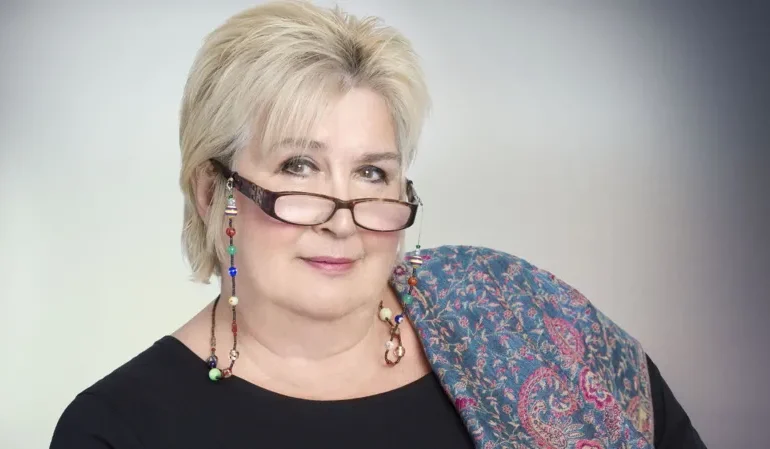
Veteran broadcaster Dame Jenni Murray died on 12 March 2026, eight days after being involved in a car crash in north London, an inquest has heard.
The 75-year-old, who presented BBC Radio 4’s _Woman’s Hour_ for 33 years, was admitted to the Royal Free Hospital on 4 March following a collision near Hampstead Heath. The North London coroner, Tony Murphy, ruled that her cause of death was bronchopneumonia caused by rib and sternum fractures sustained in the crash.
The hearing was told that the crash happened at around 19:45 GMT on 4 March, near Hampstead Heath In a statement read to the court, Dr Clare Morkane, a consultant at the Royal Free Hospital, said: “Jennifer had been driving when she became dazzled by vehicle lights and collided with two stationary vehicles.”
Dr Morkane added: “Following the collision, Jennifer was unable to recall events, exited the vehicle independently and she was conveyed to hospital.”
The impact caused “multiple rib fractures”, a fracture to the upper sternum, and a collapsed lung. Dame Jenni was initially placed on non-invasive ventilation before being moved to intensive care. She later developed bronchopneumonia, an infection of the lungs that can follow chest trauma, and died on 12 March.
The Metropolitan Police investigated the incident but closed the case with no further action Dame Jenni Murray was one of the most recognisable voices on British radio. She joined _Woman’s Hour_ in 1987 and presented the programme until 2020, making her the longest-serving presenter in the show’s history.
Over three decades, she interviewed prime ministers, actors, writers, and activists, and became known for interviews that were warm but never afraid to push.
Listeners remember her direct exchange with Baroness Margaret Thatcher about childcare policy. She conducted a famously flirtatious interview with Jack Nicholson. She challenged Edwina Currie about her affair with then Prime Minister John Major. And she asked Hillary Clinton how she could forgive her husband Bill’s infidelity.
After news of her death was announced in March, then BBC Director-General Tim Davie called her “a broadcasting icon.” Radio 4 controller Mohit Bakaya described her as “warm, fearless and beloved by listeners.”
Dame Jenni used her platform to talk candidly about issues that affected women, including her own health In 2006, she announced on air that she had been diagnosed with breast cancer. She spoke openly throughout her treatment and recovery, and continued to discuss health topics in later years, including weight loss surgery and the menopause.
She said she wanted to normalize conversations that were often kept private, and her willingness to share her own experiences made her a trusted voice for many listeners
In 2011, Dame Jenni was made a Dame Commander of the Order of the British Empire for services to broadcasting. She also won two Sony Awards and was inducted into the Radio Academy Hall of Fame.
When she left _Woman’s Hour_ in 2020, she signed off with a feminist anthem, a nod to the programme’s role in covering women’s lives, politics, and culture since 1946.
Her departure marked the end of an era for Radio 4. She had steered the programme through changes in media, politics, and society, while keeping its focus on the everyday and the extraordinary experiences of women.
Colleagues remembered her not just for the big interviews, but for the way she prepared, the questions she asked, and the care she took with listeners’ stories.
Dame Jenni Murray’s career spanned a period of huge change in both broadcasting and in public discussion about women’s issues. She was on air when _Woman’s Hour_ was still seen by some as a “domestic” programme, and she helped broaden it into a space for politics, science, arts, and global affairs, always with women’s perspectives at the centre.
She was 75 when she died. She leaves behind a body of work that shaped British radio and a generation of listeners who grew up hearing her voice in the morning.
The inquest concluded with the coroner recording bronchopneumonia, caused by injuries sustained in the road traffic collision, as the cause of death.
In the days after her death, tributes poured in from fellow broadcasters, politicians, and listeners who recalled growing up with her on Radio 4.
From confronting a prime minister to talking about breast cancer on live radio, she did both with the same directness. That, more than any award, was her legacy.