The Republic at Risk: Beyond Baba Leigh’s Tribalism

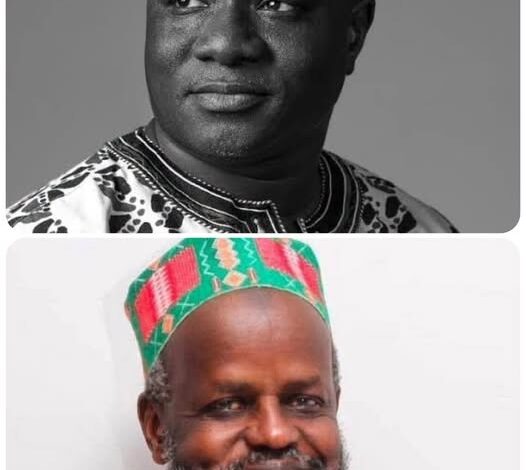
The despicable tribal remarks by Imam Baba Leigh are not an isolated incident. Rather, they are a symptom of a deep, systemic fracture in The Gambia’s body politic and society. To truly understand this crisis, we must interrogate the concept of sovereignty, the promise of our Constitution, and the glaring chasm between our national values and our national reality.
In the context of the 1997 Constitution, sovereignty is not merely the authority of the state. It is the supreme power vested in the people. This principle is expressly stated in Section 1: “The sovereignty of The Gambia resides in the people of The Gambia from whom all organs of government derive their authority.”
It implies a social contract where the state derives its legitimacy from the collective will of all citizens, irrespective of their background. The Constitution does not envisage a Mandinka citizen, a Fula citizen, a Jola citizen, a Wolof citizen, a Serahule citizen, a Manjago citizen, an Aku citizen, a Karoninka citizen, or a Serere citizen. It envisages a Gambian citizen: equal in dignity, equal before the law and equally entitled to participate in the governance and development of the country.
Sections 17 and 33 further require respect for fundamental rights, equality before the law and protection against discrimination, including discrimination based on ethnic origin. Section 212 requires all state organs to pursue national unity, integrate the people and foster loyalty to The Gambia without discrimination, and affirming the right of every Gambian to their ethnicity, religion, and culture.
Our cultures and religions reinforce the same principle. Gambian cultures teach hospitality, solidarity, care for neighbours and peaceful coexistence. Islam teaches that humanity was created from different tribes so that we may know one another, and not despise, dominate, or discriminate against one another. Christianity similarly teaches the equal dignity of all people before God and commands love of one’s neighbour. Neither faith provides moral cover for tribal supremacy, hatred, ridicule, or exclusion.
Yet, a profound contradiction exists in our country: Weaponized Ethnicity. Despite these high-minded values, tribalism is rampant, particularly among the very people elected to uphold the Republic’s ideals, i.e., public officials and politicians. It is rather unfortunate that ethnicity has been reduced from a marker of cultural identity to a means to an end: a weapon to access and keep power, a ladder to wealth and privilege, and a tool for exclusion. Nowhere is the cancer more widespread than in our public institutions.
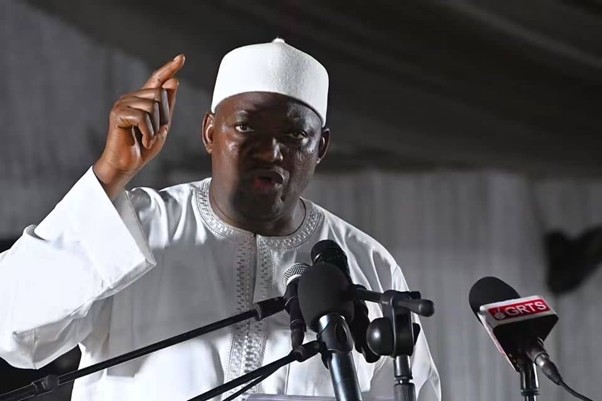
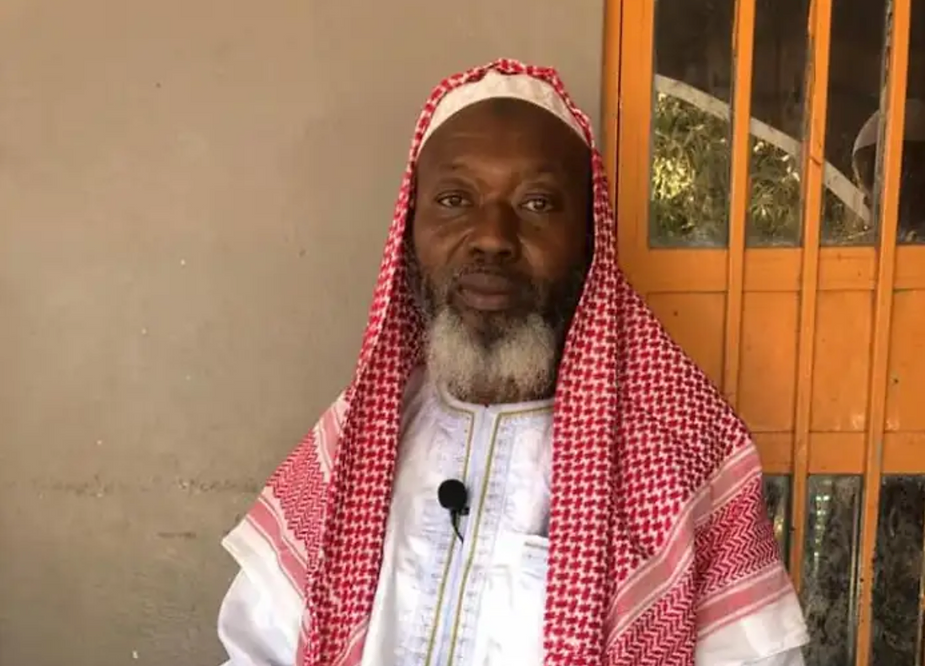
The evidence is glaring. During his misrule, the tinpot dictator Yaya Jammeh once declared that no Mandinka would rule The Gambia, calling them vermins to be exterminated. Not long ago, NPP’s Saihou Mballow labeled the current administration a “Fula government.” Then the Deputy Speaker, Seedy Njie vowed to remove all Mandinkolu from government. And now, none other than a human rights commissioner and an imam, Baba Leigh denigrates the Mandinka as ignorant and perpetually angry. These are not slips of the tongue or anomalies. It’s a pattern!
The National Human Rights Commission’s 2025 survey on hate speech confirms this disturbing pattern: 38% of hate speech target the Mandinka, the majority ethnic group. This figure dwarfs attacks on other groups (Jola and Manjago at 5%, Fula at 4%, Wolof at even lower levels). This is a dangerous imbalance! This disproportionate targeting highlights two critical truths:
First, Mandinka Restraint: It suggests that the Mandinka are, by and large, less tribalist and more inclusive, having absorbed the civic and moral ideals of the nation.
Second, a Powder Keg: It also exposes a volatile reality. A gap of 38% to 5% is not a statistic but a serious warning. It demonstrates that while the Mandinka have shown remarkable forbearance, the ongoing provocation poses a clear and present threat to national peace. If the majority group decides to abandon its restraint and reposition itself for defense or retaliation, the stability of this nation will shatter immediately.
Given our high rates of intermarriage and social integration, why does the majority ethnic group face such constant, unprovoked attacks? The answer forces us to look in the mirror. This bigotry is systemic as it flows in all directions in our public institutions and political spaces. It begs a fundamental question: What kind of Republic do we have?
Is it the just, equal, and inclusive society enshrined in our Constitution? Or is it a society of hypocrites and bigots, where we espouse high moral values while practicing discrimination, hate speech, and bigotry? When Seedy Njie made his despicable anti-Mandinka diatribe none but the Pres. Adama Barrow himself came to defend him, while both the NPP and the Government completely ignored Saihou Mballow’s “Fula hegemony” narrative!
Therefore, the Baba Leigh incident must be more than another cycle of outrage. It is the latest marker of a vicious and failing state rooted in tribalism. If, after 60 years of independence, a Gambian can still hate, dismiss, and discriminate against a fellow citizen solely on the basis of ethnicity, then our Republic is not just flawed, but indeed also heading toward a fratricidal conflict.
We cannot afford to be merely angry. We must halt, reflect, and dismantle the structures of this decadent republic. Are we saying we lack the capacity to build a foundation for a truly fair, just, equal, open, safe, and free republic for all? We cannot just complain, give up, or become reactionary. We need a serious national conversation to rescue ourselves before it is too late.
Otherwise, after the condemnations and caricatures fade, another Baba Leigh will emerge, and we will be trapped in an endless cycle of reaction, offering no cure for the cancer eating at our national soul. The time for a tough, honest, and sincere national conversation is now.
For The Gambia, Our Homeland
Source: Open Gambia