‘Rice is our staple food’: Barrow pushes year-round production at RRVCD Solar Project`

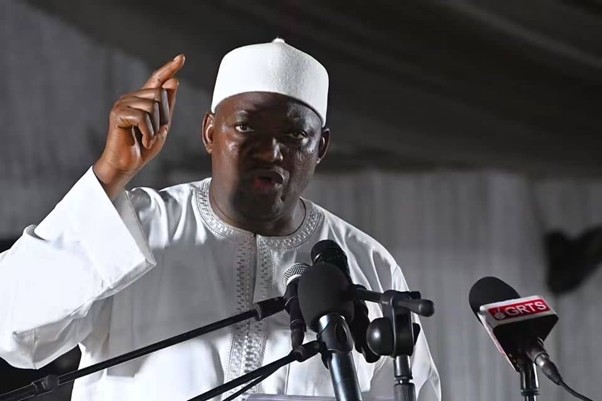
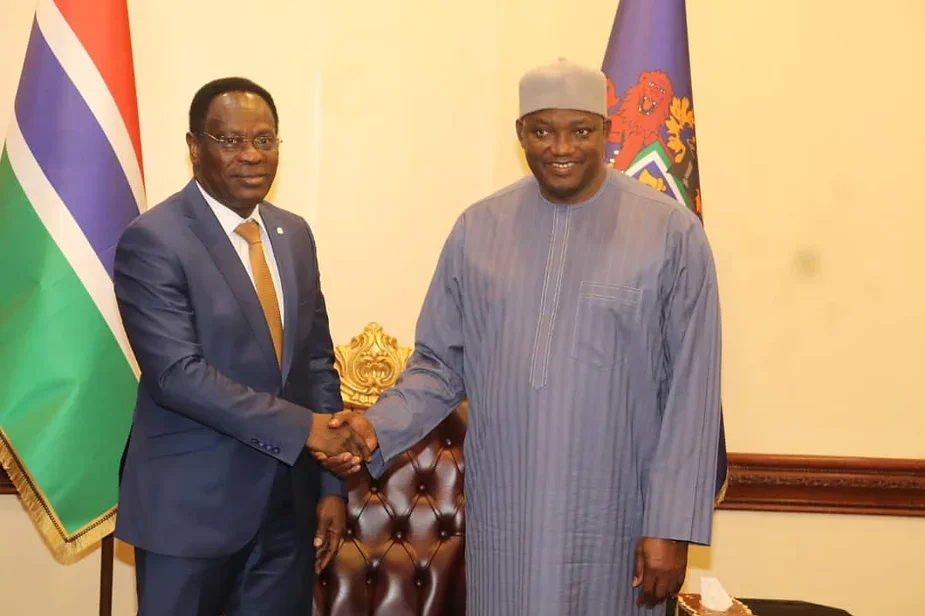
His Excellency Adama Barrow has called for increased rice production in the country to reduce rice imports.
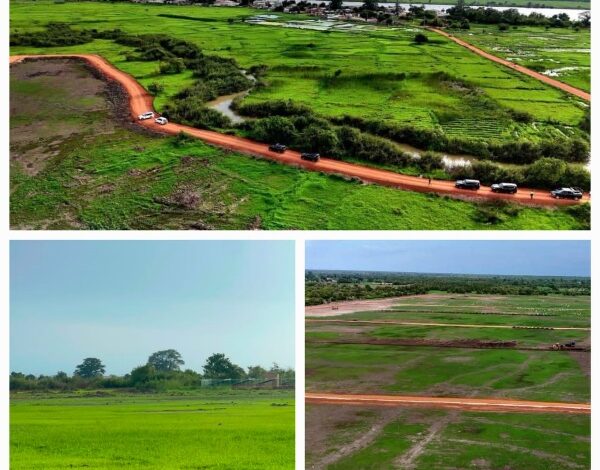
He made this call during his visit to the Regional Rice Value Chain Development Project (RRVCD) Lot 4 in Wassu, Central River Region (CRR), which is expanding irrigated rice production through solar-powered systems.
The project is part of President Barrow’s government efforts to boost food security and reduce reliance on imported rice.
“Rice is our staple food,” Barrow said, noting that The Gambia imports about 85 per cent of the rice it consumes.
President Barrow warned that the country’s dependence on imported rice makes it vulnerable whenever global supply chains are disrupted.
Barrow drew lessons from the COVID-19 pandemic, adding that African countries should learn from the disruption of global supply chains during the pandemic.
“We should learn from that experience and move forward,” he said.
Barrow then assured the project team of the government’s support and urged them to remain committed to the initiative. He emphasised his government’s commitment to the project and said the government would continue to listen to technical advice from agricultural professionals involved in the project.
The Gambian leader then thanked the project team and congratulated the Ministry of Agriculture for its efforts towards improving agricultural production and food security.
Barrow welcomed the progress and described the project as an important step towards improving food security in The Gambia.
“We are very happy with what we have seen. I think this is the way forward. That’s what we are looking for,” President Barrow said.
The Gambian Leader noted the importance of food security as a component of national security. He stressed the need for greater investment in rice production.
Hon. Demba Sabally, Minister for Agriculture, said the visit was intended to allow officials to inspect the pump house and solar installation before travelling around the site and meeting the local community and its chief.
Hon. Sabally also said the government is implementing 11 similar sites across the country, seven of which are located in the area.
Fafanding Fatajo, coordinator of the RRVCD Project, while explaining the progress of the work to President Barrow, said the site is part of a broader intervention being implemented by three contractors: Ferrmac, Chinogam, and Ocean.
Mr Fatajo said Ferrmac is working on three sites in Waassu, Lamin Koto, and Karantaba, with each site covering 50 hectares.
Fatajo also informed the President that the project is targeting a production capacity of five metric tonnes of rice per hectare, compared to the 1.5 metric tonnes farmers traditionally harvest.
Fatajo said five metric tonnes per hectare is equivalent to about 100 bags of rice per hectare. For 50 hectares, Fatajo believes that the site could produce approximately 5,000 metric tonnes.
Fatajo explained that the use of solar-powered irrigation would allow farmers to produce rice throughout the year while reducing their dependence on diesel-powered pumps.
“Initially, we normally use diesel pumps, but in terms of sustainability and maintenance, it becomes challenging. So now we are converting them to use renewable energy,” he said.
Fatajo said the site also has a drainage canal that will allow farmers to remove excess water from the fields, making it possible to use combine harvesters during harvesting.
According to Fatajo, the project is installing about 152 solar panels to power irrigation systems that will pump water from the river into the rice fields. He said the pump house will have two pumps, with each pump capable of pumping about 750 cubic metres of water to irrigate the 50-hectare site.
“The project has also supported the communities with tractors, power tillers and some inputs,” Fatajo said, adding that farmers were provided with fertiliser last year and this year as part of the project’s empowerment of farmers.
Fatajo further informed the President that the site in Wassu is about 70% complete. He said the main tertiary canals have been completed, while work on field roads is nearing completion.
He believes the remaining work includes demarcating the plots, with each plot expected to cover one hectare. The contract is scheduled for completion in March 2027, saying the site could be handed over to the community as fast as the work progress.
Source: The Point