Trade Minister outlines gov’t push to ease cost of living

The Minister of Trade, Industry, Regional Integration and Employment, Hon. Mod K. Ceesay, says government interventions to ease the cost of living and stabilize essential commodity prices are “already yielding positive results” despite ongoing global economic pressures.
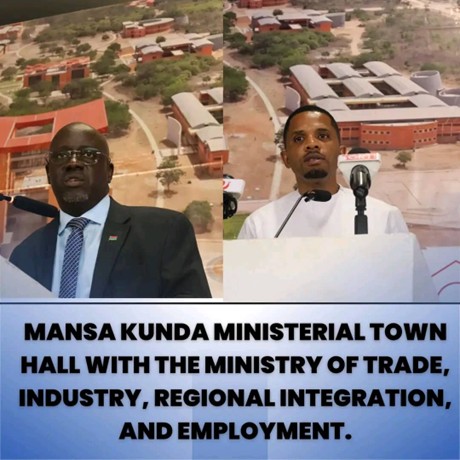
Speaking at the Mansa Kunda Ministerial Town Hall on Friday at the Sir Dawda Kairaba Jawara Conference Center, Ceesay outlined a raft of measures aimed at keeping food and other basic goods affordable for Gambians.
The minister said government continues to prioritize vessels carrying essential goods at the Port of Banjul to reduce delays and costs.
“My ministry has taken a number of measures aimed at reducing prices,” Ceesay stated. “Government continues to facilitate priority berthing for vessels carrying essential goods and has strengthened collaboration with trading partners, both at home and abroad, to assess the supply of essential commodities at competitive prices.”
He disclosed that government recently signed a Memorandum of Understanding with Pakistan to enable Gambian businesses to source rice at competitive prices while promoting commercial investment between the two countries.
To boost regional trade, Ceesay added that trade and transit cooperation agreements have been concluded with Senegal, Guinea-Bissau, Sierra Leone and Guinea. These, he said, will create new opportunities for Gambian businesses to expand across the region.
The minister also pointed to progress with China. Under China’s duty-free, quota-free market access scheme, 16 Gambian companies have been registered to export groundnuts and cashew products, opening new export channels for local producers.
Responding to concerns about the rising cost of living, Ceesay said government has “deliberately sacrificed part of its revenue through subsidies and other support measures to cushion consumers from global price shocks.”
“In the last six months, what we have achieved in The Gambia is phenomenal. Despite all the headwinds, logistics challenges and overseas price increases, prices have actually been coming down,” he said.
He ruled out direct price controls, arguing they often lead to shortages. “The Gambia operates a free market economy where competition determines prices, while government’s role is to create conditions that improve supply, encourage investment and reduce business costs,” he explained.
Government will also continue supporting businesses and industries to increase domestic production and reduce dependence on imports.
Ceesay highlighted infrastructure investments to support traders, especially women. Modern Lumo markets with sanitation, security and improved trading spaces have been constructed. The ministry has also provided solar-powered facilities, boreholes and other infrastructure to fish-smoking communities and women traders.
He cited the recently completed Lumo Border Market at Mboli Garaba, handed over in June, as part of efforts to strengthen rural commerce.
On quality assurance, Ceesay said government, in partnership with UNIDO, has completed food and life testing laboratories to strengthen food safety. The Gambia Standards Bureau has also developed nearly 500 national standards, many focused on food and agriculture, and trained hundreds of SMEs.
On consumer protection, the Competition and Consumer Protection Commission resolved more than 846 complaints in the first quarter, mostly through alternative dispute resolution. New offices have opened in Basse and Farafenni to bring services closer to rural communities.
“Our responsibility is to make doing business easier, support local production and ensure Gambians have access to affordable essential commodities while creating opportunities for businesses to grow,” Ceesay said.
Source: The Point