“Grow What We Eat” to “Import What We Eat”: Has the Government Abandoned Its 2030 Food Self Sufficiency Promise?

by Ndey Jobarteh
“”The Gambia government has signed a memorandum of understanding with the Trading Corporation of Pakistan to facilitate the importation of rice and other agricultural products, a move officials say is intended to strengthen food security and help stabilize domestic rice prices,” reports KERR FATOU.
President Adama Barrow promised Gambians that by 2030 the country would achieve food self-sufficiency by “growing what we eat and eating what we grow.” Less than a year later, his government is signing long-term agreements to import the very staple food it promised Gambians would increasingly produce themselves.
This is not the trajectory of a country moving towards food self sufficiency. It is the trajectory of a government managing continued dependence on imported food.
The Pakistan agreement exposes the widening gap between political promises and policy reality. If billions of dalasis invested in fertiliser subsidies, improved seeds and agricultural programmes were delivering the promised transformation, why is the government strengthening longterm foreign supply arrangements instead of reducing them?
Food security has quietly replaced food self sufficiency as the government’s central objective. Rather than building an agricultural sector capable of feeding the nation, the government is redefining success as securing reliable import routes and stable international supply chains. That may guarantee the availability of rice, but it does not fulfil the promise of agricultural independence.
Every bag of imported rice secured through longterm international agreements is a reminder that the 2030 pledge remains unfulfilled. Instead of investing in a future where Gambian farmers feed Gambians, the government is institutionalising a future in which The Gambia continues to rely on foreign producers for its most important staple food.
The issue is no longer whether imported rice can stabilise prices in the short term. The real issue is whether the government has abandoned its own vision. The promise was clear: grow what we eat and eat what we grow. The policy now is equally clear: import what we cannot produce and call it food security.
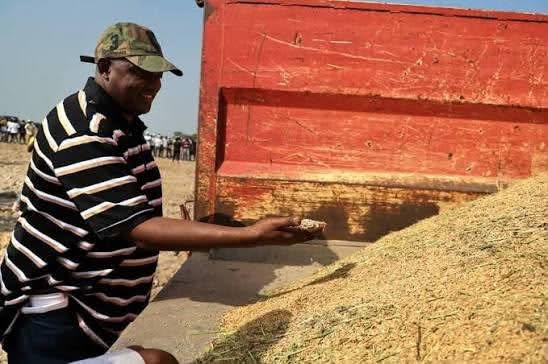
Image source: Google Images, original photographer unknown.