Nigeria: Omani Troupe brings Razha and Al-Azi to life at Rafha festival

By Zuleihat Owuiye, Nigeria
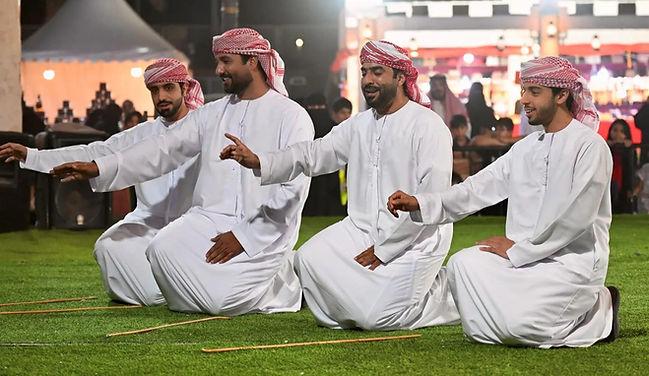
RAFHA, Saudi Arabia — The open-air theater in King Fahd Park filled with drums, poetry, and traditional dance on Friday as an Omani troupe took the stage at the Rafha Shopping and Entertainment Festival, offering audiences a vivid showcase of Oman’s cultural heritage.
The performance drew a strong crowd and highlighted two of Oman’s most celebrated folk art forms: Razha and Al-Azi. Alongside the music and movement, the troupe also presented a selection of traditional Omani poems, giving festival-goers a full picture of the storytelling traditions that have been passed down for generations
Razha, often described as Oman’s ceremonial battle dance, opened the program. Performers moved in synchronized lines, carrying swords and canes, their steps timed to the beat of drums and the call-and-response of chanting. Historically performed before battle and at celebrations, Razha today is preserved as a symbol of courage, unity, and pride.
That was followed by Al-Azi, a poetic and musical art form that blends singing with expressive dance. Unlike Razha’s martial energy, Al-Azi is more lyrical. Two rows of performers face each other, trading verses while moving to the rhythm. It’s both a musical performance and a social dialogue, rooted in the deserts and villages of Oman.
Between the dances, members of the troupe recited Omani poetry. The poems touched on themes common to Gulf heritage — the land, the sea, hospitality, and community. The combination of dance, music, and verse gave the audience in Rafha a direct window into Omani culture without translation needed. The rhythm and emotion carried the meaning.
The setting added to the atmosphere. King Fahd Park’s open-air theater, part of the larger Rafha Shopping and Entertainment Festival, provided a casual but engaged audience. Families, young people, and visitors stopped to watch, many recording the performance on their phones and applauding between pieces.
Leading the troupe was Nasser Saif Al-Mazrouei, who said the group was honored to perform in Saudi Arabia and particularly at the Rafha festival.
He described the invitation as more than just another booking. For Al-Mazrouei, performing in the Kingdom was a chance to reflect what he called the “deep historical and fraternal ties” between Oman and Saudi Arabia.
“Our participation here is about cultural exchange,” he said. “We want to introduce our heritage to our brothers in Saudi Arabia, and at the same time celebrate the shared traditions that connect our two countries.”
That sentiment ran through the event. While the dances and poems were distinctly Omani, many in the audience recognized familiar elements. The instruments, the poetic forms, and the themes of tribe, land, and honor resonate across the Arabian Peninsula. Festivals like Rafha’s have become important spaces for that recognition to happen on stage.
The Rafha Shopping and Entertainment Festival is designed to bring commerce, family activities, and cultural programming together. This year’s edition has included concerts, markets, children’s activities, and now, international folk performances.
The Omani troupe’s appearance fit that broader goal: to make the festival more than shopping and entertainment, and to position it as a place where regional heritage is performed and preserved.
Cultural officials in the Northern Borders Region have increasingly used the festival to invite performers from neighboring countries. The idea is twofold. First, to give local residents access to art forms they might not otherwise see. Second, to strengthen people-to-people connections that mirror the official diplomatic relationship between Gulf states.
For Oman, sending a troupe to Rafha also serves as cultural diplomacy. Folk arts like Razha and Al-Azi are listed by UNESCO as part of the Intangible Cultural Heritage of Humanity, and Oman has made their preservation a national priority. Touring them in Saudi Arabia helps keep the traditions alive while introducing them to new audiences.
The crowd’s reaction on Friday suggested the performance landed. There was steady applause after each piece, and many attendees stayed after the show to take photos with the performers and ask questions about the costumes and instruments.
For younger audience members, it was an introduction. For older attendees, it was a reminder of shared Gulf traditions that predate modern borders.
One festival visitor from Rafha said she appreciated seeing “the beauty of Omani heritage up close.” Another noted that the poetry in particular felt familiar, even though it was performed in a different Omani dialect.
Al-Mazrouei said the troupe welcomes more opportunities to perform across Saudi Arabia. With national days, seasonal festivals, and cultural seasons expanding each year, there are more stages for regional artists to share their work.
He added that the exchange goes both ways. Just as Omani artists perform in the Kingdom, Saudi troupes are also invited to Oman for national celebrations and heritage festivals. That back-and-forth, he said, is how cultural ties stay strong.
As the Rafha festival continues, more performances are scheduled at King Fahd Park. But Friday night’s Omani program stood out for how it turned a shopping and entertainment event into a moment of cultural reflection.
In Razha’s synchronized steps and Al-Azi’s exchanged verses, the audience saw not just a performance, but a reminder: that across the border, the music, poetry, and stories are different in detail, but similar in spirit.
For Rafha, it was one evening of entertainment. For the performers, it was a chance to represent Oman. And for both countries, it was another small step in keeping a shared heritage visible, loud, and alive.