Nigeria: Subsidy really end? The N17.5 trillion question behind Nigeria’s fuel pricing

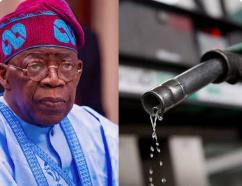
By Zuleihat Owuiye, Nigeria
When President Bola Tinubu announced on June 29, 2023 that “fuel subsidy is gone,” it was meant to close the book on one of Nigeria’s most expensive and controversial policies.
Petrol prices jumped overnight. Protests followed. The government said the move would free up money for roads, schools, hospitals and other critical services.
More than three years later, that promise is being questioned again. The reason: a N17.5 trillion receivable sitting on the books of the Nigerian National Petroleum Company Limited, NNPCL.
Former NACCIMA President and Chairman of the Alliance for Economic Research and Ethics, Mr. Dele Oye, says that money amounts to “fuel subsidy in disguise.” His claim has reignited a national debate: was subsidy truly removed, or did it just change shape?
In a detailed response backed by NNPCL’s 2024 audited financial statements, the Petroleum Industry Act, the Constitution, and World Bank reports, Oye clarified that the figure is not all subsidy.
According to NNPCL’s accounts, the N17.512 trillion recorded as “receivables from the Federation” has two main parts:
The N7.131 trillion figure often quoted in the media refers to energy security costs incurred in 2024 alone. That money is already part of the N8.672 trillion balance. Adding them together, Oye warned, would be double counting.
He stressed that the N17.512 trillion is NNPCL’s recorded claim against the Federation, not an automatic debt admitted by the Federal Government.
Where Oye sees a problem is not in the accounting label, but in how the money moved.
NNPCL’s 2024 financials show about N7.131 trillion in energy security costs, up from N4.844 trillion in 2023. The company said the increase came mainly from exchange rate differences — the gap between the rate used to set the ex-coastal price of imported petrol and the rate when payments were finally made.
Here’s what that means in practice: even after subsidy was declared “gone,” NNPCL continued importing petrol under a pricing system that shielded consumers from the immediate full cost. The losses didn’t disappear. They were passed to the Federation through energy security deductions and lower remittances.
“The arrangement had the economic characteristics of a subsidy,” Oye said, “because consumers did not immediately bear the full cost of imported petrol, while the difference was transferred to the Federation through NNPC’s receivables and remittance arrangements.”
The World Bank made a similar assessment. In its reports, it described the setup as an “implicit PMS subsidy” and said it effectively ended in October 2024, when NNPCL began using the official exchange rate for fiscal calculations and stopped recording forex losses.
NNPCL says it relied on Section 64(m) of the Petroleum Industry Act, which allows it to act as “supplier of last resort” for energy security, with costs borne by the Federation.
But Section 317(6) of the same Act gave government only six months from the PIA’s commencement to direct NNPCL to ensure adequate petrol supply and distribution.
Oye asks: what legal instrument authorized the continued recovery of petrol-related costs after that six-month window? Was it an executive directive, a legislative appropriation, or something else?
He also points to Sections 80, 81 and 162 of the Constitution, which govern how public revenue is collected, held, and shared.
“The available materials establish the statutory basis relied upon by NNPC but do not conclusively determine the legality of every deduction,” he said. “A definitive conclusion would require examination of government directives, approvals, reconciliation records and appropriation documents.
The impact goes beyond NNPCL. Every deduction made before NNPCL remits revenue reduces what is shared to federal, state and local governments through FAAC.
World Bank data cited by Oye shows that while gross FAAC revenue rose in 2024, petroleum remittances from NNPCL actually fell because of continued deductions.
That means less money for roads, hospitals, schools and security. It also makes it harder for the public to know the country’s true oil earnings, what NNPCL is legitimately owed, what government owes, and what is actually available for the budget.
Oye acknowledges the arrangement may have softened the immediate pain of higher petrol prices. But he says the cost was simply shifted — from the pump to public finances, through lower government revenue and growing obligations
Oye also questioned why Nigeria still racks up big energy security costs despite the Dangote Petroleum Refinery coming on stream.
In theory, more domestic refining should cut import dependence and forex exposure.
But he notes that inadequate supply of crude to local refineries has limited output, forcing continued imports. He urged government to fully implement Section 109 of the PIA — the domestic crude supply obligation — so local refineries get predictable crude on commercial terms.
To restore confidence, Oye is calling for a comprehensive independent forensic audit of all energy security costs and Federation receivables.
He says the results should be independently verified and published. Monthly petroleum revenue reports should also show gross revenue, deductions, remittances, liabilities, disputes, and actual FAAC payouts.
On policy, he recommends that petroleum revenues be remitted directly into constitutionally recognized accounts, and that any future price-support program be subject to explicit legislative approval instead of running through off-budget channels.
He also wants a clear framework for when NNPCL can act as supplier of last resort — including required approvals, cost methodology, and time limits — to prevent temporary measures from becoming permanent hidden obligations.
Oye’s core questions remain: Were the costs properly calculated? Was every deduction legally authorized? Has the Federation’s liability been independently confirmed?
“The outstanding questions,” he said, “can only be resolved through forensic audit, complete reconciliation, direct remittance of petroleum revenues and transparent appropriation of any future price-support intervention.”
Three years after “subsidy is gone,” Nigerians are still paying — just through a different ledger. Whether that N17.5 trillion is subsidy, energy security, or something in between will depend on the audit, the documents, and the political will to open the books.