Nigeria: NAICOM hails senate’s passage of National Insurance Regulatory Commission Bill

By Zuleihat Owuiye, Nigeria
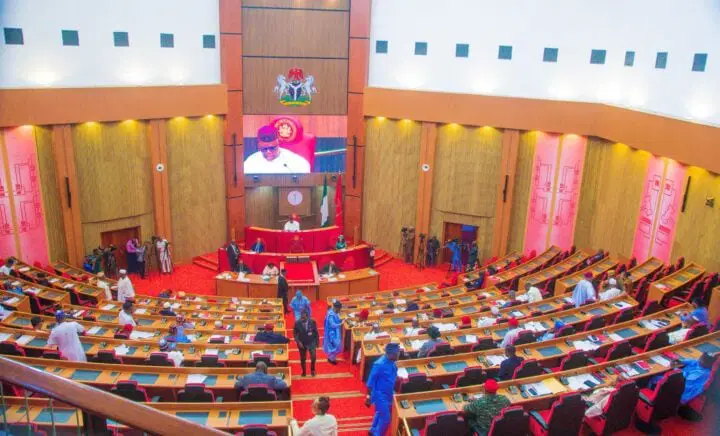
The National Insurance Commission, NAICOM, has commended the Senate for passing the National Insurance Regulatory Commission Bill, describing it as a major step toward strengthening regulation, transparency, and growth in Nigeria’s insurance industry.
In a statement released yesterday, NAICOM said the bill, once signed into law, will modernize the sector’s legal framework and help build greater public confidence in insurance.
NAICOM described the Senate’s action as a “landmark legislation” that addresses long-standing gaps in the industry’s regulatory structure.
“This landmark legislation is a major milestone in strengthening the regulatory framework of Nigeria’s insurance industry,” the Commission stated.
“With enhanced oversight, transparency, and accountability, the Bill will deepen public confidence, attract investment, and promote sustainable growth that benefits policyholders, operators, and the broader economy.”
The bill was passed by the Senate after extensive deliberations and stakeholder consultations. It is expected to replace outdated provisions in the current insurance law and align Nigeria’s regulatory regime with international best practices
NAICOM specifically acknowledged the role of Senate leadership and Senator Tokunbo Abiru, Chairman of the Senate Committee on Banking, Insurance and Other Financial Institutions, for driving the reform process.
“NAICOM acknowledges the vision, dedication, and collaborative spirit demonstrated by the Senate leadership and Senator Abiru in championing reforms that will modernize insurance regulation and advance financial inclusion in Nigeria,” the Commission said.
The Commission noted that the lawmakers’ commitment underscores the importance of a stronger regulatory environment for protecting citizens and ensuring stability in the financial sector.
Insurance penetration in Nigeria remains low, at under 1% of GDP. Industry stakeholders have long argued that weak enforcement, low consumer trust, and outdated laws have limited growth. The new bill is expected to address many of those issues
The bill provides NAICOM with clearer powers to supervise insurance companies, brokers, and other operators. This includes stricter capital requirements, risk-based supervision, and improved enforcement mechanisms.
New reporting and disclosure requirements are expected to make it easier for policyholders and investors to assess the health of insurance companies.
The legislation introduces tighter corporate governance standards for insurers and intermediaries, aimed at reducing mismanagement and protecting policyholder funds.
By aligning Nigeria’s framework with global standards, the bill is expected to make the market more attractive to both local and foreign investors.
NAICOM said the reforms will also support efforts to expand insurance coverage to more Nigerians, particularly in underserved and rural communities.
“The Commission reaffirms its readiness to ensure the effective implementation of the provisions of the new law once signed, and to continue working closely with all stakeholders to position the insurance industry as a catalyst for national development,” it stated.
The Commission noted that implementation will involve updating regulations, training staff, engaging operators, and rolling out public awareness campaigns to help Nigerians understand the benefits of insurance.
NAICOM has also been working with the National Assembly, operators, and consumer groups over the past two years to ensure the bill reflects the realities of the market.
Industry associations say a modern law will help tackle issues such as claims payment delays, capital inadequacy, and unethical market practices. They also expect it to boost confidence among banks, pension funds, and other institutions that partner with insurers.
Analysts say a stronger insurance sector can play a bigger role in Nigeria’s economy by providing long-term capital for infrastructure, protecting businesses from risk, and reducing the fiscal burden on government during disasters.
Nigeria’s financial sector is undergoing wide reforms, from banking recapitalization to pension and capital market updates. Insurance is the next piece.
With inflation, climate risks, and economic uncertainty, more individuals and businesses are looking for protection. But trust remains a barrier. Many Nigerians still see insurance as expensive or unreliable.
NAICOM believes the new law, combined with ongoing market development initiatives, can change that perception.
“Insurance is critical to economic resilience,” a senior NAICOM official said. “When people and businesses are protected, they can take more productive risks, and that drives growth.”
NAICOM said it will continue to engage the National Assembly to ensure a smooth legislative process and will begin drafting implementation guidelines in anticipation of assent.
For the Commission, the Senate’s passage is both validation and responsibility — validation that reforms are needed, and responsibility to ensure the new law delivers real benefits to policyholders.
As NAICOM put it: the goal is an insurance industry that is better regulated, better capitalized, and better able to serve Nigerians.