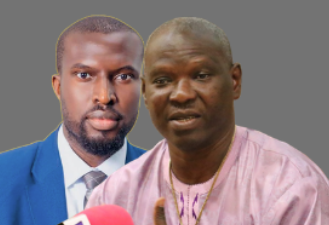
Death penalty is injustice, says NHRC Chair


The Chairperson of the National Human Rights Commission (NHRC), Emmanuel D. Joof, has described the death penalty as an injustice rather than justice, arguing that the punishment is irreversible, undermines the sanctity of life and carries the risk of executing innocent people due to judicial errors.
Speaking on Coffee Time with Peter Gomez, Joof weighed in on the growing national debate over capital punishment as concerns mount over rising violent crime and homicide cases in The Gambia.
He acknowledged that the issue has become one of the country’s most talked-about public debates, noting that many Gambians have renewed calls for the death penalty, believing it could curb violent crime.
GambiaNews Updates
“The issue of the death penalty is a very sensitive issue; people take different sides for different reasons,” he pointed out.
He said some Gambians argue that increasing homicide cases justify bringing back executions, while others support the death penalty on religious grounds, citing Islamic teachings that prescribe life for life.
However, Joof maintains that the NHRC believes capital punishment is fundamentally unjust. “I would say it’s injustice, and I will unpack it,” he said.
According to him, there is a growing global movement away from the death penalty, with about two-thirds of the world’s countries having either abolished it or no longer use it as a form of punishment.
He said the shift is rooted in the belief that every human life is sacred and that governments have a responsibility to protect life rather than take it.
“When we say the right to life is precious, the state itself must protect people from others taking their life. The state should not take other people’s life,” he said.
Joof further argued that the death penalty has increasingly been viewed as dehumanising and degrading, warning that once an execution is carried out, there is no opportunity to correct a mistake.
“The dangers are many, the death penalty, once it’s imposed, is irreversible,” he said.
He pointed to cases around the world where new evidence later proved that people sentenced to death had been wrongly convicted, adding that some governments, particularly under authoritarian systems, have also used capital punishment to target political opponents through fabricated charges or forced confessions.
“If new evidence comes to light after an execution, it cannot be reversed,” Joof said, stressing that this is one of the strongest arguments against retaining the death penalty.
Source: The Point