Nigeria: Naira gains against Dollar

By Zuleihat Owuiye, Nigeria
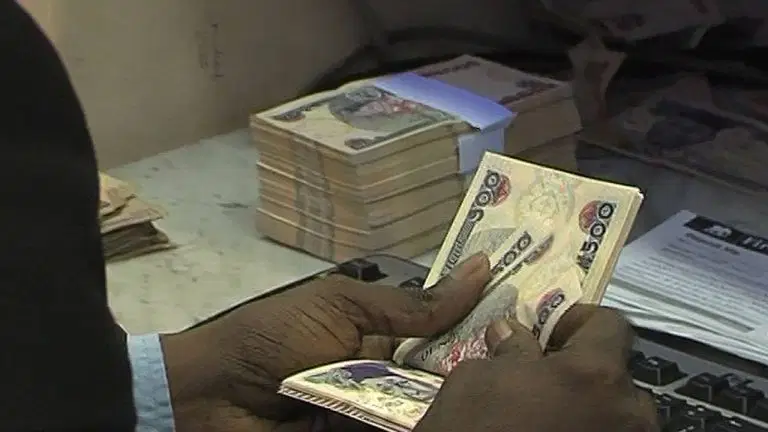
The Naira recorded modest gains on Wednesday, July 1st, 2026, appreciating against the U.S. dollar in both the parallel market and the official Nigerian Foreign Exchange Market, NFEM.
According to market data, the local currency strengthened to N1,385 per dollar in the black market, up from N1,390 per dollar on Tuesday. In the official window, it appreciated to N1,369 per dollar from N1,376 per dollar a day earlier.
Bureau de Change operators in Lagos quoted the dollar at N1,385 yesterday, representing a N5 gain compared to Tuesday’s N1,390 rate.
The parallel market, often used by individuals and small businesses unable to access official FX, remains a key barometer of demand pressure. The slight appreciation suggests reduced demand or improved dollar supply at the street level.
Data from the Central Bank of Nigeria, CBN, showed the indicative exchange rate for the NFEM closed at N1,369 per dollar, a N7 improvement from N1,376 per dollar on Tuesday.
The NFEM is the CBN’s reference market where banks and authorized dealers trade foreign exchange. A stronger indicative rate implies the CBN’s published rate moved in favor of the naira.
With the parallel market at N1,385/$ and the official market at N1,369/$, the margin between the two rates widened to N16 per dollar from N14 per dollar on Tuesday.
A widening spread can indicate lingering pressure in the unofficial market, even as the official rate improves. Analysts typically watch this gap because a large, persistent differential often fuels arbitrage and dollar hoarding.
Trading activity in the official market slowed sharply. Interbank turnover on the NFEM fell by 66.5% to N90.3 million on Wednesday from N269.9 million the previous day.
Lower turnover could reflect reduced dollar demand from importers, limited supply from banks, or caution ahead of new policy signals. It may also mean fewer large transactions cleared through the official window on that day.
The modest appreciation in both markets suggests some easing of pressure, though the low turnover in the official window indicates activity remains thin.
When the parallel and official rates diverge, businesses face challenges pricing imports, while individuals often pay more for dollars outside banks. A narrower gap is generally seen as a sign of better FX unification and confidence in the official market.
The widening to N16 from N14 in one day is not dramatic, but if the trend continues it could renew concerns about fragmentation between the two markets.
FX analysts say the naira’s direction in the near term will depend on dollar inflows, CBN policy consistency, and demand from importers and portfolio investors.
For now, the naira’s N5 gain in the parallel market and N7 gain officially show a positive, though cautious, tone. The sharp drop in interbank turnover, however, suggests traders are not yet confident enough to increase volume.
Market watchers will be looking at CBN’s next steps on supply, as well as external factors such as oil prices and foreign investment flows, to determine whether the gains can be sustained.