Forensic Lab Scandal: Summon the Former and Current Interior Ministers!

By Madi Jobarteh!
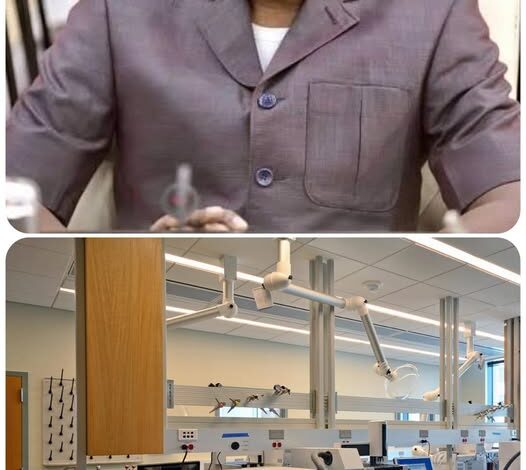
In July 2017, a grand ceremony was held at the Ministry of the Interior where then Interior Minister Mai Ahmad Fatty signed a multimillion-dollar agreement with the purported project partner from Senegal, one Dr. Cheikh Tidiane Sy. At the time, the minister announced that the project would establish a state-of-the-art forensic and scientific DNA laboratory and a DNA database centre, the first and best of its kind in Africa.
A decade later, Interior Minister Abdoulie Sanyang today informed the National Assembly that there is no trace of the project.
First, I commend the National Assembly Member for Banjul North, Hon. Modou Lamin Bah, for raising this important issue in Parliament. However, the response provided by Minister Sanyang has raised more questions than provide answers. It has deepened concerns rather than clarified them. I therefore urge Hon. Bah and the National Assembly to take the matter further by summoning both former Interior Minister Mai Ahmad Fatty and current Interior Minister Abdoulie Sanyang to account for this project before the Gambian people.
Following Minister Sanyang’s statement in Parliament, Mai Ahmad Fatty told The Standard newspaper that while the agreement was indeed signed, the project never proceeded beyond the signing stage. That explanation is neither satisfactory nor credible.
The Gambian public witnessed an official state ceremony presided over by a cabinet minister. Government resources were deployed. Public statements were made. National expectations were raised. Mai Fatty did not leave office the day after signing the agreement. How then can he now casually claim that the project never progressed beyond the signing ceremony? What happened the next day, the following week, the following month, and throughout the remainder of his tenure as minister?
Why would a government sign such a high-profile project only to allow it to die immediately on the signing table? Even more troubling is the claim that there is now no trace of the agreement or related documents. Either someone is concealing those records, or gross negligence occurred in preserving official state documents, or the entire exercise was nothing more than a public relations spectacle devoid of substance.
Mai Ahmad Fatty owes the nation answers. To whom did he hand over the signed documents? Is he saying he cannot identify a single office, department, desk, or official that received custody of the agreement? Does he have no personal copy, correspondence, briefing notes, or records relating to the project? Did he prepare handing-over notes for his successor, and if so, was this project mentioned?
Equally, Minister Abdoulie Sanyang must answer serious questions. Is he claiming that he received no handing-over notes when he assumed office? Is he saying that neither the Ministry of Interior nor the Gambia Police Force possesses any records relating to a project that was publicly launched by the government?
By 2017, Abdoulie Sanyang was already a senior police officer and may well have been aware of, or even present at, the signing ceremony. Is he now saying that across the entire Ministry and police establishment, no one can locate a single document relating to this supposedly landmark initiative?
The Ministry of Interior is an institution, not an individual. Many officials who served under Mai Ahmad Fatty remain in public service today. Several of them were present at the signing ceremony and involved in the administration of the ministry. Are both ministers asking Gambians to believe that none of these officials knows anything about the project, its documentation, or what became of it? Between Mai Ahmad Fatty and Abdoulie Sanyang, there were four individuals who became interior ministers, namely, Habib Drammeh, Ebrima Mballow, Yankuba Sonko and Seyaka Sonko. What do they know about this project?
The argument that “not a butut was spent” on the project is entirely beside the point. It is a diversion from the central issue. The issue is accountability and truthfulness. A government cannot organize a public event, announce a major national initiative, generate public expectations, and then years later claim that the project effectively never existed. Such conduct amounts to a serious misrepresentation of facts to the Gambian people.
Projects do not simply disappear into thin air. Agreements do not sign themselves. State ceremonies are not held for imaginary initiatives. Never in the history of this country has a major government project been publicly signed and then vanished without explanation.
The Gambian people deserve answers. Where are the documents? Why did the project never commence? Who decided to abandon it? Why was the signing ceremony organized in the first place? Why were Gambians told that a forensic DNA laboratory and database centre would be established? Who bears responsibility for ensuring that official records are maintained and preserved?
These are legitimate questions that demand truthful and comprehensive answers. For this reason, I urge the National Assembly to summon both former Minister Mai Ahmad Fatty and current Minister Abdoulie Sanyang to appear before the relevant committee or the plenary and provide a full account of this matter. Transparency and accountability require nothing less.
For The Gambia, Our Homeland