VP Jallow: Climate change threatens economy, coastline

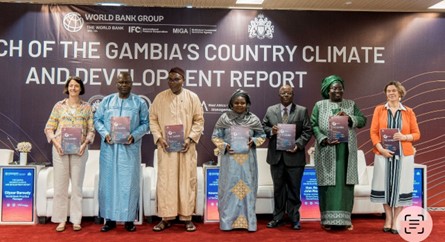
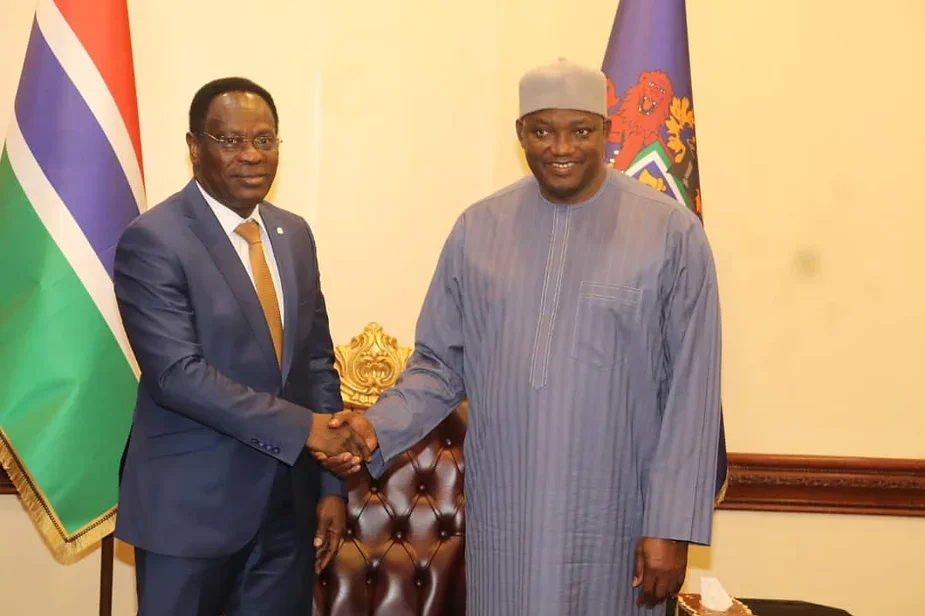
His Excellency Vice President Muhammed B.S. Jallow has officially launched The Gambia Country Climate and Development Report, delivering a strong message on the country’s exposure to climate risks and the urgent need for action.
“The Gambia contributes less than 0.01 percent of global greenhouse gas emissions, yet we remain among the most climate-vulnerable countries in the world,” he said, pointing to the reality that over 60 percent of the population lives in coastal and urban areas at high risk. He warned that flooding alone already causes losses of up to 3.8 percent of GDP annually, while Banjul faces the threat of submersion due to rising sea levels.
“The report provides a sobering but necessary analysis. Without decisive action, climate change could reduce our GDP by up to 9.3 percent by 2050, increase public debt pressures, slow growth, and push tens of thousands into poverty,” the vice president added. He stressed that timely investments and no-regret strategies could cut losses by more than half and open new pathways for sustainable growth.
World Bank Resident Representative Franklin Mutahakana, said climate change is no longer a distant concern. “Today, changes in our environment are no longer just a distant risk for The Gambia. We are already grappling with them as they shape economic outcomes, fiscal stability and the economy’s ability to grow and generate jobs,” he said.
He emphasised that the cost of inaction is high but manageable with early investments. “The CCDR shows that these risks are not evenly distributed, with urban and coastal areas, particularly Banjul, among the most exposed. But it also shows that early and targeted investments can significantly reduce these risks, often with very high economic returns,” he noted, calling for stronger partnerships and private sector participation.
Minister for Finance and Economic Affairs Seedy Keita, highlighted the economic implications. “Climate change affects our economy through multiple channels, reducing agricultural productivity, damaging infrastructure and disrupting key sectors such as tourism,” he said.
“This is not a list of risks, it is a direct threat to growth, jobs and fiscal stability. Climate resilience and economic transformation must go hand in hand,” he added, stressing the need for climate-focused public investment and increased private sector involvement.
Minister for Environment Rohey John Manjang underscored the role of financing and systems reform. “The single largest impediment to development of our private sector is access to finance, and climate investment cannot be realised without addressing this,” she said.
She added that the report offers direction for the future. “It provides a roadmap and shows that while risks are real, so are the opportunities. With the right mix of policies, investment and partnerships, we can turn climate vulnerability into resilience, inclusiveness and prosperity.”
Source: The Point