LAWYERS CLASH OVER EX-AG CEESAY’S ‘FORCEFUL REMOVAL’

The state yesterday denied that former auditor general Modou Ceesay was forcefully removed from office, as the Supreme Court received final briefs from the contending parties in the closely watched constitutional case.
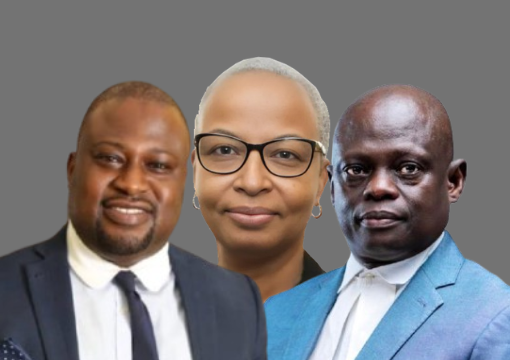
Counsel Ida Drameh, appearing for the state, told the court there was no evidence before it to support claims of forceful removal. She referred the justices to the plaintiff’s own testimony, arguing that he admitted he was asked to leave and complied.
“There is no evidence before this court that the plaintiff was forcefully removed,” she submitted, maintaining that neither the president nor the minister acted outside the law.
Earlier, Counsel Lamin Darboe for the plaintiff, informed the court that the plaintiff had filed his final brief, insisting that Ceesay was unlawfully removed from a constitutionally protected position. He argued that Sections 158, 159, 160 and 169 of the 1997 Constitution, along with Section 164 of the National Audit Act, provide strict conditions for the removal of an auditor general.
According to Darboe, the constitution permits removal only on grounds of mental or physical incapacity, or incompetence established by a tribunal set up by the president and led by a high court judge.
“The plaintiff was not removed for mental or physical illness, neither was he found incompetent,” Darboe told the court. He described the office as “ring-fenced from arbitrary power” and said due process was ignored in the auditor general’s removal.
Darboe further argued that the state, in its statement of defence, acknowledged that Ceesay was removed after refusing to vacate his office during the swearing-in of a new auditor general. He maintained that no tribunal was established and no constitutional procedure was followed, rendering the removal unlawful.
On the issue of ministerial appointment, Darboe challenged the validity of the letter cited by the state, arguing that it was not properly addressed to Ceesay. He said an appointment as minister could not override the constitutional security of tenure attached to the auditor general’s office.
Counsel Abdoulie Fatty, also for the plaintiff, relied on Sections 3 and 14 of the National Audit Act, which he said guarantees the independence and security of tenure of the auditor general. He cited the Supreme Court decision in Ya Kumba Jaiteh v Attorney General, urging the court to uphold constitutional protections for public offices.
Fatty further argued that even if there had been acceptance of appointment or resignation, the law requires a minimum of 30 days’ notice before a vacancy can arise.
He said a new auditor general could not lawfully assume office within days if the statutory notice period had not elapsed.
Responding to that argument, Counsel Drameh said Section 16(3) of the National Audit Act only requires notice where an auditor resigns and does not prevent the immediate appointment of a replacement. She insisted that once Ceesay accepted appointment as minister, he ceased to be auditor general by operation of law.
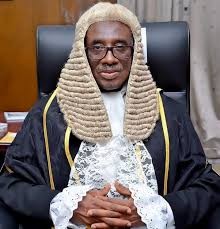
Chief Justice Hassan Jallow adjourned the case for judgment.
The case, brought by Modou Ceesay against the Minister of Justice, IGP and the president, centres on whether his exit from office complied with constitutional and statutory safeguards.
Source: The Standard